Blog Archive

Showing posts with label race equality. Show all posts

Saturday, 10 April 2021

Chair of BARAC UK co-signs letter on Covid 19 and Racial Inequality in Higher Education - Black Impact and Make Diversity Count writes to the PM

Chair of BARAC UK Zita Holbourne has  co-signed this letter initiated by Black Impact  regarding Covid 19 and racial inequality in higher education. 


Read original on Black Impact website here 


On the occasion of the United Nations’ International Day for the Elimination of Racism, we have written to Prime Minister Boris Johnson MP, to express our concern about the growing crisis in relation to racial inequalities in higher education and are seeking his urgent support in tackling this important issue.

Read our letter below.

Rt Hon Boris Johnson MP

Prime Minister
10 Downing Street
London
SW1A 2AA

19th March 2021

                                          COVID-19 RACIAL INEQUALITY IN HIGHER EDUCATION

Dear Prime Minister,

We are writing to you today 21st  March 2021, being the United Nations’ International Day for the Elimination of Racism, to express our concern about the growing crisis in relation to racial inequalities in higher education. We are seeking your urgent support in tackling this important issue.

We work with and support local and International Black African and Caribbean students in higher education across the UK. As you are aware, the health of ethnic minorities is disproportionately affected by COVID-19. Additionally, vaccination hesitancy has led to lower vaccination rates within some ethnic minority groups, mainly African and Caribbean communities. Our lived experience of racism partly explains such hesitation and the consequent lack of trust and confidence felt by many in UK African and Caribbean communities, in Government and institutions willingness and commitment to tackle racial inequality.

We believe that the evidence shows that current rates of ethnic disadvantage in education, health and economy have all increased during this pandemic.

The amplification of racial inequality comes as a direct result of the pandemic. It is now doubly important that the Government develops a clear Race Equality Strategy in response. Also, we believe it is essential that within Higher Education, there is a radical reappraisal of the Advanced Higher Education Race Equality Charter (REC) as called for by the Race Equality Now (REN) campaign supported by Universities and launched in 2020.

Black Impact and Make Diversity Count launched the REN campaign and have disseminated a national Black student and staff survey to assess their perceptions of the progress made in implementing the REC.

Race Equality Now has received support from organizations, both within and outside of the higher education sector, including the National Union of Students and Operation Black Vote. The campaign has also received support from Vice-Chancellors and individuals within senior university management.

Prime Minister, we are seeking your public endorsement of the REN campaign and a statement of support. We would like to discuss the REN campaign with Michelle Donelan, Minister of State for Universities, Gavin Williamson, Secretary of State for Education, and seek your support to facilitate this meeting.

Far too many Black African and Caribbean students continue to face the reality of differential treatment, racial harassment and sometimes violence on university campuses across the country. Evidence of this discrimination can be found in numerous reports, including the Equality and Human Rights Commission’s Tackling racial harassment: Universities challenged and Universities UK’s Tackling racial harassment in higher education.

The systemic issues Black students and staff are experiencing during this pandemic include:

  • declining mental health; lack of culturally competent services; 8% of students who experienced racial harassment said they had felt suicidal
  • digital and economic poverty; lack of access to educational resources and spaces to complete assignments
  • Black attainment gap of 26%; there has been little specialist measures or support put in place to ensure the attainment gap does not widen during this pandemic
  • reduced graduate employment rate, e.g. BME graduates with a first degree are more than twice as likely to be unemployed as white graduates[1]
  • day to day discrimination at their universities; Nearly 1 in 3 members of staff had experienced racist name-calling, insults and ‘jokes’[2]
  • a low disproportion of Black people in leadership positions, e.g. there are only 155 Black professors out of 22,810 professors in the UK[3]
  • inaccessible ways to report incidents of racism and investigations not taking place; Two-thirds of students who had experienced racial harassment did not report it to their university.  [4]
  • International students are facing incredible financial pressures and a high degree of social isolation.

We would like to discuss all of these critical issues with you and your ministers. We would appreciate it if you could consider providing us with a supporting statement for the REN campaign to help us advance the cause of quality, fairness, and opportunity for all within higher education.

Yours sincerely,

Ceewhy Ochoga, Founder, Black Impact
Osaro Otobo, Founder, Make Diversity Count
Hillary Gyebi-Ababio, VP Higher Education – National Union of Students
Patricia Lamour MBE, CEO Aspire Education Group
Zita Holbourne,  National Chair BARAC UK

Monday, 1 March 2021

Letter by trade union leaders and race equality campaigners on the government's Commission on Race and Ethnic Disparities

1st March 2021


Chair of BARAC UK has co-signed this letter alongside leading campaigners against racism including trade union leaders including Baroness Doreen Lawrence, 


 This week, the Commission on Race and Ethnic Disparities is expected to publish its report. Set up under pressure from the Black Lives Matter protests In June last year, the prime minister made a commitment “to tackle the substance of the problems”.  

Despite progress on equality, change is urgent. BME people are three times more likely to die from Covid-19. The BME unemployment rate is running at almost double that of white workers. And BME workers in London experience a 24% pay gap. 

We hope the commission’s report recognises that these inequalities are driven by institutional and structural racism.  

Last week we lost Sir William Macpherson. His 1999 report into the murder of Stephen Lawrence highlighted the impact of institutional racism. Twenty years on, his insight is being forgotten, with too many explaining away racial inequalities as being about “a few bad apples” or solely about class or geography.  

Of course both class and where you live matter. The UK must address the inequal opportunities faced by low income people, and the glaring disparities across the regions and nations of the UK alongside the racism and structural discrimination face by BME communities. But we will not stand by as white and BME working people are pitched against each other. 

We hope the Commission’s report will, as a bare minimum:  

  • Implement in full the recommendations from the seven reports commissioned since 2010: Lammy, Angiolini, Williams (Windrush), McGregor-Smith, Kline, Parker and Timpson 

  • Set out race equality strategy to guide the Covid-19 response 

  • Introduce mandatory ethnicity pay reporting. 

The statement has been signed by: 

Frances O’Grady, General Secretary, TUC 

Baroness Doreen Lawrence OBE 

Lord Simon Woolley CBE, former Chair, Government’s Racial Disparity Unit advisory group 

Dr Patrick Roach, General Secretary, NASUWT 

Gloria Mills CBE, Chair, TUC Race Relations Committee 

Lord Prem Sikka, Economist 

Prof Kailash Chand CBE, Hon Vice President, BMA 

Dr Halima Begum, Director, The Runnymede Trust 

Dr Zubaida Haque, Independent SAGE 

Maurice Mcleod, Chief Executive, ROTA 

Phyll Opoku-Gyimah, Executive Director, UK Black Pride 

Zita Holbourne, BARAC UK 

Ellie Mae O’Hagan, Director, CLASS 


The related news story together with the letter  can be accessed here 

Saturday, 5 December 2020

Support the work of BARAC UK by affiliating to us, making a donation to us or donating to our humanitarian aid crowdfunding platform


https://uk.gofundme.com/f/BARACHumanitarian


BARAC AFFILIATION FORM


To affiliate to Black Activists Rising Against Cuts (BARAC) UK please complete and return this form together with a cheque or alternatively pay directly into our account bank account.

 · I wish to affiliate to BARAC UK annually;

£10 Individual concession

£20 Individual waged

 £50 Local organisation

 £100 Trade union branch or Trades Council

£200 National trade union or organisation


 · I wish to give a donation towards BARAC’s work; £250 £100 £50 £35 £25 £10 Other


 £ .….….….….….


· I enclose a cheque for a total of £ ..........


made out to BARAC UK or Black Activists Rising Against Cuts

 · I have paid the following amount £……….. into the BARAC Bank Account:


BARAC UK Bank details:

Black Activists Rising Against Cuts (BARAC) UK

Barclays Bank

Sort Code 20 67 90

Account No. 53317803


Signature:


 Date:


Name of Organisation (if applicable)


Name:


Position:


Address:


 Tel no.:


 Email:


Please return affiliation form (and cheque) to:


 BARAC UK C/O Zita Holbourne, National Co-Chair BARAC UK PCS HQ 160 Falcon Road, London, SW11 2LN


 Alternatively email to: barac.info@gmail.com


Black Activists Rising Against Cuts (BARAC) UK Web: www.blackactivistsrisingagainstcuts.blogspot.com

 Twitter: @baracuk

Facebook: BARAC UK

Instagram: BARACUKoriginal


 Thank you for your support


crowdfunder for BARAC Humanitarian aid supporting refugees

Monday, 4 May 2020

Coronavirus and its impact on Black communities

This article written by Chair of BARAC UK Zita Holbourne was a guest post written originally for RS21 and published here:


Coronavirus and its impact on Black communities

In the rising coronavirus death toll, black and brown people in the UK are represented in disproportionate numbers, due to not only discrimination and poverty, but because they make up a sizeable amount of the frontline workforce working without adequate PPE, argues Zita Holbourne.

Black and minority ethnic workers and communities are disproportionately adversely impacted by coronavirus in multiple ways with the most devastating, sudden and harshest impact being the high and disproportionate number of people dying from the virus, especially those who are key workers, with a particular impact on those who work in the health sector and in transport. 
These are the workers on the frontline, delivering essential public services including caring for and treating those with coronavirus who have disgracefully been failed by the government who have not protected them and failed to provide personal protective equipment, effectively being sent to die with no care for their lives. 
Black communities have historically and right up to the present day faced race discrimination at work and in the labour market, meaning they are in frontline jobs, often working precariously, bearing the brunt of ten years of austerity and cuts to the public and voluntary sectors, pay freezes, zero-hours contracts and discrimination in promotion and progression. They are the same people who experienced the horrendous Windrush scandal – some of whom are still experiencing destitution and homelessness and with the majority impacted still not receiving compensation, they are from migrant communities who have been demonized, labelled and scapegoated through a decade of austerity and who have and continue to face not just discrimination and racist abuse at work but in wider society. Black and migrant communities have for decades been crucial in keeping public and voluntary sector services running. 
Other impacts are the increase in racist attacks and abuse. Chinese people and communities and those perceived by racists to be Chinese who are not, have been subjected to horrific abuse, including hate mail sent to Chinese restaurants and takeaways and physical attacks leading to people having to be hospitalised. 
There have been reports of key workers, even while they keep essential services running and are caring for those who are ill, facing abuse and told they want a white nurse or carer. 
I think that any moves by the government to end lockdown before it is safe to do so will impact adversely on even more black workers and must be resisted. 
There is now an inquiry underway to look into the reasons for BAME people dying disproportionately but there is little faith amongst black communities in the person originally appointed to lead this inquiry and an array of formal letters issued by BAME and health representatives calling for this to be changed including one by 100 black women and one representing thousands of BAME people. There has been speculation that the reasons for black and other minority ethnic people dying disproportionately is due to underlying health conditions that impact on our communities and whilst this may be a factor the key reasons are linked to racism and poverty, where we live, how we are treated in the workplace and the labour market and now the complete disregard for our lives in failing to provide protection and safety.
I know of one family where two members of the same family, key workers in different sectors died a day apart from each other. The trauma and pain for families who have lost more than one loved one, will have lasting impacts – mentally, physically, spiritually and economically and whilst the government have announced a payment to families who have lost loved ones, this cannot bring back lives – the priority should be on keeping everybody safe and reducing all the risks of getting coronavirus – lives cannot be replaced by cash.
We have had so many inquiries and reports into race discrimination in the UK and what we don’t need is another inquiry for the sake of an inquiry without action to address the causes and reasons – but this is an urgent situation that cannot wait for the outcome of an inquiry – an inquiry cannot be an excuse to do nothing in the meantime. The government should be carrying out equality impact assessments on all key work and carrying out ethnicity monitoring on those doing key work, those who get the virus and those who die from the virus by sector and work area. Official figures broken down by ethnicity is not there for all areas, but we sadly see it for ourselves as the photos alongside heart-breaking tributes to those who have died are published by the media and shared on our social media.
Whilst responding to the coronavirus pandemic is clearly a priority, we must not forget about the other injustices faced by black and migrant communities here in the UK and globally.
For the past 7 years, I have organised regular aid and solidarity missions to people who are refugees in Northern France in addition to being part of a European Trade Union group who have monitored and responded to the impacts on refugees and migrants coming to Europe, visiting refugee centres in Melilla and Palermo. Due to the coronavirus, for the safety of people who are refugees and volunteers and closed borders, some of the charities on the ground we work with have had to stop the support work they do as have we and this has left already vulnerable traumatised, predominantly young people at risk and without basic sanitation, food and water, let alone shelter, people who are displaced due to climate change, conflict, poverty and persecution and who have in recent years been labelled and demonised as coming to steal jobs and strip resources. Yet it is a large proportion of migrant and black workers who the UK are depending upon right now to keep essential services running. The government have already indicated that when we are through the coronavirus crisis, they will continue with their hostile environment policies. 
This will coincide with an economic crisis which will also have disproportionate adverse equality impacts as the last decade long one did but with potential impacts we have never experienced before with whole sectors that black and migrant workers are concentrated in impacted in a major way by the coronavirus crisis and the necessary lockdown that has come with it.
However, whilst the response by the government in ensuring safety and reducing the spread of the virus is essential, I do not agree that there is no individual responsibility required. This week we have seen people travelling to hold protests outside the workplaces of key workers. Whilst some may have walked to these demos, others may have taken public transport, putting predominantly BAME public sector workers at risk at a time when those workers have expressed over recent weeks their fears about going to work. I know from family and friends who are key workers that they worry about using shared facilities such as toilets, cannot access food or drink during the working day and have to put their own measures in place to protect themselves and have to do all they can do be socially distanced from their colleagues. Meanwhile, there are people outside their workplaces, not practising social distancing, not considering the safety of workers who have no choice but to be there, blocking pathways and posing for photos with smiles on their faces. Yes, we should protest and campaign for their rights but we need to do this in different ways to what we may be used to and with respect for the safety of everyone else, as well as in coordination with the workers in these workplaces.
In the midst of the coronavirus crisis the Windrush Lessons Learned report was published with a range of recommendations and the two year anniversary of the Windrush scandal came whilst more than one thousand applicants to the Windrush Compensation scheme, some waiting for over one year, have not even had their cases considered by the government. 
Black nurses, transport workers and other public sector workers who came to the UK as part of the Windrush generation faced the most horrific racism yet dedicated their lives to helping others and to public service and now face destitution, injustice and poverty because of the way they were discriminated against due to racist immigration policies and laws and it is black and migrant workers who are keeping essential services running now – some of them the children and grandchildren of the Windrush generation who have also experienced the impacts of the hostile environment in their lives. We must hold the government to account for failing them yet again.
Black Lives Matter.

Zita Holbourne is the Chair of BARAC UK, a founding member of BAME Lawyers for Justice, a trade unionist, human rights campaigner, author, visual artist and poet.

Zita Holbourne. Photo copyright Elizabeth Dalziel photographer, courtesy of Women Activists of East London exhibition.


Tuesday, 16 October 2018

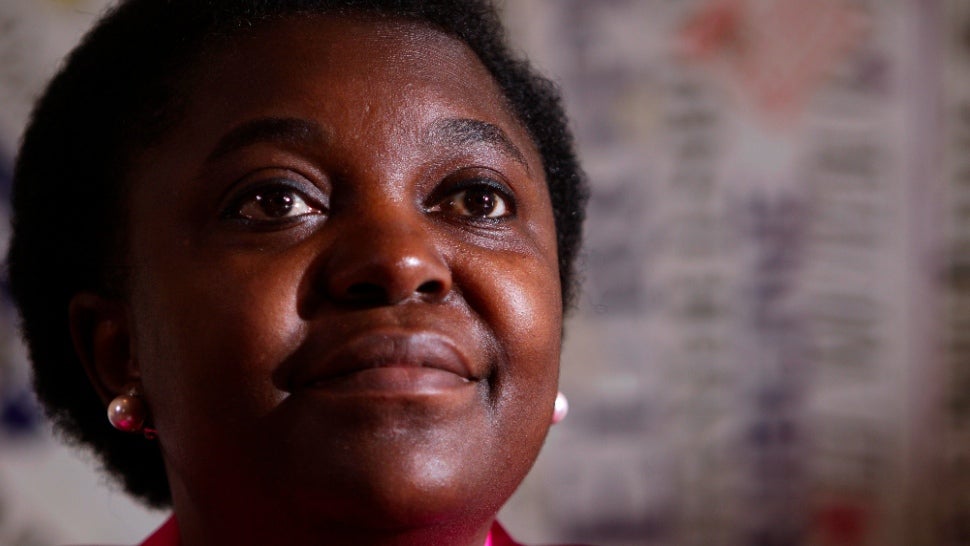
We Stand With our sister Cecile Kyenge MEP


We Stand With our sister Cecile Kyenge MEP


Cecile Kyenge is an Italian MEP. Over a prolonged period, she has been subjected to horrendous racist abuse, misogyny and threats by those who say she should not be a politician in Italy or in Europe.

Some of this abuse has come from other politicians and political parties. Northern League senate vice-president Roberto Calderoli likened her to an orangutan and said she should not be involved in Italian politics but ‘should do politics in her own country’.  There have also been calls for Cecile to be raped. She has had bananas thrown at her.

Cecile has a legal case naming ten Italian politicians because of their abuse.

The leader of Northern League, Now Deputy Prime Minister of Italy, Matteo Salvini, has compared African migrants to slaves and Northern League has ordered a process to expel undocumented Roma people from Italy.

Recently a town in Italy has denied school meals and bus services to children of migrant families, applauded by Salvini who has also blocked NGO rescue ships from Italian ports and has made a proposal that would force what he calls “little ethnic shops” to close by 9pm, targeting Asian shop owners.

In September I was part of a European wide trade union delegation visiting Palermo, Sicily to bring a message of solidarity with refugees and migrants.
We agreed a statement which initiated a European public sector union network of support. Cecile was invited to attend the first day of our programme and sent a video message. In my speech, I gave a message of solidarity with Cecile and called on participants to stand up to all forms of racism.

We visited one of several support centres for migrants, providing shelter and training.  In the same week a decree drafted by Salvini was approved outlawing the type of support centre we visited and also abolishing humanitarian protection for those not eligible for refugee status amongst other plans targeting migrants.  

As a result of the direct attacks on her and hostile policies and actions targeting migrants and refugees by Northern League, Cecile has expressed the view that they are racist. In response Matteo Salvini is now suing Cecile for defamation.

The attack on Cecile in suing her for speaking out about racism is an attack on us all, it is an attack on equality and on human rights and it is an attempt to legitimise racism and silence voices opposing it.  But it is also a direct attack on Cecile because she is a black, migrant woman.
We know first-hand that black women politicians, campaigners and activists face horrific abuse because of their race and gender and we  recognise that all have a responsibility to stand up to it. We condemn the horrific abuse and harassment of our sister Cecile and we offer our whole-hearted solidarity and support.  We thank Cecile Kyenge for her courage and determination and for speaking out for all of us.

We also encourage people to sign the petition in support  initiated by Operation Black Vote.

Zita Holbourne; Co-founder & National Chair;
On behalf of Black Activists Rising Against Cuts (BARAC) UK


Monday, 22 May 2017

Campaign groups launch a manifesto for a racism-free post-Brexit Britain

Campaign groups launch a manifesto for a racism-free post-Brexit Britain

Press release: Monday 22nd May 2017, For Immediate Release

Contact OBV press office: 
020 8983 5430 / 020 8983 5444 / 07584 177 529 / 07920 057 237

Campaign groups launch a manifesto for a racism-free post-Brexit Britain

A new coalition of 20 race equality campaign groups has launched a manifesto which includes a set of demands they want the next government to adopt.

The ‘Manifesto for Race Equality in Britain’ includes policy proposals to tackle racial inequalities in the jobs market, housing, and criminal justice.

Proposals include:

  • A comprehensive government-wide race equality strategy;
  • Brexit negotiations must be “race equality-proofed” to safeguard rights protecting citizens against discrimination;
  • A new law prohibiting online hate which forces social media firms to take action.


The online manifesto has just gone live: www.raceequality2017.org.uk

The website also features new analysis of the power of the black and ethnic minority (BME) vote in this snap general election.

The study found that:

  • Seven of the top ten swing seats have BME electorates significantly larger than the 2015 majority;
  • 45 of the top 50 swing seats, 45 have BME electorates larger than the 2015 majority;
  • 96 of the top 200 marginal seats have BME electorates large enough to make the difference.

The report concludes that Labour could seriously reduce the Conservatives majority by holding onto their share of BME voters. The Tories could seal a comprehensive victory by winning over more BME citizens, and the Lib Dems need to increase their appeal in diverse seats to have any hope of winning them back.

See the Power of the Black Vote 2017 report here: https://goo.gl/kAZMrA

The Race Equality 2017 coalition was coordinated by Operation Black Vote. The full list of organisations is in Notes to Editors.

Simon Woolley, Director of Operation Black Vote, said:

“Britain is at a crossroads on Brexit, immigration, and British identity. How these issues play out in this snap election will determine the country's direction for a generation. The key question is to what extent will black and minority ethnic communities (BME) be involved in this debate?

“Persistent race inequalities in employment, education, housing and the criminal justice system has meant and lack of social mobility for BME children growing up to be adults is nothing short of a scandal. Many do succeed despite the barriers but too many fail to have their potential recognised much less fulfilled. That is why we are calling for a government-wide race equality strategy to root out racial inequality wherever it lurks in the system.

Dr Omar Khan, Director of the Runnymede Trust, said:

“Given the persistence and extent of racial inequalities we need the next government to have an actual plan to reduce racial inequalities, not just warm words. With post-Brexit Britain raising existential questions about who we are, we also need the next government to affirm that race equality is a core British value and that minorities won't see their rights and protections weakened”

Viv Ahmun, from Blaksox, said:

"Unemployment of 30% amongst 16-24 year old black people in comparison to just 13% amongst white people of the same age is a shocking disparity that feeds into and drives the poverty of opportunity that underpins rises in violence and mental ill health. The next government must do more to increase opportunities for employment and business development within BAME communities.” 

Zita Holbourne, National Chair, Black Activists Rising Against Cuts (BARAC) UK and National Vice President, Public and Commercial Services Union, said:

“Austerity combined with institutional racism is impacting disproportionately on BAME workers. Our manifesto seeks to address the adverse impacts of cuts on BAME workers from redundancies in the public sector having a double impact on BAME women to zero hour contracts meaning young BAME  workers have no job security, whilst addressing the structural systems of discrimination that already existed before cuts, in appraisal, promotion, progression and recruitment. Race Equality should be a right, not a privilege.”

Patrick Vernon OBE, trustee of Bernie Grant Trust and founder of 100 Great Black Britons, said:

“This is the 30th anniversary of Black History Month and the election of the late Bernie Grant, Diane Abbott, Paul Boateng and Keith Vaz as MPs. Tackling racial inequalities still have not been fully achieved. Our manifesto is a demand for our civil and economics rights to be taken seriously and delivered to all political parties.”

Lee Jasper, Blacksox sponsor, said:

“Black and Asian people in the UK today look with trepidation towards an uncertain future in a Brexit Britain. Racial inequality in the UK is now wider than any other time in our history. Hate crime is rising and black unemployment is at record levels. This no time abandon hope and refuse to vote. It’s time for UK Civil Rights movement.”

END.

Notes for editor: 
1)    OBV is non-partisan political campaigning organisation
2)    Organisations supporting the ‘Race Equality 2017’ manifesto include:
Runnymede Trust; Aspire Education Group; Coreplan; Ukren; BTEG; Friends, Families and Travellers; BSWN; Blacksox; Father 2 Father; DWC Global; Reallity; Voyage Youth; Race on the Agenda; Every Generation Media; BARAC; JUST Yorkshire; Society of Black Lawyers; Race Equality Foundation; Bernie Grant Trust.
3)    Power of the Black Vote report – showing that 45 of the top 50 most marginal seats have BME electorates larger than the 2015 majority – can be found here: https://goo.gl/6cPA91


Sunday, 18 December 2016

BARAC / United Black Labour Parliamentary Launch; A vision for Race Equality


Hosted by Rt Hon John McDonnell MP. 

17th January 2016

6.15 to 8.45pm,  Wilson Room, Houses of Parliament


Speakers: 

Dawn Butler MP,
Kate Osamor MP,
Michael Nicholas, Secretary B&EMM FBU,
Hector Wesley, PCS NEC member 
Kingsley Abrams, General Secretary, Momentum Black ConneXions, 
Zita Holbourne, BARAC UK National Co-Chair,
Lee Jasper, BARAC UK National Co-Chair 

(More speakers to be confirmed)
Invited speakers include: 

David Isaac CBE (Chair)
Clive Lewis MP
Diane Abbott MP
Gloria Mills, Senior National Official Unison
Patricia Lamour, Blaksox

We would like to invite you to attend the ‘BARAC UK/ United Black Labour ‘Race Equality Round Table’ meeting on 17 January 2017. 

This date has been chosen to coincide with Martin Luther King Day.

This meeting will be a parliamentary launch of BARAC’s vision paper – 2025: A Vision for Race Equality in Britain. Speakers will include black activists and speakers from community organisations, race equality organisations, the Labour Party and the trade unions.

2025: A Vision for Race Equality in Britain - a strategy paper, setting out a strategic framework focused on the goal of substantive reduction of racial disproportionality and inequality in the United Kingdom. - Authors: Mr Lee Jasper and Ms Zita Holbourne, National Co-Chairs Black Activists Rising Against Cuts (BARAC) UK 

This vision paper can be found here: http://blackactivistsrisingagainstcuts.blogspot.co.uk/2016/09/2025-vision-for-race-equality-in.html?m=1

To book please email your name and contact details to: baracwomens@gmail.com


Tuesday, 20 September 2016

BARAC at The World Transformed; Building Black Power - a 2025 vision for race equality


BARAC UK will be faciliating a session at The World Transformed Conference - a four day fringe conference running alongside the Labour Party Conference with a range of sessions run by grassroots organisations like ours. More info at the bottom of this email about the conference.

Our session: Building Black Power; Asserting our right to race equality
Facilitated by Black Activists Rising Against Cuts (BARAC ) UK
Chair: Zita Holbourne Co-founder & National Co-Chair BARAC UK
Speakers : Donna Guthrie; BARAC Women's Officer
Colette Williams; PAC45 Co-ordinator / Founder

Panel discussion followed by audience debate
Description:
How do we build a Labour Party & wider labour and social movement that focuses on eradicating race injustice and race equality?
Austerity has amplified racism over the past 6 years and led to deepening poverty for black communities. Along side this we have experienced increased racism and injustice ranging from discrimination in the labour market to disproportionate stop & search, deaths at the hands-off the State whilst being denied access to justice because of cuts and a failure to address institutional racism by public authorities including the police.
This event will discuss how radical black movements can work together to build a 2020 vision focused on black leadership and anti racist struggle, uniting the Black labour movement & Labour Party.
We have published the following strategy paper to aid discussion,with the aim of continuing debate after the conference and forming a consensus that brings Black communities, activists, race equality and anti -racist  organisations, the Labour movement , the Labour Party and Momentum together to achieve a common aim.

Click here to read the strategy paper


http://blackactivistsrisingagainstcuts.blogspot.co.uk/2016/09/2025-vision-for-race-equality-in.html


The World Transformed is free to attend: Register for free tickets

Black Lives Matter! Building Black Power!
3- 5pm, The Gallery. 
Hosted by BARAC 
Between austerity, migrant-bashing and police brutality, racial prejudices and inequalities are only deepening. This panel will explore how black activists can work with each other and the Labour Party to take the anti-racist struggle and black radicalism forwards to 2020.

Speakers:
Chair: Zita Holbourne Co-founder & National Co-Chair BARAC UK
Speakers : Donna Guthrie; BARAC Women's Officer
Colette Williams; Manchester Black Lives Matters; PAC45 Co-ordinator / Founder

We have initiated United Black Labour in support of Jeremy Corbyn, an online discussion platform


2025: A Vision for Race Equality in Britain, a BARAC UK Strategy Paper


2025: A Vision for Race Equality in Britain


Authors: Mr Lee Jasper and Ms Zita Holbourne
National Co-Chairs Black Activists Rising Against Cuts (BARAC) UK

A strategy paper, setting out a strategic framework focused on the goal of substantive reduction of racial disproportionality and inequality in the United Kingdom.

Background

BARAC UK [1] was established as a social movement and campaigning organisation in 2010 after the General Election of that year, in direct response to the anticipated politics of austerity and the likely disproportionate impact of cuts on black workers, service users, and deprived communities. We believed that the planned austerity cuts would inflame and exacerbate racism, poverty and social-economic injustice faced by black and migrant communities.
We use the term black in its inclusive and widest political sense, including all non-white ethnic minority communities living in the United Kingdom.
Our core belief is, as research has shown, racial disparities on socio-Reconomic indices expand dramatically during economic recession.[2]
We believe that the combination of the 2008 global economic crisis, the pursuit of ideological austerity and the decision to leave the European Union have combined into a perfect storm hugely amplifying and aggravating racism in Britain.
We believe that these factors have made the vision of a fair and just Britain, a nation that is a free and equal society for all its citizens, increasingly remote as rates of racial socio-economic inequality, religious and racist attacks, alongside xenophobic hate crimes, continue to rise.
We note with both alarm and extreme concern the publication of the Equality and Human Right Commission’s recent tri-annual report “Healing a divided Britain: the need for a comprehensive race equality strategy’. The report called for the introduction of an urgent and immediate Race Equality Scheme, noting the widespread and growing rate of racial inequality across the United Kingdom.
The Chair of the Commission, [3]Mr David Isaac warned in his foreword to the report that, “widespread racial inequality risks further increasing racial tensions".
We agree and support the Commission’s call for Government to adopt a "comprehensive race equality strategy".
Further we believe, as stated in a recent published report, assessing the state of racism in the UK, the United Nations Committee on the Elimination of Racial Discrimination (CERD) [4] stated that protracted economic decline in Britain has led to the targeting of popular scapegoats, ramping up racism for short-term political gain, led by sections of the UK’s right-wing media alongside some irresponsible British politicians.
This traditional political scapegoating is being used as a means of popular distraction; diverting attention from the real authors, and those primarily responsible for our current economic decline, the banks, financial service institutions and parliament itself.
We believe that in the current economic and political context, we will continue to see the growth of racism and religious hatred in many towns and cities across the UK, an increase as highlighted in the Equality and Human Rights Commission’s most recent report.
Britain’s ethnic communities continue to grow in size and the palpable and continued failure of Government to tackle racism and religious hatred, we believe. invites the development of European style democratically elected fascism, in an increasingly racially hostile, post Brexit Britain as exemplified by the success of the United Kingdom Independence Party (UKIP) in pandering to racist sentiment and of and the election in growing numbers of a range of extreme right-wing parties [5] across the European Union.

Things are getting worse

A report “A Portrait of Modern Britain” [6] released by the UK think tank, Policy Exchange, a centre-right research institute based in London, identified significant population growth of some ethnic communities. The authors of the study looked at the UK’s five largest distinct ethnic groups including Pakistani, Black African, Black Caribbean, Bangladeshi and Indian, their findings found that some of these groups accounted for as much as 80 percent of the UK’s population growth with Black Africans being the fastest growing group and White and Black Caribbean groups the slowest.

We believe that we must urgently address the growth of systemic racism, race and religious hatred and inequality, if we are to avoid a dystopian future, leading major cities in United Kingdom, to follow the trajectory of many deeply troubled, major US cities over the last 30 years, resulting in huge racial tensions, endemic poverty, increased crime rates, huge damage to property and potentially loss of life.
This strategy paper seeks to focus political discussions within mainstream political parties, trade unions, civil society and non-governmental organisations on the goal of achieving substantive reductions in race inequalities and social injustice faced by black and ethnic minority communities in the United Kingdom.
We believe the Government’s Race Equality Strategy (RES) approach should be bespoke, targeting local regional areas in particular employment sectors, like the media, with specific and sector specific goals and targets designed to tackle the problem where it is greatest.
Across the UK and its multicultural cities, there are huge regional, ethnic variations in the particular experience of discrimination, the extent of racial inequality experienced between ethnic groups themselves and different regions, towns and cities.  The extent of racial inequalities experienced by individual ethnic communities around the country, varies for each individual ethnic group and with strong regional variations, any effective RES strategy will require local targets and differing regional approaches.
Any attempt to seriously reduce substantive racial inequality across the UK will need to target discrimination amongst the largest employers. In order to achieve the kind of society that can be a beacon for multiracial nations around the world, we must first tackle job discrimination in the UK labour market and that means specifically targeted employment legislation capable of achieving a representative workforce.
It is also important that the demand for race equality by 2025 should be from civil society campaigns in which individual institutions and organisations not only sign up in support but also adopt their own race equality strategies in line with the demands on government. It is extremely important that organisations, institutions, businesses and faith groups all lead the demand for greater effectiveness from government in tackling race equality by way of example. This is an extraordinarily important aspect of this campaign.

Prolonged and sustained racial inequalities are symptoms of profound economic and social exclusion. Racism, discrimination, prejudice and bigotry all deny human potentiality and negatively affect the lives of millions of Black, Asian and other non-white minorities living in the UK. 

The strategy.
The achievement of this important strategy relies on the success of two important objectives;

1. The need to secure broad support and adoption of this 2025 strategy, across large sections of British society, including political parties, trade unions, faith communities, business and civil society groups and all race equality and ant -racist campaigning organisations.
2. The agreement of government on the development of a realistic RES strategy and broad policy framework, developed in consultation with black and ethnic minority communities and designed to help Britain secure the achievement of genuine racial equality and improved social justice within a decade. A radical plan that sets out bespoke targets within various sectors of British society that focuses on the reduction of all major areas of substantive racial inequality by 2025.

We hope that the obvious requirements demonstrated in this paper of the urgent need to develop a broad policy consensus and agreement across British civil society around the goal of substantively reducing racial equality in Britain by 2025, will deliver majority and significant support around a clear set of detailed campaign objectives and thereby increase our chances of convincing government to engage in the consultation, development and ultimately agreement of this important strategy.

What we believe

We believe it is now absolutely critical for the future economic, cultural and political success of post Brexit Britain, that where racial and religious hatred and the wholly negative effects of institutionalised racism, continue to blight the lives of many black and ethnic minority citizens, that such discrimination is tackled head on.
What is now required, we believe, is a profound paradigm shift of focus and approach in achieving a more equal society. It is absolutely beyond doubt that the goal of a fair, just and equal society is receding into the distance becoming a distant and increasingly unachievable goal.
In this post Brexit Britain context, tackling racism becomes a matter of national interest. It is now vital that structural racism, demonstrated and evidenced by a plethora of in-depth academic research, illuminating profound social, race and ethnic inequality, is substantively reduced over the next decade.
Failure to do so, will we believe, lead to growing and increased ethnic, religious and racial tensions in a multiracial Britain, where continued acute economic disadvantage and discrimination will lead to deep social unrest, and increased tensions among Britain's ethnic communities and ultimately civil disorder. Educated black and ethnic minority young people are becoming increasingly impatient for access to social mobility and career development opportunities.
We believe that a decade-long plan provides a realistic framework and timescale for real and sustainable progress to be made.
We believe this requires the adoption of a clear and comprehensive, ten-year RES, that outlines a series of proposals, targets and milestones, designed to achieve substantive race equality within a finite period. Black British and ethnic minority citizens must secure substantive commitments to race equality in their lifetimes.
The consequences in not doing so will condemn future generations of black and ethnic minority British citizens and the country as a whole, to a grim, angry and uncertain future where racism, racial and religious tensions, social discord and civil unrest all continue to rise.
This strategy paper presents a brief political and academic analysis of where we are today in terms of racial and ethnic discrimination and inequality, outlines key findings of academic statutory or community based research, and suggests the development of a coherent and consensual approach to making a once in a generation determined attempt to substantially reduce and/or eliminate racial inequality.

What the research tells us

Racism in 2016, is significantly worse today, than the crude racism faced by migrant communities in the mid-50/60s. Whilst this generation ended the horror of extreme racial violence and colour bar racism, the sad fact is that their grandchildren today suffer lower levels of social mobility than their parents, higher levels of unemployment and homelessness and yet are more educationally qualified than their parents.
These facts are confirmed in an important and significant report published in August 2016 by the Equality and Human Rights Commission. The Commission has analysed the state of race discrimination, inequality and disadvantage in the UK.
Their report cites the huge rise in hate crimes, racist abuse and violent attacks against migrants, Muslims and black people in the aftermath of the EU referendum. The report also found significant growth in rates of racial inequality and a widening of the life chances differentials between white, black and ethnic minority citizens.

These results as very worrying and fundamentally threaten Britain's social cohesion, economic prosperity, social solidarity in very many multicultural cities and towns across the country.

This substantive research review, undertaken by the Commission, focused on the areas of education, employment, housing and living standards, health, criminal justice and civic participation.

The report follows a similar report published by the Commission in 2010 entitled How Fair is Britain? This report, also came to similarly worrying conclusions as the Commission’s more recent review. We have seen no effective policy or campaigning response to either of these reports, from Government, trade unions, and campaigning groups or indeed from wider civil society. The impression given is whilst racism remains a "concern", it does not constitute a real political priority for many.

Since the publication of the Commission’s initial report in 2010 yet another generation has grown up under the cloud of continued racial and ethnic disadvantage.

The findings of both these important reports are an indictment of the grand political failure of successive governments of all parties, civil service administrations and wider civil society, in making real progress in ensuring that the dream of Britain becoming country that affords equality to all its citizens, becomes a reality within the lifetime of this current generation.
Today Britain is commonly described as a meritocracy, however we will argue that is no longer true and that Britain offers it’s growing black and ethnic minority communities third class citizenship in what is regarded the first-class democracy. Britain is an increasingly racial and religious discriminatory society where the current generation of black and ethnic minority citizens face more racism in terms of socio-economic exclusion and lack of social mobility than that faced by their parents, a damning indictment for any society.              
We are not moving towards the goal of full race equality, the goal is moving away from us, condemning millions of black and ethnic minority citizens to continue to live under the long shadow of racism.
This report is not alone in identifying such gross racial inequality.

The Runnymede Trust an independent race equality think tank published its second annual report entitled "Ethnic Inequalities In London: A Capital For All’[7] which captured the growth of  racial inequality right across the capital.

Its findings were equally conclusive that "ethnic inequalities are persistent and widespread, particularly in employment and housing." Its findings identified the south London borough of Lambeth as the most racially unequal and divided borough in London. This annual snapshot of London also confirms that the gap between black and white Londoners in terms of life chances, quality of life and opportunities is widening.

Runnymede’s report also found, as did the Commission’s review, that black and ethnic minority pupils were out performing their white counterparts, and yet suffered huge discrimination within the UK labour market. This successful trend within black and ethnic communities of a growing and confident, educated, young, black aspiring workforce, faced with systemic racism within the labour market and the routine denial of opportunity, presents the UK; both with a unique opportunity and a real and present threat.

Black and ethnic minority young people; qualified, ambitious and ready to work are finding themselves unemployed, on the streets, unable to get a decent home to live in, unable to get a job commensurate with their skills and education, and living in a society where they will find themselves repeatedly racially profiled and harassed through discriminatory application of police Stop and Search powers.

The combination of widespread racial inequality, racism and discrimination means our communities are both contained and under pressure, with no obvious social mobility routes out of this incredibly hostile environment and no real access to secure race equality and justice.

Where do we go from here?

This paper sets out BARAC’s key concerns and seeks to build public debate and political consensus on the urgent need for the development and adoption of a comprehensive Government and civil society RES action plan that identifies the goal of substantially reducing all areas of racial inequality and disproportionality by the year 2025. A plan that should be developed through, timely and ethical consultations with black and ethnic minority communities, with a goal of developing a 10-year RES definitive plan with annual targets and public reporting mechanisms.
We hope this paper’s recommendations will be considered by all political parties, civil society organisations and community groups with a view to formally supporting a statement, such as the draft produced below, by way of example;
We wish to live in a Britain that provides equality of opportunity and freedom from race, religious and ethnic discrimination. Our ambition is for Britain to become a modern multicultural democracy where all our citizens can live, thrive and prosper, without the fear of racial or religious discrimination and bigotry.
We call upon the UK Government to ensure ethical and formal consultation and partnership with black and ethnic minority communities, organisations faith groups and wider civil society in the development of a radical and fully comprehensive Race Equality Strategy (RES) focused on the substantive reduction and where possible, elimination of all substantive areas of racial inequality and discrimination in the United Kingdom by the year 2025.
We individually commit to leading by example by initiating the development of our own public, comprehensive, national 10-year Race Equality Strategy (RES) developed in partnership with black and minority communities. This will include targets in employment and service delivery that work towards reducing current levels of racial and ethnic underrepresentation and inequality and commit to publishing an annual report, outlining our progress each year until the year 2025.

This BARAC UK strategy paper sets out some of the key statistics demonstrating racial disadvantage, disparity and disproportionality that affect black and ethnic minority communities within the UK. Effects of racism are nuanced so not all communities experience the same effects in terms of racism and racial inequality. Each distinct black and ethnic minority community is defined by its particular historical, political and cultural experience that ensures a range of differential outcomes for many distinct British ethnic communities.
Notwithstanding this important distinction, it is nevertheless true to say that the major negative effects of growing race and ethnic inequality and its impact, is demonstrably greatest upon Britain's African, African Caribbean, Pakistani and Bangladeshi communities, and of late we have seen the terrible xenophobia directed towards Eastern European and in particular Polish communities.
Any race equality strategy would need to take account of these real differentials in the lived experience of distinct ethnic communities. That requires very specific targeting of individual groups and communities that suffer the greatest disadvantage. This approach recognises the reality of racial disadvantage as it impacts upon distinct ethnic groups and provides a credible and coherent response to those in the greatest need. This moves away from a broad "black and ethnic minority" categorisation and adopts entirely specific ethnic targets focusing on specific disadvantage and disproportionality, where such disadvantage clearly exists.

Current initiatives

The Prime Minister recently announced her intention to conduct a Race Equality Audit across all Government Departments and public services in an effort to reveal "difficult truths" about the extent of racism across and within the public sector. This audit will highlight differences in outcomes for people of different racial and ethnic backgrounds in areas of health, education, childcare, welfare, employment, skills and criminal justice.
Whilst this is to be welcomed, it is vitally important that the detailed remit of such an audit, the evaluation of the resources required and the timescale for its delivery and completion are all agreed in partnership with a broad range of credible black and ethnic minority organisations and communities. A simple 1980s style race equality snapshot across government cannot be, in and of itself, viewed as real and substantial progress. This has to be much more than just a bean counting exercise.
Despite these concerns, this initiative is to be welcomed. The real test will be the extent of public consultation and engagement with black and minority communities. This audit must enjoy the confidence of our communities and that will require genuine government and civil society partnership in the development of the specific terms of reference that will inform the work of this audit.
However, there remains a fundamental weakness in what is currently being proposed by government. The reality is that discrimination in wider society goes well beyond the realm of public services. If the UK private sector is to be excluded, then a critical area where racism's social economic effects are endemic will be ignored.
Failure to include discrimination in relation to goods and services will result in a keyhole examination of racism in Britain rather than a comprehensive full-scale enquiry. We must work together to make sure that the remit for the planned audit is substantive and capable of tackling these issues in a sustainable and effective way.


The ‘fire next time’

What we believe is required, is a Judge led public enquiry on a similar scale to the 1967 United States, National Advisory Commission on Civil Disorders also known as the Kerner Commission  and was established to investigate the causes of civil disorder that took place in the aftermath of the assassination of Dr Martin Luther King.
We believe that as a consequence of austerity, heightened levels of race and ethnic discrimination, disadvantage and inequality, civil disorder is not just likely, it is inevitable. We believe there is a failure in government to recognise the driving factors that led up to the civil disturbances of 2011[8] and that many of the issues that gave rise to those events have not just remained unaddressed but have become substantially worse over the last five years.
By establishing a much broader inquiry now, the country can save itself millions of pounds in avoiding the huge costs that would be associated with yet another outbreak of national civil disorder and riot damage. We believe that for all British citizens to flourish and for our economy to prosper we must be better able to compete in an increasingly globalised world.

Britain as a multicultural democracy must utilise all the talents available to the nation in an effort to enhance social cohesion and promote economic prosperity.  

There is simply no need to wait for the ‘fire next time’ politicians, trade unions, civil society groups and campaigning organisations need to all coalesce around and campaign for the establishment of a judge led public enquiry and the production of a comprehensive race equality 10-year strategy.


2025 Racial Equality Campaign

BARAC UK 2025 Race Equality Campaign Draft Objectives

BARAC will work with others to develop a project/campaign framework that has the potential of attracting wide spread support whilst providing the necessary public pressure needed to reverse the current trend of widening inequality and race discrimination.

Power concedes nothing without demand. 

The importance of establishing the issue of race as a political and policy priority within both central and local Government and wider civil society, requires a mass movement and a broad based campaign, capable of keeping the issue high on the media and political agendas.

Key to achieving this important objective is creating the broadest possible alliance of black and ethnic minority organisations, trade unions, community and civil society groups and faith communities.

The key aim of the campaign is to;

Challenge Government, business and wider civil society to substantially reduce persistent racial inequality and disproportionality in both employment and service delivery in addition to improving levels of ethnic representation in public life by 2025.

The 2025 Race Equality Campaign will seek to encourage British society to adopt the objective and goal of ending significant racial inequalities within 10 years.

This will involve, clearly identifying current rates of race inequality, disproportionality and ethnic under representation through a base line Race Equality Audit (2017) and setting challenging annual public targets for substantial reductions to be achieved by 2025. 

The Campaign is designed to encourage a broad range of institutions, businesses and organisations to support the statement and sign up for the
2025 Race Equality Challenge committing to working, within their specialist sectors, toward the elimination and or reduction of major areas of racial inequality, disproportionality and ethnic under-representation by 2025. 


We have five initial developmental objectives for further discussion;

a)    To publicly campaign for Government, businesses, institutions, civil society organisations, faith groups and individuals to accept and sign up to the 2025 Race Equality Campaign.

b)    To work with others in seeking to significantly challenge, reduce and where possible eradicate all major areas of racial inequality, disproportionality and ethnic under-representation in Britain by 2025.

c)    To promote, campaign and advocate for better public understanding of the reality and scale of racial inequalities, disproportionate treatment and ethnic under-representation and its effects on British society and economy.

d)    To highlight the financial cost to Britain’s economy and prosperity of continued racial discrimination and economic exclusion and injustice.

e)    To bring public pressure to bear on governments, businesses and institutions to sign up to the campaign, reserving the right to initiate social action where there is resistance to race equality.

Signing up to the campaign.

Political parties, business and civil society organisations from all sections of society, who agree with our stated aims and objectives to join with us in helping Britain to become a vibrant, multiracial democracy by 2025 are invited to sign up. 

Sign up to 2025 Race Equality Challenge and commit to publish a five-year Race Equality Strategy that sets out yearly targets for the reduction or elimination of all areas of racial inequality, disproportionality in employment and service delivery and targeted improvement of ethnic representation. 

Commitment to the publication of annual Race Equality Audit reports identifying progress against annually agreed targets aimed at reducing rates of race inequality, disproportionality and ethnic under representation.

Help promote the campaign nationwide.

Support the public launch of the campaign group which will take place on Saturday 15th of January 2017 on the occasion of the birthday of Dr Martin Luther King.


Campaign Structure

The 2025 Race Equality Campaign Group will be the national co-ordinating group providing input and guidance to the campaign.  We expect this group to meet no more than 4 times a year. 

This group will be made up of specialist organisations committed to tackling race inequality that will then be utilised for their sector specific expertise.

BARAC UK will convene a national campaign-planning group, that will help focus early negotiations with government about the remit and resources needed to undertake a comprehensive race equality audit across the UK.

If you are interested in becoming one of the initial, founding signatories and supporters of this important campaign, contact:

BARAC UK   Email: barac.info@gmail.com  


@baracuk


End.


[2] Economic scarcity alters the perception of race. Amy R. Krosch and David M. Amodio http://www.pnas.org/content/111/25/9079.abstract
[3] Equality and Human Rights Commission https://www.equalityhumanrights.com/en/our-work/news/widespread-inequality-risks-increasing-race-tensions-warns-ehrc
[4] United Nations Committee on the Elimination of Racism. http://www.theguardian.com/politics/2016/aug/26/politicians-rise-hate-crimes-brexit-vote-un-committee
[6]  A Portrait of Modern Britain. Rishi Sunak and Saratha Rajeswaran. Policy Exchange
[7] http://www.runnymedetrust.org/projects-and-publications/equality-and-integration/london-ethnic-inequalities.html
[8] Reading The Riots London School of Economics. http://eprints.lse.ac.uk/46297/1/Reading%20the%20riots(published).pdf