Blog Archive

Showing posts with label migrants. Show all posts

Tuesday, 16 October 2018

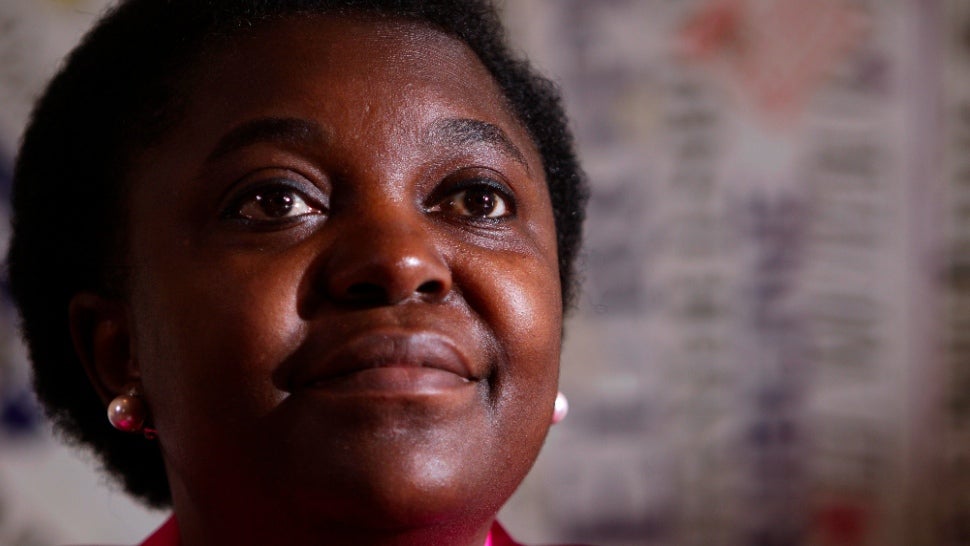
We Stand With our sister Cecile Kyenge MEP


We Stand With our sister Cecile Kyenge MEP


Cecile Kyenge is an Italian MEP. Over a prolonged period, she has been subjected to horrendous racist abuse, misogyny and threats by those who say she should not be a politician in Italy or in Europe.

Some of this abuse has come from other politicians and political parties. Northern League senate vice-president Roberto Calderoli likened her to an orangutan and said she should not be involved in Italian politics but ‘should do politics in her own country’.  There have also been calls for Cecile to be raped. She has had bananas thrown at her.

Cecile has a legal case naming ten Italian politicians because of their abuse.

The leader of Northern League, Now Deputy Prime Minister of Italy, Matteo Salvini, has compared African migrants to slaves and Northern League has ordered a process to expel undocumented Roma people from Italy.

Recently a town in Italy has denied school meals and bus services to children of migrant families, applauded by Salvini who has also blocked NGO rescue ships from Italian ports and has made a proposal that would force what he calls “little ethnic shops” to close by 9pm, targeting Asian shop owners.

In September I was part of a European wide trade union delegation visiting Palermo, Sicily to bring a message of solidarity with refugees and migrants.
We agreed a statement which initiated a European public sector union network of support. Cecile was invited to attend the first day of our programme and sent a video message. In my speech, I gave a message of solidarity with Cecile and called on participants to stand up to all forms of racism.

We visited one of several support centres for migrants, providing shelter and training.  In the same week a decree drafted by Salvini was approved outlawing the type of support centre we visited and also abolishing humanitarian protection for those not eligible for refugee status amongst other plans targeting migrants.  

As a result of the direct attacks on her and hostile policies and actions targeting migrants and refugees by Northern League, Cecile has expressed the view that they are racist. In response Matteo Salvini is now suing Cecile for defamation.

The attack on Cecile in suing her for speaking out about racism is an attack on us all, it is an attack on equality and on human rights and it is an attempt to legitimise racism and silence voices opposing it.  But it is also a direct attack on Cecile because she is a black, migrant woman.
We know first-hand that black women politicians, campaigners and activists face horrific abuse because of their race and gender and we  recognise that all have a responsibility to stand up to it. We condemn the horrific abuse and harassment of our sister Cecile and we offer our whole-hearted solidarity and support.  We thank Cecile Kyenge for her courage and determination and for speaking out for all of us.

We also encourage people to sign the petition in support  initiated by Operation Black Vote.

Zita Holbourne; Co-founder & National Chair;
On behalf of Black Activists Rising Against Cuts (BARAC) UK


Thursday, 11 October 2018

European Public Sector Unions Welcome Refugees & Migrants to Europe

Our chair Zita Holbourne spoke in her role as National Vice President of PCS Union, at a conference organised by European public sector unions in Palermo, Sicily on 28th September, you can watch her speech below and read her article on the PCS website.

Read here

The conference agreed a statement (below), which Zita contributed to and a network to welcome migrants to Europe, oppose racism & stand for properly resourced public services responding to the needs of refugees and migrants.


Zita Holbourne speaking at EU Care conference


Statement;


Proposal for a statement by FPCGIL e CCOO
European solidarity? A European network of public service workers to welcome migrants

Migration is a global, social and economic phenomenon. Migration has existed since the beginning of time, it has benefit socially and economically.  It cannot be dealt only as if it were an emergency and a security issue, as it has been the case until now, but as a structural phenomenon that involves the whole European Union and across the world and will continue to do so.
Without a common coherent, solidarity and human rights framework, the ad-hoc  security-based approach to migration at national and EU level contributes to fear and causes racism and xenophobia.
Racism is real. In the last few months in Italy and many other European countries we have witnessed a resurgence of racism, outburst of verbal and physical violence involving fascist and populist right wing groups but also ordinary people victim of fears and insecurity who are led to believe that migrants are the enemy to persecute, insult,  and reject. Those who hold racist views feeling emboldened to express them and carry out racist and xenophobic abuse and hate crimes.
The European Union cannot be conceived of as a mosaic of national borders: the Mediterranean countries form the southern frontier of the European Union and carry out activities for the EU in the field of migration processes to promote reception and integration. These are important activities that involve all public sectors: from health to local and central governement, including civil servants,  to rescue at sea, from security to social services, as well as processing of asylum claims and related services, local social services, housing, training, promoting  integration in the labour market and society.
It is fundamental to understand that workers in those services are European,  far beyond that of a single nationality; their fundamental, transnational job is to welcome and integrate migrants on behalf of the whole of Europe.
Until now, their national isolation, a lack of adequate resources and investment and the need to always work in emergency situations have created stressful working conditions and objective problems. This means that the work being done does not always meet the needs of the citizens concerned.
Indeed, the key issue of staff shortages throughout Europe, due to the economical crisis approach,  in particular in the public services dealing with the reception, care and integration of the newcomers, and the absence of a common European policy, are ignored for squalid political and electoral reasons.
To build a European sense of solidarity that can accommodate and manage migration in a qualitatively adequate manner, creating a structured and coherent system, a single one for the whole Union, it is necessary to develop common standards and tools to allow all public workers in the Union, whatever their country of origin, to work in the same direction. In particular, this must go through in changing the Dublin Rules that have burdened the countries of the southern frontier disproportionately.
We agree with EPSU calling for an EU-wide relocation system based on social, economic criteria of host countries as well as preferences and language and family connections of newcomers concerned.
It is also necessary to place at the centre of the political debate the importance of the role played by the public institutions, at national and local level, the working conditions of workers who deal with the reception of migrants and the search for solutions that allow a genuine system of integration, based on the European Charter of Fundamental Rights, ‘International standards for refugees and migrant workers’ rights (i.e. UN Conventions, as the UN 1951 Refugee Convention and Core Human Rigths Conventions of the UN, including the one on migrant workers and ILO conventions) as well as  the national constitutions.
Appropriate resources must be allocated by the Union to increase the budget for migratory issues which, on the one hand, take into account the dignity and rights of the migrants and, on the other, invest in and enhance the work of all workers dealing with migrants in  cooperatives, NGOs, public administrations that should all be working within a public sector ethos, developing a fundamental role of integration and defending the democratic values of the European Union.
Further, the public security services of the various states working at the borders must guarantee the respect of human rights of newcomers and be able to work in a safe and healthy working environment. In this sense it is necessary to respond to the needs of the security forces members. Governments must therefore provide sufficient technical and human resources, qualified training, relevant to the work done by people working in this sector; there is no doubt that if police personell and other security workers do not operate safely, they can hardly guarantee the security and safety of others.
In our view, relaunching EU safe channels for regular migration are essential to  guarantee security and legality as well as reducing so-called irregular migration, the consequences of which are often conditions of widespread illegality and the exploitation of migrants at work. Furthermore, stopping the migrant smuggling industry is a goal that the European Union is quite capable of.
Furthermore, the creation of humanitarian channels, for all those fleeing wars (conflict, poverty, persecution, climate change) and inhumane conditions, could avoid the terrible escalation of deaths at sea which in recent months has seen a terrifying increase as recently reported by UNHCR.
As a European public service delegation underlined at a meeting in Melilla on 13 and 14 June last, “It is at the basis of the values of the Union to ensure the saving of lives and the protection of asylum rights and this has to be a central element of reception policies.”
As public workers’ unions, we therefore believe that to build and support these demands it is necessary to create a European network of reception workers, and for this reason we ask our European Union Federation, EPSU, to support this call and help connect all workers in Europe who are operating in the migration area to encourage decent reception and a human-right based approach to migration. We invite other unions affiliated to EPSU representing those workers to join the network and to build a powerful voice to represent our interests towards the EU institutions (Parliament, Council and Commission).
Through this virtuous connection it will be possible, building upon the European trade union meetings in Melilla and Palermo, to exchange important shared experiences that might initiate a dialogue in Europe with the institutions.
The aim is to achieve at least adequate “EU legal minimum social standards” including through European sectoral and cross-sectoral social dialogue, to give much more emphasis on the importance of the work in public services dealing with reception and to overcome the difficulties of workers.
The European network of reception workers can also be a means to strengthen the role of public service unions internationally as key stakeholders in promoting access of migrants to basic services, a commitment stipulated in the United Nations Global Compact on Migration agreed last July, and underlined by the PSI, our global union federation.
The network should also aim to influence the European elections in May 2019, asking the progressive political forces to defend in their programmes the need for humane response of migration and quality of public services, also as an extraordinary antidote to the re-emergence of fascism, racism and xenophobia. (European citizens, even those who are frightened by the migratory phenomenon, has to understand that adequate welcoming and integration of migrants has unavoidable costs and should support to invest economical resources for this aim.) cfdt
We know well that in Europe there is a general situation of crisis and social injustice, of a failure to satisfy human rights, not the least at work, and there are those who use and exploit the fears and uncertainties of ever broader social categories, accentuating dangerous divisions between workers and citizens.
We also know well that the European Union is based on strong values so it is necessary to mobilize citizens and cultural, philosophical and militant  forces.
We know well where this road can lead and we cannot stand and watch. We all have to affirm strongly: no to racism and xenophobia, yes to human security, and yes to a quality reception through public services and public work.

Sunday, 23 April 2017

Donate to BARAC refugee aid & solidarity


Since 2015 BARAC has been coordinating aid & solidarity convoys to refugees stuck in Northen France.

There's been a break in our regular distributions every few weeks, 1 of the reasons being the need to raise more funds to take essential items.

With your support we are ready to return shortly & we will be  taking food for the refugee kitchens.


The refugee camp in Dunkirk recently burned down which means people already displaced due to poverty, climate change, war & persecution, don't even have a place of temporary refuge so your support us much needed.

Please do what you can to support us, you can make donations via Go Fund Me: https://www.gofundme.com/BARACHumanitarian

Thanks for your ongoing support.


Wednesday, 15 February 2017

Brixton Moves Against Trump - community feeder march to the Lobby of Parliament - 20th February 4.30pm


Black Activists Rising Against Cuts (BARAC) UK has organised a feeder march from Kennington Park to Parliament  on 20th February, where we will join the main lobby of Parliament to demonstrate our complete opposition to Trump being granted a State visit to the UK. 

We will be assembling in Kennington Park at 4.30pm with speeches from grassroots community campaigns, departing at 5.30pm and marching to Parliament.
We have called this march to bring together Black (BME) and migrant communities and grassroots orgs campaigning against racism and xenophobia, to oppose Trump and to mark an One Day Without Us. 


1 Day Without Us is a National Day of Action on 20th Feb 2017 to celebrate the contribution of migrants to the UK, to coincide with UN World Day of Social Justice.For 24 hours, we are inviting migrants from inside and outside the European Union, and everyone who supports them, to celebrate the contribution that migrants make.


We will have a sound system leading the march and we are grateful to Lush for sponsoring this.


We invite you to join us. Please bring your home made placards, vuvuzelas and whistles to make some noise.


https://www.facebook.com/events/269899020099334/


http://www.1daywithoutus.org/


https://www.facebook.com/events/1799412480383866/


Tuesday, 1 March 2016

Refugees in Calais and Dunkerque - urgent call for support of BARAC Humanitarian efforts


Image by Zita; Poet~Artist~Activist


Dear Friends 

Most of you will have seen the news reports of riot police using tear gas and water cannons to support the demolition of the South part of the Calais 'camp', only days after a judge gave a commitment that this would take place slowly, in stages and humanely - if there could ever be a humane way of destroying the tiny bit of shelter and belongings people had after fleeing war, persecution, poverty and climate change, followed by perilous journeys. 


Image by Care 4 Calais


We are responding to the call for urgent replacements of essential items and food supplies because people have lost everything with the demolition.  We will be returning to Calais and Dunkerque to take essential items and food next week with other Black Community and Trade Union groups. 

Image by Care 4 Calais


This impacts on thousands of people including hundreds of children. 

Image by Care 4 Calais


You can read a feature here, written by Co-Chair of BARAC UK, Zita Holbourne, for the Morning Star newspaper; http://www.morningstaronline.co.uk/a-b268-Fighting-survival-in-the-Calais-jungle#.VtddJ5yLSM8 

Read a report in The Guardian here

Please can you support our efforts to respond to this urgent situation by donating what you can and sharing our GoFundMe with your networks.   https://www.gofundme.com/BARACHumanitarian


Thank you for your support. 

BARAC UK 


Saturday, 5 December 2015

Zita Holbourne speaking at Paris Climate Change Conference; on Migration, Refugees and Climate Change

Zita Holbourne; PCS

Migration, Refugees and Climate Change

What Trade Union Response?


Watch first ten minutes of the speech here


Some people are forced to spend their entire lives as climate change refugees – people of the Solomon Islands are one example.

Extreme weather, drought and floods have led in part to the migration to European countries from the Middle East and African Continent.

If we don’t address the issues of climate and global warning there will be increased refugees heading towards Europe and other parts of the globe. Not out of choice but because they have no choice.

We have seen increasing demonisation and labelling of migrants and  refugees as benefit tourists and economic migrants coming to steal jobs and responsible for lack of housing and jobs and services by governments with no consideration for the effects of climate change. Wednesday was the UN day for the abolition of slavery but Western governments are fast to forget their colonial pasts, stripping resources from many of the countries most impacted by climate change.

For the past 3 months I have been involved in coordinating and organising aid distributions in Calais.

The so called Jungle in Calais is not a camp – it is a shanty town where people live in inhumane conditions:

30 or so toilets for around 5000 people, 2 showers, inadequate clean water,  dealing with climate issues right there as high winds and storms and heavy rains destroy tents and camping structures – made of tree branches, twigs and tarpaulin / plastic sheets,  Having no mains electricity supply mean that people are walking 2 to 3 hours to collect fire wood, making fires to cook and for heat, using candles for light in the evenings and dependent on generators and gas cylinders – this has led to frequent fires- often very bad – destroying everything they have – including documents and personal items.

Illness is spreading due to inadequate conditions, lack of hot food etc and if you look at the countries those there and in other camps across Europe they are from countries impacted by the effects of climate.

Sudanese make up the majority of people in Calais – 60% - Sudan is the largest African country – arid land and desert impact on food due to climate impact on agriculture – one of the most vulnerable countries to drought in the world.

Syria has had several droughts meaning that people have to leave farmland / rural areas to overcrowded cities.

Other groups include Ethiopians and Eritreans and Iranians who have also experienced drought. Afghanistans are the second biggest community there,  cold winters and hot summers, droughts and floods has led to loss of crops with  6.7 million Afghans impacted by  disasters and extreme weather  between 1998 and 2012.

In turn the countries most responsible for climate change are usually the ones rejecting, demonising and labelling those fleeing its effects.

The countries most responsible for historical emissions from 1850 to 2007 are in order

USA 28.8%
China 9.0
Russia 8.0
Germany
UK, Japan, France, India, Canada, Ukraine

Consumption footprints – from import /export of goods put Belgium at the top with 21.99%, followed by USA 20.2, Ireland 16.2, Finland, 15.1, Australia 13.8, UK, 11.5

Principally it is the the developed world that creates the conditions for climate change

Emissions per person

Luxemburg 1429 tons UK 1127, US 1126, Belgium 1026, Czech 1006 followed by other mainly Western countries

Migrants and refugees from the poorest countries contribute little to the causes of climate change in turn suffer disproportionately from its effects.

Higher temperatures and heavier rainfall cause drought and floods, this in turn leads to greater food and water insecurity, deepening poverty and furthering social inequality.

This leads to mass migration, displacement, conflict and millions are forced to move in order to survive.

Human instinct is to survive, human beings have been migrating since the beginning of time.  When those in the West move to other countries they are ex-pats and seen as acceptable, legitimate and respectable, whilst stigmas and hatred are attached to those from poorer countries, not moving as a choice as those in the West usually do, but because they have no choice.

Climate change also threatens rights – rights to safe adequate water and food, access to health services and housing - this has a knock on impact on child poverty and deepens race and gender discrimination and inequality.

Economic instability means opportunities and rights are reduced.

Governments, trade unions and civil society have a responsibility to address and minimise the consequences for human beings of rapid global warming.

We need equitable, just and binding agreements with developed countries acting first and financing for climate change initiatives plus
Adaptation of strategies for capacity building and research.

Social inequality created by the effects of climate change must be addressed as all other social inequality should be.

We need to look at the link to austerity and cuts because there is one.  Economic instability combined with climate change impacts on the poorest but also in times of austerity racism increases and the far right grows as we have seen across Europe.  Racism and islamophobia is deepening every day – I have experienced and witnessed this first hand as an anti racist, equality and justice campaigner. So if you are a migrant / refugee who is black, a person of colour or Muslim you face an added level of discrimination and attack.

An issue for those seeking asylum or a new home and new start in a safe place is that they are not recognised legally as refugees if they are migrating because of climate change.

1951 Geneva Convention regarding the status of refugees says you must prove fear of persecution. The 1950 European Convention on Human Rights says it is not legally possible to apply for asylum from outside the country so for all those refugees in Calais, stuck in limbo between France and the UK, the only chance they have is to risk their lives every night trying to get on trains and in trucks - many have died and even more have serious injuries and disabilities from their attempts to get to the UK.

Those fleeing climate change do not meet the legal definition of refugee.

The UNHCR, UN Refugee Agency says that camps should be the exception for those in forced displacement and they should be permitted to exercise their rights and freedoms.

In Calais there is not even a refugee camp in the proper sense - just a makeshift shanty town on asbestos infested waste land and refugees are frequently brutalised by police in an attempt to keep them boxed into this land.

The UN  says that there should be links to host communities with access to the local economy and infrastructure and service delivery to live peacefully without harassment.

Complete opposite is true in Calais – last month a high court ruled that the Calais authority must provide adequate toilet facilities and collect refuge – it is charities on the ground like L’auberge, and secour catholique together with individual voluntary groups such as my own org BARAC UK that are provided food, essentials, volunteers to sort the warehouse of donations, distribute, clean and build.

There is a gap in international law in terms of protection for climate change migrants who would need to characterise climate change as persecution. Extreme weather is harmful but does not generally meet the high threshold of persecution and they have to identify a persecutor – could be argued that developed countries, industrialised countries or the international community is the persecutor.

But they still have to meet the criteria of persecution being due to race, religion, nationality, political opinion, social group etc.

Climate change does not distinguish but does impact disproportionately – more likely to be black, people of colour, indigenous.

There is an impact on human rights and the right to life, right to adequate standard of living, food, clothing, and housing are all impacted.

For those who have got through the system but are rejected and facing removal they have to show they will be removed to a place of torture, inhumane or degrading treatment, physical or mental suffering.

Refugees in Calais are all suffering from post traumatic stress due to the war, poverty or persecution they fled in the first place and in addition the journey they endured, dangerous, exhausting and frightening – many I spoke had survived the Mediterranean on perilous terrifying journeys and have lost their families, parents – mostly young 18 to 24 and many unaccompanied minors.

 But despite this the level of severity required in article 3 is difficult to prove.


Trade Union Response

Things unions can do:

Lobby governments

Work with orgs supporting refugees and support them

Fight racism and islamphobia

Include refugees and migrants in policies, strategies and campaigns on climate change, anti austerity and anti racism/ anti fascism work.

Lobby and strengthen human rights and immigration laws – campaign against racist immigration laws such as the UK Immigration Act which seeks to create an apartheid state -

Recent landlord pilot – means not only those who are actually migrants but those perceived to be because of name or colour will be rejected for housing or exploited – I am part of the Movement of Xenophobia and one of the organisations that form MAX,  JCWI, research identified threatening, rogue landlords would exploit migrants with a disproportionate impact on women – asked to perform sexual favours and threatened with reporting to the home office if they go to the police.

In addition because landlords are expected to be immigration police and check papers, if papers are with the home office then they can’t access housing.

But not just housing, access to other services, such as driving licences, NHS, medical services, marriage license are more.  Impact on students from abroad.

So support for migrants and refugees should not stop when they get asylum, because the labelling, demonisation, discrimination and disadvantage continues.

Form trade union policy on this internationally, regionally and nationally.

Support orgorganisations like my own taking aid to refugees - BARAC and MAX campaigning on issues like the immigration act.  Most of us have little or no funding at all – another impact of austerity and rely on people power – I am proud my union does this and is affiliated to both orgs,  example:  PCS has been  sponsoring our  aid  distribution travel and transport to Calais.

Put pressure on govs to provide humane faculties for refugees and camps.

Its winter and many could die – this is about humanity. Humanity and equality should be at the heart of our union movement.

Countries like the UK who are agreeing to woefully low numbers of asylum seekers need to be lobbied and shamed.

Speak about these issues to your union members. We know that our memberships represent a cross section of society – some of them will hold racist, biased, negative views about refugees and blame and scapegoat fuelled by government and media narrative.

We have a responsibility to provide a counter narrative and educate, mobilise and organise from a position of truth  on an ongoing basis and also to form policy through our democratic structures – model motions, articles, briefings all help.

This week Indigenous Peoples released a joint statement to the UN talks.

Extract; World leaders in Paris must lead us away from the commodification of mother earth which places our lives and future on an unstable foundation based on money greed and power.

I support their position, Western countries that have benefited and profited from colonial rule, Empire, enslavement, taken from African, Asian, Latin American, Indigenous etc people now seek to bar and block the descendents of those people after they have stripped them of everything. They have a collective responsibility to act.

Climate Change will continue to displace people and so it's totally outrageous to then demonize and ostracise the victims and blame them.

Those nations that hold the most power and privilege cannot be allowed to create a climate of fear racism and displacement and must be held accountable and stand up to their responsibilities.

Trade Unions have a key role in holding them to account but also ensuring these issues are on the agenda when working and campaigning on Climate Change.

Zita Holbourne, PCS Union National Executive, BARAC National Co-Chair

4 December 2015, Le Bourget Climate Change Conference, COP21, Paris


Monday, 21 September 2015

Solidarity Visit to Calais by Black Activists Rising Against Cuts with the National of Islam; Refugees Welcome Here Demo


NOI & BARAC delegation to Calais

On 19th September 2015, a group of representatives from Black Activists Rising Against Cuts and the Nation of Islam including Colin Muhammad, senior representative of the NOI, Zita Holbourne, National Co-Chair BARAC UK and Donna Guthrie, National Women’s Officer, BARAC UK,  visited the so called ‘refugee camp’ in Calais, France to take aid, solidarity and join the International demo called by L’auberge Des Migrants; Refugees Welcome.

Participants at the demo were asked to bring gifts, in particular rain coats and personal cards / letters and to give these to those in the ‘camp’ and promote the event during the day on social networking using the hashtag #makeitpersonal.


Embracing a Sister from Ethiopia 


Young Sudanese men


When we went through French passport control our passports were taken, the window was shut on us and the official did not engage with us. We sat for what seemed an eternity watching all the cars either side of us sail through, their passports glimpsed at for a second or two. When the window eventually opened we were scrutinised one by one and asked to identify ourselves. No apology or explanation was given for the delay.


Representatives from Convoys 2 Calais, BARAC UK & Nation of Islam


On arrival our group of 8 visited a warehouse to take our donations of clothes, tents, sleeping bags, coats, toiletries and food.  There were many different groups there who had travelled from different parts of the UK doing the same. We met there with BARAC’s newly partnered organisation London2Calais part of Convoys2Calais who are taking aid to Calais twice a month.  BARAC will be part of the convoys going forward.


After sorting our donations we went to the ‘camp’ which is known as ‘The Jungle’. On our way there we stopped at a garage and shop to use the facilities there.  A French woman parked her car near to us and we greeted her and smiled. She gave us a bad look and told us in French that immigrants are a problem and not welcome there and were not allowed in the shop. At first I thought she must be the owner of the shop but she was a customer telling us that we were ‘unwelcome immigrants who were a problem and banned from the shop’. I shouted after her that she was ‘raciste’.


We spent a few hours walking around, talking with people and listening to their stories and gave out the gifts of coats, toiletries, toys, books and 200 rain ponchos donated by my union, PCS plus other items and handmade cards, shared our lunch, snacks and drinks and listened to heart breaking story after story but were uplifted by the strength, determination and hope of those there.

What was clear immediately is that the place near to the ferry terminal that people are staying is not a refugee camp, it is a shanty town created by these forced to stay there, in limbo, using the limited resources available to them.

As we drove towards the ‘camp’ we noticed the make shift shelters and tents set up in corners around the town and along the road towards it, as more and more people make the journey to France in the hope of making it to the UK and having a chance of starting their lives anew after escaping persecution, poverty, war and other horrific circumstances. 

Along the way we met with some young men from Sudan who were carrying firewood – to obtain it they have to walk for miles – firewood they told us was important as they needed it for fuel and heat.


Inside the main area that people are staying it was crowded and muddy with uneven surfaces.  At the entrance was a bank of 11 portable toilets, for the estimated 4000 people there are 30 toilets in total.  Water is obtained from pipes which are away from the toilets and there are no showers, washing or bathing facilities. People have to fill bottles with water from the piping to use.


Caked into the muddy ground was discarded clothing and rubbish as there are no facilities for placing rubbish.

I asked some people staying there if the French authorities came to clean and empty the toilets and take the rubbish away and they said no.


I asked a group of young women from Eritrea what they did to bathe and wash their hair and if they had access to feminine hygiene products. They said that if they wanted a shower, this was only available sometimes at Secours Catholique in Calais Town. To get there they had to walk for two to three hours as there was no public transport, they had none of their own and had no ability to earn money to afford a cab.  Otherwise they just had to fill up bottles with water and use that to wash and bathe.


The ‘camp’ is divided into separate country areas so different communities live together in different areas.  While we were there we observed a queue of people in front of van that had situated itself in the middle of the camp. People were coming away with random items, one had a box of cornflakes, the next a piece of clothing, the next a hat and so on.  We could see that some of the people were looking bemusedly at the odd pieces of clothing and food they had been handed and it started to explain the large number of rags and clothes embedded in the muddy ground as people were being given items that were not useful or practical as well-meaning people have donated their unwanted items without necessarily considering what is most needed and practical.  Amongst the items in the mud were ‘going out’ dresses and high heeled shoes which don’t keep out the cold and aren’t designed to walk around a muddy area.


We met people from Eritrea, Sudan, Ethiopia, Syria, Iran, Kosovo, Kuwait, Afghanistan and many other countries, as we spoke with individuals and groups of people from different African countries including Sudan, Eritrea and Ethiopia we learned that there were divisions and unequal access to essential items and unequal treatment of those from African countries in the ‘camp’.   Amongst our group were fellow country people and between us we spoke a number of languages so we were able to overcome some communication /language barriers and  took the time to hear their stories and experiences in detail.

We were told that 60% of the people there were from Sudan but that people from other communities were coming to the ‘camp’ bringing essential items and provisions for others and saying that the items were only for those from that country and they are then offered the left overs that they don’t want.  Others groups have been provided with cooking stoves and building materials and equipment in order to build small businesses to bring some money in. All around the ‘camp’ were small businesses - shops and cafes but not everyone there can afford to purchase items and have to rely on donations but they also told us that they face hostility from some of the businesses and are not welcomed.


They said that the charities on the ground were very good at distributing items to everyone but that because of language barriers, if you don’t speak the language of the people doing the distribution you don’t understand what they are calling out – i.e. tents, blankets etc. and those that do speak the language get in first and they are too late or get the left overs.  Also food distributed does not cater for cultural / traditional needs, a bag of cornmeal flour or ground rice for example would be more welcomed and last longer than a box of cornflakes and would allow them to cook traditional foods. Traditional spices and dried fish would be welcomed also and the latter is as long lasting as tinned fish that is being distributed.

I will post a fuller list of the items needed later on but some of the items they asked for were:

A cooking stove so they don’t have to walk for miles to collect fire wood to cook on.

Cooking utensils.

Sacks/ bags of cornmeal flour, ground rice and other traditional food items.

Warm clothing for the winter such as coats, woollen hats, thermal underwear and other thermal items.

Waterproof items and inflatable mattresses so they don’t have to sleep on the ground.

We met lots of women from the African continent but we had been told in the 2-3 weeks leading up to our visit not to collect women’s clothing as there were not many women in the camp and the charities sorting the clothes had enough women’s clothing but the women we spoke to did need items, especially warm clothing and practical footwear and outer clothing to equip them to cope with the wet and cold season ahead.   Also feminine hygiene items are needed as although there are some donated they don’t always have enough. They also need African hair products.


Some had tents but others just make shift structures made with branches and plastic sheeting. They said that neither kept them dry when it rained.

Some of the gifts we took were packs of cards, balls and books and these were very popular, some groups we met only had one or two people who read in English but they said they would read the books and translate them as they went along so their friends could enjoy them too.

Spending days and months there mean that people need things to occupy their time and take their minds, if even temporarily from the horrible situation they are in so our experience is that also items to pass the time and share knowledge would be appreciated, not just for children but for adults.

We also learned that bicycles and trollies were very valuable – the ‘camp’ area is so far away from the town, shops and facilities that it takes hours to walk anywhere.

There is a library in the ‘camp’ which needs books in a variety of different languages plus a school.

Many of the people we met were young, in their late teens and twenties. 

During the day there were many tears shed as we embraced and encouraged our sisters and brothers there to keep strong. It was emotionally draining to see so many people in distress and hear so many tragic stories but we have to focus on the fact that they were also stories of hope and courage.

One young woman from Eritrea I spoke to told me that her parents and child had died, another that she had not seen her daughter for ten years.


One man on crutches told me that he had broken his leg trying to get on top of a train to the UK and had spent 20 days in hospital but then released and had no other option but to go back to the camp.  
A man told me that he spoke 6 languages and if I needed advice or information about anything in the camp he was there to help. 

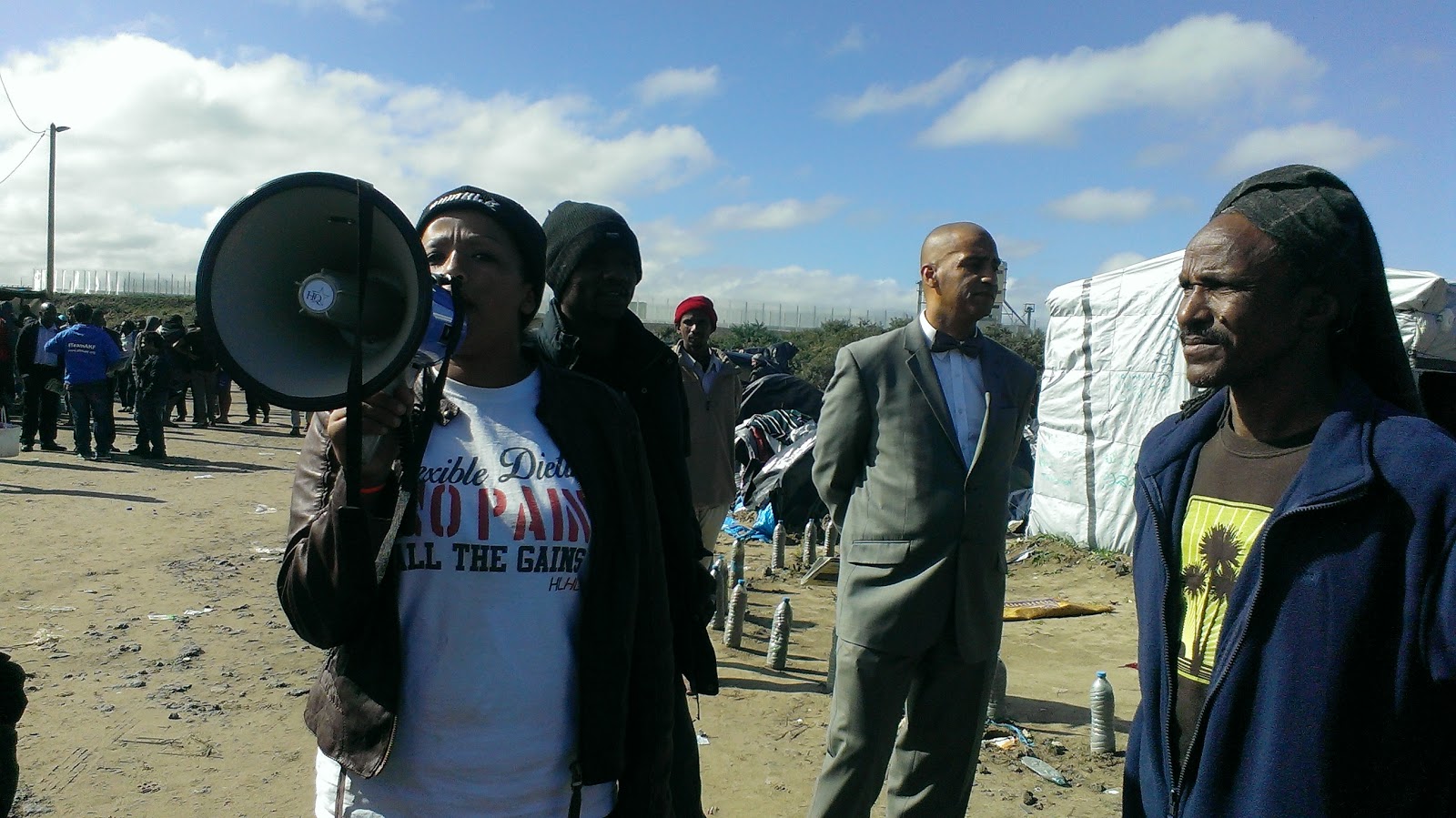
As we visited the Eritrean area a woman with a megaphone was shouting; ‘We Are Human! We Are Not Animals!’.


People embraced us as we did them and even though they have nothing they invited us to eat with them and hear their stories – for some this was the first time anyone had taken the time to listen.

Some of our group stayed at the camp to speak and eat with the Sudanese people there and some of us joined the march out of the camp to the ferry terminal – we were joined by a large number from the camp.  They were upbeat and determined but understandably and quite rightly  upset about the way they were being treated.

There were lots of people on the march from the UK but far fewer French, I met a couple of Dutch women who had come by themselves to give solidarity but from the UK there were several organised groups who also brought aid.

Our partner organisation Convoys 2 Calais organised a coach to take people to the demo which around 45 people joined.

As we approached the foot passenger entrance to the ferry terminal some men expressed to us their frustration on seeing two passengers that they could not go too.  We also saw a few men walking along the track.


At the end of the march there was a rally with speakers and again we heard the words uttered ‘we are human, not animals, freedom, freedom, freedom’.


Other activities were a giant mural that everyone could contribute to. I painted a tribute to all the sisters I had met during the day in solidarity. There was a one minute silent die –in, in memory of all those who have lost their lives on their journey to freedom.


I carried a homemade placard which had a painting I did of a boat packed with people with the caption ‘Refugees are welcome, Racism is not welcome’.  People told me that this image was very important to them as many of them had travelled there by boat across the Mediterranean Sea. One man said he had travelled on a small boat with 350 people and it had been a frightening and perilous journey.


People filled in large cards with messages to the UK government, about themselves and their story and people signed a solidarity agreement.


We were the last people left at the demo, taking the time to sit, share food and talk to people and as we were about to leave, half of our group who had gone to get our mini bus saw the woman we had seen earlier with a megaphone leading a group of 70 African women on a march out of the camp and down the road. By this time the march and the demo were well over. Police attacked them and told them that they had to return to the ‘camp’ and were not permitted to march on the road – the women argued back that they were going to asset their rights to express themselves and march. They carried signs saying ‘Where is our right?’ they chanted ‘we are human beings, where is our right? We are educated black women’.  The police threatened to set riot police on them and as they started to arrive the brothers in our group intervened and stopped the police from attacking them. 

watch the powerful video of them marching  below:


 video courtesy of Colin Muhammed, National of Islam 


The image of these strong African women marching for humanity, demanding rights and reminding the world that they matter was not captured by the media, will not be seen on the news but it is an image that makes me feel empowered.

On our return journey we were asked at Passport Control what we had been doing in Calais and if the people in our mini bus now were the same people that had been in our mini bus on the outward journey!

We need to tell the stories of those in the Calais shanty town and we need to show our humanity by supporting them, bringing solidarity and the practical things they need whilst living on the edge of survival.

But the reality is that ‘The Jungle’ should not exist, those who find themselves at the end of a long and dangerous journey after escaping persecution, poverty and war should not be left in limbo hoping that one day their lives may begin again. The truth is that the 4000 there is growing daily and will continue to grow, no fences, barriers, demonisation, scaremongering or scapegoating by politicians, the mainstream media or the far right will prevent people coming or risking their lives crossing the Mediterranean Sea to reach Europe, because for them, there is no choice, risking the dangers of getting here, is safer than staying where they were. 

Over the past few months we have heard refugees and migrants referred to us economic migrants, benefit tourist and even worse deemed to be non- humans marauding swarms of cockroaches and animals.   It is a shame and stain on the human race to treat their fellow human beings in this way.

Our role must also be to dispel the myths and lies, to lobby the government to grant asylum to those in Calais and to campaign for equality, freedom and justice for all. It’s not enough to be against injustice we must act to achieve it too.


BARAC is part of Convoys 2 Calais and we will be taking cars with food and essential items to Calais on the 2nd of October.  Information can be accessed here: www.convoys2calais.com.

We have also invited the new shadow chancellor John McDonnell to come on a future visit, which he has agreed to do. It’s important for politicians to see first-hand the conditions people in Calais and wider are forced to live.

You can donate here:
https://www.indiegogo.com/projects/london2calais-october-refugee-solidarity-convoy#/story

BARAC has signed the solidarity agreement that was launched at the demo yesterday which you can sign here:


Earlier this week at the Trades Union Congress, the following statement was passed:


It commits the TUC General Council to:

Congress commits the General Council to campaign for Government policy to:

i.             recognise that the UK must play a full role in supporting refugees and fulfil its moral and legal obligations to significantly upscale its resettlement programme
ii. participate fully in a continent-wide response to the refugee crisis
iii. make welcome tens of thousands of refugees whether from camps in the Middle East or already in Europe
iv. fully fund refugee resettlement, avoiding the exploitation of refugees and avoiding extra pressure on poorer inner-city communities, whilst ensuring that the international development budget is only used in line with OECD guidelines on official development assistance.


If you can sponsor or provide a vehicle on the convoys, can donate items or fundraise please get in touch barac.info@gmail.com.