Blog Archive

Showing posts with label race. Show all posts

Tuesday, 17 November 2020

BAME Lawyers for Justice response to Parliament's Joint Committee on Human Rights report; Black People, Racism and Human Rights

BARAC UK is a founding organisation of BAME Lawyers for Justice. 


BAME Lawyers 4 Justice Response to Parliaments Joint Committee on Human Rights Report Black people, Racism and Human Rights.


                                        Saturday, 14 November 2020


We welcome the Black People, Racism and Human Rights report published on the 11th November 2020 by Parliament’s Joint Committee on Human Rights


The Committee polled Black people in the UK to assess their views on the issues highlighted by the Black Lives Matter movement. The report focuses on four areas; health, criminal justice, nationality and immigration and democracy.


General comments. 


The report makes several damning findings and critical recommendations, all of which we consider to be important in seeking to restore trust and confidence of the Black communities in the rule of law. Access to equality and equal rights is a fundamental for all citizens.  The fact that a large proportion of our society continue to live with racism and discrimination and be treated as unequal citizens is no longer a tolerable situation.


The report points to fundamental breaches of the social contract between citizen and State which is essential for any multicultural functioning democracy. Severe violations of Black people's human rights cited in this report provide a vivid illustration of the extent to which Black British people’s human rights are disregarded and abused. These human rights abuses take place despite Government being aware of these serious issues as evidenced by

legal commentary, academic reports and government inquiries, all of which demonstrate increasing rates of racial inequality, injustice and oppression.


Whilst the report is welcome, we do not feel it goes far enough in its recommendations.


For example, the Committee fails to recommend to government that it should sign up to the general prohibition of discrimination outlined in Protocol 12, Article 1 the European Convention of Human Rights. (ECHR). Doing so would provide a strong indication of the Government's commitment to tackling the systemic and institutionalised racial discrimination. Signing this important protocol would also n strengthen domestic race equality and human rights legislation thereby improving trust and confidence of  Black  communities.


The report also fails to reference this Government's failure to acknowledge or institute a programme celebrating and contributing towards the UN's International Decade for People of African descent, (2014 -2024)


Citizenship, human rights and the rule of law.


Fundamental to a sense of shared citizenship is a confidence in the equal application of the rule of law. This report highlights the reality that the majority of Black people do not believe that they are equally valued as citizens of the United Kingdom, nor do they think that they are treated equally before the law. This is informed by strong evidence from legal practice and academic research and validates the belief that Britain remains a deeply racist society where the colour of one's skin is more important than commitment to one's country.


The generally accepted principle and basis of the social contract between Government and the British Black community has been breached by a failure of the Government to acknowledge and take action to address systemic institutional racism. The consequences of these failures are profound and erode the very basis of the idea that Britain is a modern, multicultural, meritocratic and inclusive democracy.


There is a fragile balance between democracy, protection and obedience to the State. Failure to tackle racism presents an existential threat to our civil condition. The State can no longer credibly demand Black communities' obedience to the law whilst only offering partial protection against the degrading effects of institutionalised racism, injustice and racial disadvantage.


As a result, the State not only loses its authority, representative democracy ceases to have credibility in the eyes of those who are denied access to justice and equality.


The report's finding that over 75% of black people in the UK do not believe that human rights are equally protected is a chilling statistic that bears witness to the reality that black people in the United Kingdom are third-class citizens living within a supposedly "first-class democracy".


We concur with the Committee's analysis on this issue and subsequent recommendation "This is a damning indictment of our society and must be addressed as a matter of the highest political priority. To this end, the Equality and Human Rights Commission must undertake to run an annual opinion survey…" 


We welcome the Committee's undertaking to ensure that they hear from a diverse range of witnesses in their deliberations. Black Asian and Minority ethnic Lawyers will assist the Committee by helping to facilitate input and evidence from a broad delegation from British Black communities.


We further agree that the Equality and Human Rights Commission has failed to provide adequate leadership or be effective or gain the trust of British Black communities in both tackling racial inequality and protecting black people's human rights. The recent appointment of Prof David Goodheart as an EHRC Commissioner a man whose on record of denying the existence and reality of institutional racism is a serious and deliberate provocation by Government and will simply further damage Black public confidence in the institution.


The Committee's recommendation that a new Commission of Racial Equality (CRE) and the creation of local Race Equality councils should be established enjoys our support. All available evidence demonstrates that the racial inequality gap has widened since the demise of the CRE. The morphing of the CRE into the EHRC has failed.


We also urge the Committee to recommend that Parliamentary select committees conduct race equality impact assessments in all aspects of their work, and in particular, where known racial and ethnic disparities and injustices exist.


The Commission on Race and Ethnic Disparities mentioned in the report and chaired by Dr Tony Sewell (someone else who is also on public record as having challenged the very idea of institutionalised racism) and set up by Prime Minister Boris Johnson in response to the Black Lives Matter protests, lacks credibility. We anticipate its findings will not, given the views of its chairman, enjoy the confidence of Britain's black communities and are unlikely to make any strategically relevant or meaningful findings.


We support the idea of the need for a comprehensive cross Government race equality strategy to improve the collection of data on racial equality but any cross-Government initiatives, must include representation from affected communities of different perspectives.


Health.


One of the most significant areas of fundamental human rights breaches occurs in health. The Committee’s notes that "78% of black women and 47% of black men do not believe that their health is equally protected by the NHS when compared to white people".


Death in childbirth provides a profound and tragic indicator of the realities of cumulative effects of systemic and institutionalised racism on black communities.


The Committee finds that seven in 100,000 white women, 13 in 100,000 Asian women, 23 in 100,000 mixed ethnicity women and 38 in 100,000 black women die in childbirth. The fact that there remains no significant government action regarding this issue is an appalling indictment. What it tells British black communities is that the Government views black women's lives as of no significant value.  Had white women died in similar numbers, this would be a national scandal.


The Committee’s recommendation that the NHS must set a target to end the maternal mortality gap is of critical importance and work must begin on this immediately.


We believe that the number of unnecessary deaths of black infants' is an issue that was deserving of recognition in this report. Black Caribbean and Black African infant mortality are recorded as 6.6 and 6.3 deaths per 1000 live births. These are the second and third highest ethnic minority into mortality rates behind that of Pakistani babies that die at a rate of 6.7 per hundred live the births. In contrast, white British babies have an infant mortality rate of 3.3 deaths per 1000 live births.


There can be no greater condemnation of any society that the ethnicity of its children should determine their life expectancy at the point of birth.


The Committee quotes Public Health England statistics which show the disproportionate and severe impact of Covid19 on Black communities stating that "after accounting for the effect of sex, age, deprivation and region, black people of Caribbean and other black ethnicities had between 10 and 50% higher risk of death when compared to white British people."


That Government and the National Health Service appear to have no substantive response to the increased vulnerability of Black communities to Covid-19 is further evidence of the extent of neglect.


That the Government has recently announced that any new vaccine will be applied to a list of priority groups that does not include vulnerable BAME communities must be revisited immediately based on the evidence.


Criminal justice.


The continued criminalisation of the British Black community through the process of racial profiling in policing and immigration and the effects of systemic, institutionalised racism has dramatically increased in the last 20 years. The Committee's report states of all the " issues covered in this polling this... [was the one area] where there was greatest consensus...’.


85% of Black people not being confident that they would be treated the same as a white person by the police."


This was particularly true for young Black people between 10 and 17 years old who only make up 4 per cent of the population but make up 33% of children remanded in youth custody. The Committee states "the number of children in youth custody from a Black background has increased 6% in the last year, and now accounts for 28% of the youth custody population".


The Lammy Review commissioned by David Cameron's Government in 2016 to look into racism within the criminal justice system identified profound ethnic disparities in criminal justice administration, processing and sentencing. The review made 35 key recommendations of which only six, according to the report's author David Lammy MP, have been implemented.


There is a profound crisis of confidence between British Black communities and police services in England and Wales. Public confidence surveys conducted by regional Police services including the Metropolitan Police Service have shown a catastrophic drop in the level of public confidence in policing. It is this area that we believe will act as a catalyst for wider civil disturbance if radical action is not taken to begin to address growing tensions between Black communities and the police.


Key to this, in addition to implementing the Lammy Review's recommendations, is addressing critical issues such as stop and search and the disproportionate number of black deaths in police, prison and immigration service custody. We agree with the Committee's recommendations to governments to establish an Article "right to life" Commissioner and Human Rights compliance unit to ensure investigative support to the victims' families and also ensure that critical recommendations for action are implemented to prevent future unnecessary deaths.


The recommendations from the Lammy Review and the Angiolini Review must be acted upon with urgency. We welcome the recent ruling by the Supreme Court that has determined that Inquest juries’ inquiries into sudden deaths, in seeking to determine where

responsibility lies, should not now rely on the legal principle of ‘beyond reasonable doubt but should instead rely on ‘the balance of probabilities.”


Nationality and immigration.


We believe a culture of racism is implicit in British immigration policy and practice. The Windrush scandal provides a powerful spotlight on the serial injustice faced by many Black British citizens in seeking to access their citizenship rights. But people were unlawfully detained and deported because of the Government's "hostile environment" in direct breach of their right to liberty contained in article 5 of the ECHR.


There can be no more egregious example of the extent to which Black people are subject to racial injustice. Wendy Williams, Her Majesty's Inspectorate of Constabulary Windrush Lessons Learned Review  into the scandal published in March 2020, found that "failings demonstrate an institutional ignorance and thoughtlessness towards the issue of race and the history of the Windrush  generation within the Department, which are consistent with some elements of the definition of institutionalised racism." We believe that the failings identified are entirely consistent with the definition of institutionalised racism and can be categorised as such beyond all reasonable doubt.  Williams found that the effects of the Windrush scandal was to inflict serious harm on its victims.


We agree with Windrush victims who wrote to the Guardian on 14 October stating that the Home Office’s improvement plan published on 30 September 2020 is "long on regrets but short on specifics of how and when appropriate changes will be made."


The Government's compensation scheme is failing the victims and is in total disarray, adding serious insult to grievous injury. Government’s decision to set the threshold of evidential requirements for eligibility for compensation as "beyond a reasonable doubt" is an insurmountable obstacle for the majority of Windrush victims in claiming compensation. This wilful and malicious action by British Government provides powerful insight into the extent to which British Black communities are now treated with utter contempt by our Government.


We believe the Government should be subject to a motion of censure in both the Houses of Parliament and the House of Lords condemning its failure to deliver on its promises to ensure that justice was delivered to all Windrush victims.


To restore trust and confidence within Black communities that this process is authentic and meaningful, we believe that the Government should provide a sum of £200 million to be given to an independent body. That body could then adjudicate and administer the process of compensation and reparation to Windrush victims and end the ongoing scandal that has seen victims sadly die whilst waiting for justice.


We are also concerned that polices and legislation governing deportation, family reunion, asylum and the fees structure for applying for immigration status documentation, need to be reviewed as a matter of urgency as these disproportionately affect and impact on the lives of the UK’s Black and ethnic minority population in an adverse way.


Conclusion.


Without immediate and substantive action to address the growth in racial inequality as a consequence of systemic, institutionalised racism and in the absence of Government, action to fundamentally address human rights abuses experienced by Black British people, we believe there could be  increased racial divisiveness, a breakdown in respect for and adherence for the law and government institutions.


The consequences of allowing Black British communities to continue to suffer such egregious abuses of our human rights will be civil disorder in our major inner cities and a breakdown in law and order. It is incumbent upon Government to recognise the realities of systemic institutionalised racism as it manifests itself in the fundamental abuses of the human rights of British Black communities, and to take urgent action now to avoid, what would be a national catastrophe.


We will be contacting the Joint Committee to facilitate a delegation presentation from a broad range of national Black organisation and expert individuals that can assist in contributing to this important debate in an effort to support the work of the Committee and further highlight these issues.


End.


Saturday, 17 June 2017

Grenfell Tower: Press Release by Leading Black Race Equality Orgs


PRESS RELEASE                   PRESS RELEASE                         PRESS RELEASE

EMBARGO: FRIDAY, 16TH JUNE 11.00 PM

Leading Black and minority organisations express their sorrow, shock, horror and outrage at the appalling tragedy of the wholly unnecessary loss of life and suffering at Grenfell Tower.

The organisations are deeply concerned with the failure of the Prime Minister to meet residents or victims and the position of the former Housing Minister, Gavin Barwell that is now untenable. We also call for the urgent assessment of all 4,000 tower blocks in the UK that are in a similar state of design and age as a matter of urgency.

The bravery of fire-fighters and local residents is to be applauded and stands in stark contrast to the failure of leadership in central and local Government who are more concerned with damage limitation with their lawyers.

We urgently make the following demands: -

1. An apology by the Prime Minister, whose Government bears the full responsibility of failing to act since 2013 and the failure to implement the Coroner’s report of 2013 on the Lakanal fire in the London Borough of Southwark;
2. The resignation of the Prime Minister’s Chief of Staff, Gavin Barwell, the former Minister of Housing who on 16th October 2016, said, “we have not set out any formal plans to review the buildings regulations as a whole”;
3. The immediate fire safety assessment of all 4,000 similar tower blocks in the UK;
4. An urgent corporate manslaughter investigation by the Metropolitan Police into Kensington and Chelsea Management Organisation (KCTMO); Harley Facades, Rydon and all other contractors that bear responsibility for the renovation work;
5. An Independent  Public Inquiry called by the Prime Minister, to be  chaired by a High Court Judge and address how poverty, austerity, cuts, local private property interests and unlawful discrimination affected the delivery of housing services and safety of people in  Grenfell Tower;
6. The Royal Borough of Kensington and Chelsea, one of the UK’s wealthiest, be directed to rehouse all the affected families and provide emergency disaster relief to those directly affected, including trauma counselling.
7. There be immediate special measures imposed on KCTMO who have had two enforcement notices served on them in recent years, following a fire in a 14 storey block of 78 flats they own in October 2015;
8. The implementation of the Hillsborough Rule (proposed by Andy Burnham, Mayor of Manchester), where families receive legal aid to be represented after such a tragedy in any Inquest or Public Inquiry.

This tragedy appears to be the perfect storm of poor housing, cuts in local authority spending and a complete failure by the Government to implement any of the Coroners recommendations in the tragic case of the blaze in Southwark that resulted in the loss of six lives in 2011. The history of fires in UK tower blocks is nothing new with Ronan Point in May 1968, where four died; Lakanal House, July 2009 where six people died; Shirley Towers, April 2010, where two people died, with other major fires of tower blocks, as recently as last December 2016 in Dubai.

Questions must be asked as to;

1. Why the Government failed to implement the Housing safety review recommended in 2013;
2. Why the former Housing Minister, Gavin Barwell failed again to commence the fire safety review in October 2016;
3. Why RBKC failed to heed the warnings issued by Grenfell Action Group which highlighted the dangers as recently as November 2016 in reviewing the 10.8 million refurbishments to Grenfell Tower;
4. Why the RBKC failed to coordinate the volunteers and charities in the aftermath of the tragedy and solely concentrated on re-housing given their significant resources;
5. Why a disproportionate number of children and babies were allocated the top floors together with BME tenants;
6. Why Coroners Courts do not have the power to bring expedited Judicial Review proceedings to enforce compliance with their recommendations that are not carried out by Government or local authorities and others within 12 months.
These and many other questions need to be answered. Public inquiries often take years to be set up and hear evidence during which time the truth can be obscured and disappear, whilst memories can fade.
Successive Housing Ministers from 2011 onwards failed to prioritise the needs of the poor and needy who occupy social housing. The responsibility for this tragedy lies at the heart of Government in Downing Street, due to the neglect and austerity of successive Housing Ministers.

Lee Jasper, former Race Equality adviser to the Mayor of London commented,
“Whilst we grieve for the families and those missing and injured, we urge the Metropolitan Police to urgently arrest those responsible at the Kensington and Chelsea Management Organisation (KCTMO) and the relevant contractors for possible manslaughter charges and to seize all available evidence before it is destroyed. This is not only a continuing danger to the public but a crime scene. We remember all too well that when the victims are poor, black and minority people, money is saved, corners cut and investigations fail, as with the Deptford Fire.”


      Zita Holbourne, National Chair of BARAC UK stated,

     “My thoughts are with all the tenants impacted, particularly those who have lost loved ones, those who have been injured and those who have lost their homes. The effects of austerity and cuts have impacted adversely on the poorest communities, disproportionately black and minority ethnic, with those local authorities officially declared deprived facing the deepest cuts.  There also needs to be proper investment in affordable and social housing.”

D Peter Herbert O.B.E., Chair of the SBL, and former Vice Chair of the Metropolitan Police Authority commented,
“Our thoughts and prayers are for the victims, and their families of this dreadful tragedy which is down not to terrorism but to the negligence and lack of care by those in power and authority. It is not the families, friends or relatives of Government Ministers who are forced to live in such dangerous property that is generally only found in social housing or the private rented sector. It is remarkable that the Prime Minister hides away from the public in Notting Hill, as she did during the election in a private visit. The SBL & AML will be conducting a series of meetings in the community and interviews with witnesses in the coming months to gather first hand testimony of what occurred”.

Rita  Patel commented,
“There are horrific accounts of whole families that have perished, with children separated and lost, parents and the elderly who have tragically disappeared with the old and the vulnerable the least likely to survive. We know that this type of property is simply not tolerated in the private sector, so why should it be acceptable in public housing? This Government has increasingly run down, privatised and neglected public housing over the years with the consequences visited on the poorest and most vulnerable in our society.”
Ismet Rahat stated,
“We are proud of our Islamic youth and our Mosques who have demonstrated their community support.  There has been an abandonment of safety standards for the poor who are forced to occupy the least popular highest floors of properties all over the UK. These are disproportionally families with young children, minorities and those suffering with a disability. No private sector tenant in a buy to let property would tolerate such safety standards, the lack of functioning fire alarms and safety systems. All faith communities have shown the type of commitment not shown by RBKC. No offer of housing has come from any member of the Royal family despite their abundance of accommodation in London.”

For further information please contact:
 Info@societyofblacklawyers.co.uk
 Info@blaksox.com


Viv Ahmun - Blaksox: 07985 395 166
D Peter Herbert OBE – SBL 07973 794 946
Zita Holbourne – BARAC UK 07711 861660
Ismet Rahat- AML -07852 146 056

Monday, 5 June 2017

BARAC UK: Use Your Vote for Race Equality on June 8th, Vote Labour


BARAC was established as an anti-cuts organisation, 7 years ago this month, to respond to and campaign against the disproportionate impact of cuts on black workers, communities and service users. Over the past 7 years we have campaigned not just against cuts but the deepening race discrimination and injustice faced by black communities. 


Throughout these seven years, Jeremy Corbyn, leader of the Labour Party  and John McDonnell, Shadow Chancellor have supported our campaigns, joined our rallies and events and brought out campaigns and concerns to Parliament, chairing a range of parliamentary meetings, discussions and  campaign launches,  including our Equality in Our Lifetime campaign marking the 50th anniversary of the march on Washington, Jobs and Justice, Olympic Fair Play and our 2025 vision for race equality parliamentary launch to mention just a few.


We have therefore seen first hand their commitment to race equality.


Many of the concerns that BARAC has been campaigning on, the adverse and disproportionate impact of cuts to local authorities, the NHS , public sector job cuts and pay freeze, zero hour contracts, university tuition fees, deepening poverty, insitutional racism, discrimination in the labour market and in service provision,  inadequate social housing, disproportionate stop and search are issues that Jeremy, John and the Labour Party say they will address if elected.


You can read here a statement from Jeremy Corbyn, responding to a race equality manifesto published by 20 race equality orgs including BARAC UK here: https://www.raceequality2017.org.uk/jeremy-corbyn/


If you haven't already, we would encourage you to read the Labour Party manifesto here:


http://www.labour.org.uk/page/-/Images/manifesto-2017/LabourManifestoEASYREAD.pdf


For an alternative to reading, here's a spoken word video setting out reasons to vote  and to vote Labour, If All the People Voted for the Many Not The Few:


We've also produced some Vote Labour BARAC stickers.


Inline image 1


Every vote counts on the day and failure to vote / low turnout can assign us to another 4 years of misery, more cuts, deeper racism and injustice and poverty so please speak with family, friends and networks to encourage them to use their vote on June 8th.


 "If you elect me as your Prime Minister I promise you our Government will tear down the barriers that restrict fair access to jobs, housing, homes and health care.
Under a Labour Government those hard fought race equality rights and institutions that have been weakened and undermined in the last eight years will be strengthened." Jeremy Corbyn.


Thursday, 13 April 2017

Follow Up Letter to the EHRC from Race Equality Organisations


David Isaac CBE
Chair
Equality and Human Rights Commission
Fleetbank House
2-6 Salisbury Square
London EC4Y 8JX


10 April 2017


Dear David

We would like to thank you and Rebecca Hilsenrath for meeting with us on 27 March and for listening to our concerns. We also appreciate that you are facing cuts to the Commission's budget and have difficult choices to make.

However, we remain concerned about the declining numbers of BAME staff and the recent redundancies at the EHRC. Since you did not offer any workable solutions for addressing our concerns, we would propose that the following steps be taken:

1. Reinstate the staff who have been made redundant.
2. Pause and review the restructure and redundancy selection process.
3. Appoint an independent external agency to oversee and monitor the restructuring. The agency should have proven expertise in equality.

Whilst we are willing to be partners in a wider race consultation group, we do not consider it practical or realistic for the Commission to use us for advice on your employment practices.

We repeat our advice that if your proposals have a disproportionate adverse impact on ethnic minority or disabled staff then you must revisit the process and interrogate it and, given the history, the decision-makers.

We would now like to address your concerns that we have been misled or misinformed and that we have misinterpreted the data.


Number of BAME staff made redundant.
We believe that the number of BAME staff who were made redundant is 9 and not 5 as stated in your letter. Based on the list of names which we have seen, the racial profile is as follows:
Asian: 4
Black Caribbean: 2
Mixed race: 1
Irish: 2

As three people have now accepted CILON, that leaves six ethnic minority staff who are asking to be reinstated.

We also noted from your replies to our questions that:

● 28% of BAME staff were successful at the ‘expression of interest’ stage compared with 61% of White staff.

● 16% of BAME staff, compared with 22% of white staff, were appointed into roles at the assessment stage

● 24% of our BAME staff applied for VE, and 8% accepted offers, compared to 17% of white staff applying, and 9% accepting offers.

From this data, we can only infer that the restructure process - possibly even the culture within the Commission - is racially discriminatory.  We consider your process was far from ‘fair, robust and transparent.’ Somewhere there is a barrier to the progress of BAME staff and closer scrutiny is needed of the process and the decision-makers. Hence, our very strong recommendation that you bring in an external agency to review the process

Employment support and counselling for those facing redundancy
Your letter said that all staff were offered appropriate guidance and mentoring.

We have been told that under the ‘Transition to Work’ programme, staff in Birmingham were directed to Brook St Bureau who offered them part-time jobs in warehouses and other manual/non-skilled jobs. One member of staff was offered a coaching session in Costa Coffee during the lunchtime rush.

We do not consider this was appropriate guidance and definitely not mentoring.

Mitigation
You said you did mitigate adverse impact and for one individual, a job was created. We now understand that was for a disabled member of staff and it was a reasonable adjustment that was made. It seems to us that there hasn’t been any mitigation of the adverse impact of the restructure process on BAME staff.

The referral to Brook St Bureau is further evidence of the lack of mitigation.

Senior BAME staff
We were concerned that the one BAME Director was made redundant. You have informed us the recently appointed Finance Director is from a BAME background. So there is now (still) only one person from a BAME background amongst your directors.

The equality objectives set in 2014/15 stated:

'In our workforce diversity report we identified an under-representation of ethnic minority staff at the more senior grades - Level 5 and above - and disabled staff at Levels 4 and 5.   Therefore we have set the following equality objectives for our workforce diversity to begin to address this…To increase the proportion of ethnic minority staff and disabled staff at Level 5 and above to that proportionate with the Commission’s overall workforce diversity over the next 4 years.'

Of the 64 staff now at level 5 and above, there are three who are from a BAME background. This is equivalent to 5% BAME staff in senior grades.

In the year 14/15, the figure was 11% (taken from the Commission's Workforce Diversity Report).  So in the first two years of the four year period, the Commission has managed to reduce the percentage of BAME staff in senior grades by 66%! There are still no Level 6 officers who are ethnic minorities. This is zero progress two years in.

And only 1 of the 9 staff at director level and above is an ethnic minority.  

You have explained that you have set a 50% target for shortlists for senior roles at the Commission. But, looking at the restructure table, it seems there are very few senior posts which are vacant.

With regards to Grade 6 and above, we see that since 2014/15 there has been an increase in the number of staff employed at this grade. The number of executive directors has doubled. We agree you need a Chief Legal Officer. However, we question why the Commission needs four executive directors when the total workforce will be only 160 or fewer staff.

We cannot understand how a publicly funded organisation facing budget cuts can justify creating jobs at senior levels where the salary bill will be very high, while getting rid of lower grades where BAME and disabled staff are concentrated.

We consider that it is only fair and just for the financial axe to fall equally across the grades.

Lastly, you will have now read the Supreme Court decision in Essop and others v Home Office [2017] UKSC 27, which the Commission supported. As you know, the court found that in order to succeed in an indirect discrimination claim, it is not necessary to establish the reason for the particular disadvantage to which the group is put.  It is sufficient to show a causal link between a policy, criterion or practice and the disadvantage. We consider there is a strong causal link between the decision to cut jobs in lower grades and the disadvantage experienced by BAME staff.

We ask you to heed the words of Langstaff J in the EAT, to whom the court referred, who said 'a wise employer will monitor how his policies and practices impact upon various groups and, if he finds that they do have a disparate impact, will try and see what can be modified to remove that impact while achieving the desired result.’

We trust the Commission will act boldly, as we suggested, by pausing the process and carrying out a review. Hopefully, we do not need to remind you of your own obligations to ensure the Commission is acting lawfully under the Equality Act 2010 and the public sector equality duty.

At the very least, the Commission should practise what it preaches.

Yours sincerely,


on behalf of those present at the meeting:
Zita Holbourne, BARAC UK
Constantia Pennie, Race Equality Foundation
Simon Woolley, Operation Black Vote
Race Equality Matters
Lord Herman Ouseley

With the continued support of:
Society of Black Lawyers
Blacksox
GMB Regional Equality Forum
Momentum Black Caucus
Northamptonshire Rights and Equality Council
Race Equality Matters (REM)
Wellingborough Black Consortium
Hanef Bhamjee, OBE, Secretary, Action for Southern Africa –Wales
Professor Gargi Bhattacharyya, University of East London, UCU Black Members' Standing Committee
Michael McEachrane, PhD, co-founder of IDPAD Coalition UK

Friday, 3 March 2017

Letter to EHRC from Race Equality Orgs : sacking of black staff


David Isaacs CBE
Chair
Equality and Human Rights Commission
Fleetbank House
2-6 Salisbury Square
London EC4Y 8JX 3 March 2017

Dear David Isaac,

It is with sincere regret that we feel obliged to write to you about the decline in the number of BAME staff at the Commission.

It has come to our attention that the number of BAME staff - especially visible minorities - has been declining for several years without any serious attempt to halt or reverse it.

We understand that twelve members of staff were selected for compulsory redundancy. Only two of the twelve staff are White British. Eight are from a BAME background, four are Muslim, six are disabled.  Apparently, seven of the twelve members of staff were unceremoniously ‘sacked’ by email on 9 February and told their last day would be 10 February.

We further understand there are no visible minorities amongst the senior management team. The only one Black director, who was on the team, was among the twelve workers who were made redundant.  We also understand that all but two of your remaining BAME workers are in the lowest three grades.

We consider this a matter of grave concern.

The legacy commission, the Commission for Racial Equality, possessed a unique racial justice acumen shaped by its diverse workforce at every level and in all departments. We believe if the Commission is not similarly diverse, it will lose credibility, authority and legitimacy with the public.

In our opinion, it is not satisfactory or acceptable simply to say the percentage of BAME workers reflects the percentage in the national population and especially not with main offices in London and Manchester. But this is not just about numbers: the personal experiences and viewpoints, which a diverse workforce brings, are essential if the Commission is to challenge the majority or mainstream beliefs. In a climate of rising levels of racist and Islamophobic attacks and where the majority opinion in GB seems to be anti-immigrant, anti-Black and anti-Muslim, then it is even more important that the Commission’s staff can stand firm against prevailing views. We believe this means recruiting a larger percentage than that in the national population - or even the local population where that is higher than the national figure.

Also worrying is the assessment of these workers as having no skills. Some of them were at the forefront of maintaining good relations in times of heightened racial tensions during periods of riots, the Stephen Lawrence Inquiry, and the 7/7 terror attacks. Such an assessment disregards the value of this work and their commitment to the protection and promotion of equality and human rights. (Presumably, it is a specification for working at the Commission that employees have a demonstrable understanding of discrimination and good relations?).

On a personal front, BAME workers are only too painfully aware of discrimination, racism and social injustice. You are unlikely to know the individuals, but each one will have a personal history of struggle, obstacles and racism. Yet, the Commission has effectively told them they have no skills to hold a job with it and their experiences have been dismissed with the cold despatch of an email.

We realise the Commission’s website says it plans to address any under-representation with positive action measures. This has been the Commission’s answer to the decline in the number of BAME staff since 2011/12 when the numbers started to fall dramatically. Yet, as far as we are aware, the Commission has never used positive action measures, despite its assurances to do so.

But, more importantly, we do not consider that BAME staff or job applicants lack the skills for a position at the Commission or that positive action is necessary to equip them with the necessary skills. Given the nature of the work, we think it is, quite frankly, an insult to suggest that they lack the skills. The Commission had BAME senior professionals, lawyers and directors but almost all have gone. And we believe it will be difficult to recruit BAME staff with this poor history as it doesn’t inspire confidence or respect.

Whilst we’ve welcomed your recent statements on race hate crime, we do not believe you can or should speak for our communities. And whilst you might consult us as stakeholders, we also want to see our communities represented amongst your workforce - and not just in lower grades. Until we see progress in this area, you risk losing our trust and confidence.

We take this opportunity to remind you that the Paris Principles on the status and functions of national human rights bodies require such bodies to be ‘established in accordance with a procedure which affords all necessary guarantees to ensure the pluralist representation of the social forces (of civilian society) involved in the protection and promotion of human rights.’ The Principles also require them to work with others ‘to combat racism, to protect particularly vulnerable groups (especially children, migrant workers, refugees, physically and mentally disabled persons)...’

Unfortunately, we doubt whether the Commission can meet these obligations.

We were also appalled by the brutal manner by which the Commission terminated the contracts of those made redundant on 9 February. We understand they were served with redundancy notices by email while they were on strike - a strike called by the trades unions - and told the next day would be their last day. Trade union rights are protected human rights. And the requirement for ‘pluralist representation’ includes trades union representation.

This behaviour must be unprecedented for any employer. But, we rightly expect more from the Commission than other employer. But, even if the Commission followed a lawful process, we still expect a fair and compassionate process - to do what’s morally right, not just what is lawful.

We would like to conclude by affirming our support for a strong and effective national equality and human rights body which is diverse at all levels - and not just in terms of race but other characteristics. (We are also worried by a similar decline in the number of disabled and older staff).

Sadly, we now have serious doubts about the Commission’s credibility, authority and legitimacy with our communities.

We would welcome an opportunity to discuss our concerns with you in a meeting.

Finally, please kindly note other organisations share our concerns but they were unable to sign at this time.

Yours sincerely,

Lord Herman Ouseley
Hanef Bhamjee, OBE, Secretary, Action for Southern Africa –Wales
Professor Gargi Bhattacharyya, University of East London, UCU Black Members' Standing Committee
Peter Herbert, Society of Black Lawyers
Michael McEachrane, PhD, co-founder of IDPAD Coalition UK
BARAC UK
Blacksox
GMB Regional Equality Forum
Momentum Black Caucus
Northamptonshire Rights and Equality Council
Operation Black Vote
Race Equality Matters (REM)
Wellingborough Black Consortium


Please reply to:
REM
c/o Coral Rose
8-9 Frith St
London W1D 3JB
email: raceequalitymatters@hotmail.com

Friday, 13 January 2017

2025 Vision for Race Equality; A BARAC UK Strategy Paper


NOTOCUTSRACISMAUG11
Contents


2025: A Vision for Race Equality in Britain


Authors: Mr., Lee Jasper and Ms. Zita Holbourne
National Co-Chairs Black Activists Rising Against Cuts UK (BARAC UK)
A strategy paper, setting out a strategic framework focused on the goal of achieving substantive reductions in racial disproportionality and inequality in the United Kingdom.

Background

BARAC UK was established as a social movement and a campaigning organisation, following the 2010 General Election, in direct response to the anticipated politics of austerity and the likely disproportionate impact of cuts on black workers, service users, and deprived communities. We believed, at that time, that the planned austerity cuts announced by Tory Chancellor George Osborne would inflame and exacerbate racism, poverty and social-economic injustice faced by black and migrant communities. In addition the growing rise in Islamophobic sentiment and religious hate attacks also prompted the creation of BARAC UK.
J:\BARAC\Document Pics\IMG-20170104-WA0017.jpg
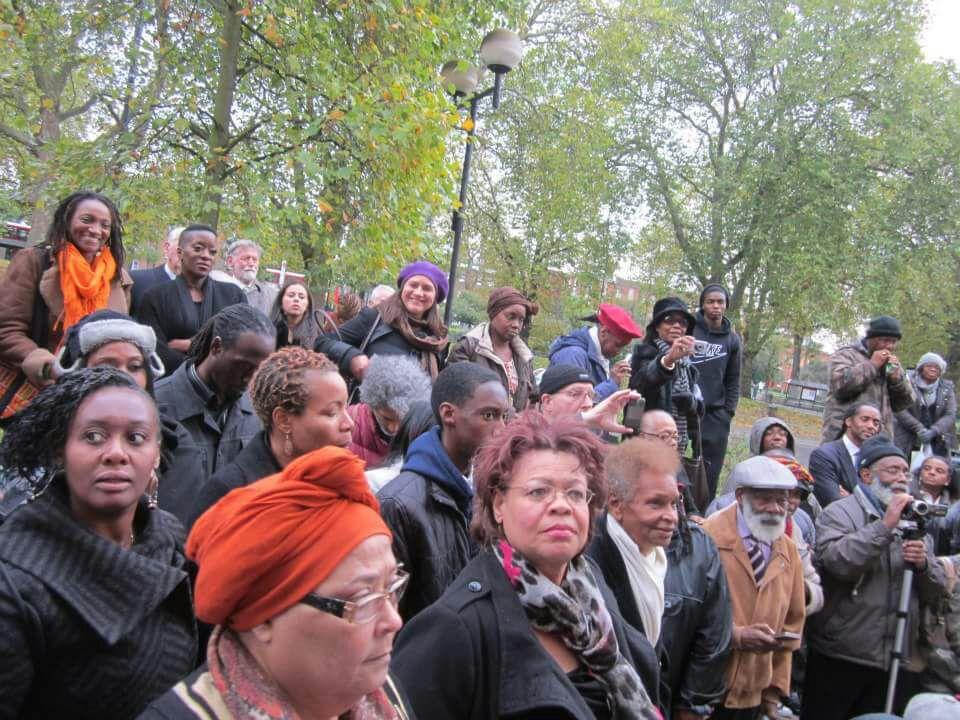
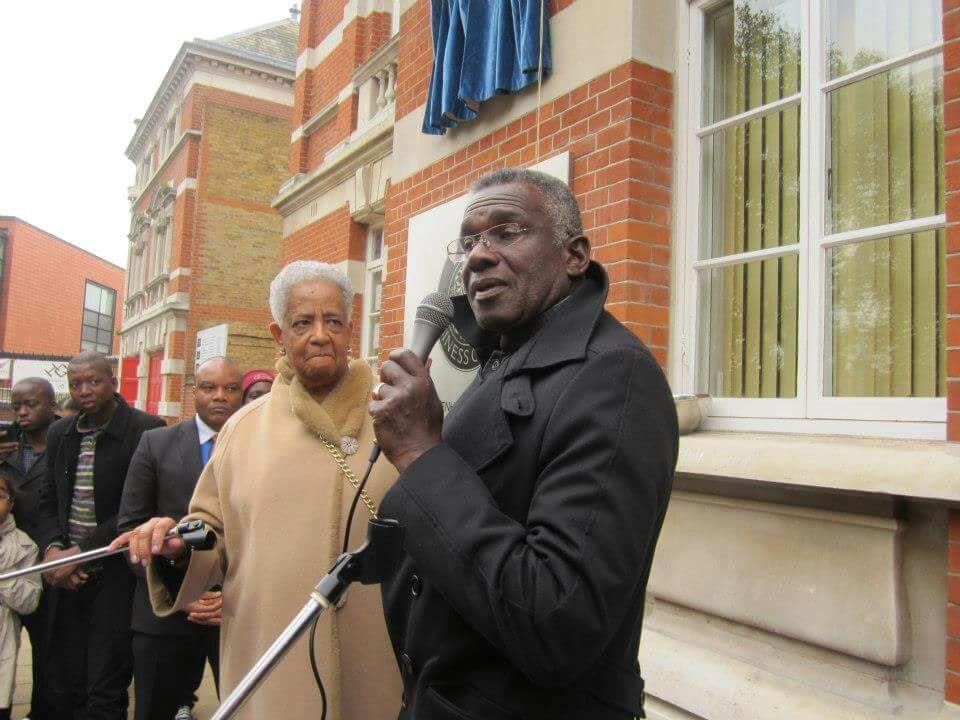
Blue Plaque Unveiling for the late Bernie Grant MP

Definition of “Black”

We use the term black in its inclusive and widest political sense, including all non-white ethnic minority communities living in the United Kingdom.

Core Belief

As recent research has now shown racial disparities on socio-economic indices expand dramatically during economic recession
http://www.byc.org.uk/wp-content/uploads/2016/07/45864623456.jpg
Stock Photo 1

Socio-Economic & Political Context

We believe that the combination of the 2008 global economic crisis, the pursuit by the Coalition Government, led by the Tories to fundamentally restructure the British labour market under the guise of austerity led economic policy, overshadowed of late, by the decision to leave the European Union, have all combined into a perfect storm hugely amplifying and aggravating racism and inequality in Britain.

We believe that all these factors combined have made the vision of a fair and just Britain, a modern society where all its citizens are equal in the eyes of the law and the state, increasingly remote. Consequently, rates of discrimination, racial socio-economic inequality, religious and racist attacks, alongside xenophobic hate crimes, continue to rise as a result.

We note with both alarm and extreme concern the publication of the Equality and Human Right Commission’s (EHRC) recent tri-annual report “Healing a divided Britain: the need for a comprehensive race equality strategy’. The report called for the introduction by Government of an urgent and comprehensive Race Equality Strategy in response.

The Chair of the EHRC, Mr David Isaacs warned in his foreword to the report that, “widespread racial inequality risks further increasing racial tensions". We agree and support the EHRC’s call for Government to adopt a "comprehensive race equality strategy" (RES).

Further we believe, as stated, in the recent United Nations Committee on the Elimination of Racism (CERD) report  assessing the state of racism in the UK, that protracted economic decline in Britain has led to the targeting of popular scapegoats, ramping up of racism for short-term political gain, led by sections of the UK’s right-wing media alongside some irresponsible British politicians.

J:\BARAC\Document Pics\IMG-20170104-WA0009.jpg
BARAC at the Annual Reparations March, Windrush Square

We believe that this represents traditional political scapegoating that is being used as a means of popular distraction; diverting attention from the real authors, and those primarily responsible for our current economic decline; the banks, the financial service sector and institutions including Parliament itself.
We believe that in the current Brexit economic and political context, we will continue to see the growth of racism and religious hatred in many towns and cities across the UK.

Britain’s ethnic communities continue to grow in size and that the palpable and continued failure of successive Governments to tackle racism and religious hatred, plus the propensity to scapegoat black communities invites the development of European style democratically elected fascism. In an increasingly racially hostile post - Brexit Britain, racism is on the rise. This we believe is best exemplified by the success of the United Kingdom Independence Party (UKIP) in pandering to racist sentiment and the growing numbers of a range of extreme right-wing parties right across the European Union.

Things Are Getting Worse

A report “A Portrait of Modern Britain” released by the UK think tank, Policy Exchange, a centre-right research institute based in London, identified significant population growth of some ethnic communities. The authors of the study looked at the UK’s five largest distinct ethnic groups including Pakistani, Black African, Black Caribbean, Bangladeshi and Indian, their findings found that some of these groups accounted for as much as 80 percent of the UK’s population growth with Black Africans being the fastest growing group and White and Black Caribbean groups the slowest.

Black communities are growing fast and we believe that we must urgently address the growth of systemic racism, race and religious hatred and inequality, if we are to avoid an American future, with major cities in the United Kingdom, following the trajectory of the many deeply troubled, major US cities and neighbourhoods such as Watts, Chicago and New York. Racism left to fester will result in huge racial tensions, endemic poverty, increased crime rates, civil uprisings, damage to property and potentially loss of life.

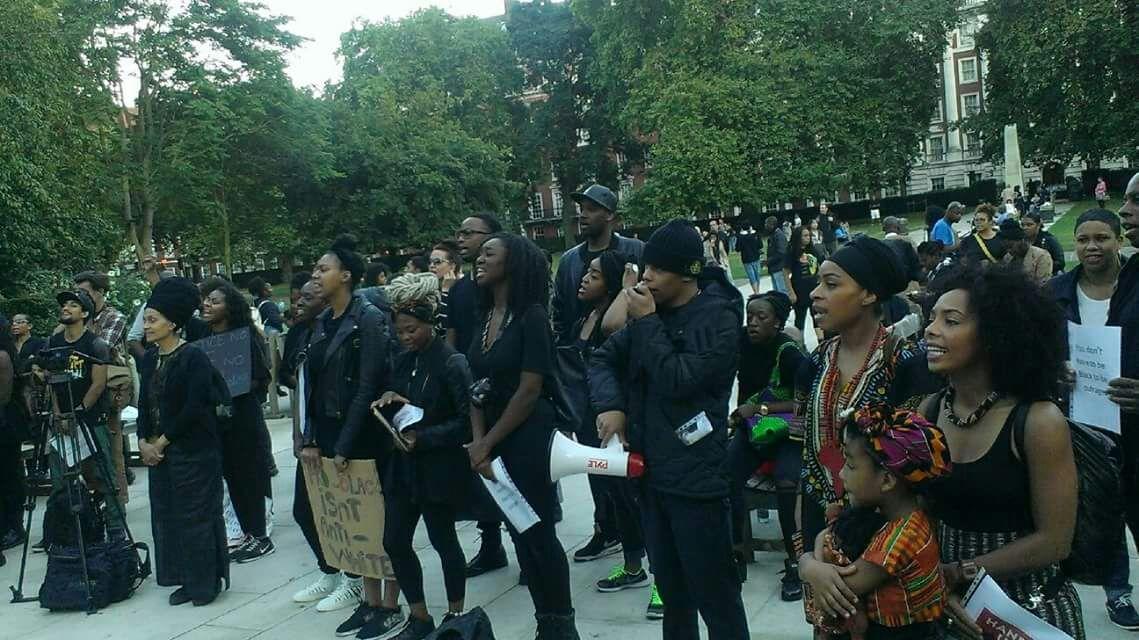
http://i.dailymail.co.uk/i/pix/2015/02/08/2577D69A00000578-2944946-Organisers_the_Muslim_Action_Forum_handed_a_petition_signed_by_1-a-79_1423426200801.jpg
Stock Photo 2

This strategy paper seeks to focus political discussions within all mainstream political parties, trade unions, civil society, faith based organisations and non-governmental organisations, on the goal of achieving substantive reductions in race inequalities and social injustice faced by black and minority ethnic communities in the United Kingdom in the next decade.

We believe the Government’s RES approach should be bespoke, and include the targeting of regional areas, in particular sectors such as employment, with industry specific job  recruitment, promotion and retention targets designed to tackle the problem where it is greatest.

Across Britain and its many and growing multicultural cities, there are huge regional, ethnic variations in the particular ethnic experience of discrimination. The extent of racial equality experienced by and between ethnic groups themselves varies in different regions, towns and cities across the country.  The extent of racial inequalities experienced by individual ethnic communities, varies for each individual ethnic group and with strong regional variations, any effective RES strategy will require local targets and differing regional approaches.

https://taboracademy.files.wordpress.com/2012/08/ta12412-e1346330909411.jpg
Stock Photo 3

Any attempt to seriously reduce substantive racial inequality across the UK will need to target discrimination amongst Britain's largest employers. In order to set the tone for creating the kind of society that can be a beacon for multi-racial nations around the world. The priority must be to first tackle job discrimination in the UK labour market and that means specifically targeted employment legislation capable of achieving a representative workforce.

It is also important that the demand for meaningful race equality by 2025 should be adopted by civil society organisations in which individual institutions and organisations not only sign up in general support, but also adopt their own race equality strategies in line with the demands on government. It is extremely important that organisations, institutions, our businesses and faith groups all lead the demand for greater effectiveness from government in tackling race equality by way of example. To achieve this ambitious goal we need civil society organisations to support this drive to end substantive race discrimination in the UK in a decade.

This is an extraordinary important aspect of this campaign.

Prolonged and sustained racial inequalities are symptoms of profound economic and social exclusion. Racism, discrimination, prejudice and bigotry all deny our human potential and negatively affect the lives of millions of Black, Asian and other non-white communities living in the UK.  

The Strategy

The achievement of this important strategy relies on the success of two important objectives;

The need to secure broad support and adoption of this 2025 strategy, across large sections of British society, including mainstream political parties, trade unions, faith communities, business and civil society groups and all anti-racist campaigning organisations.
The agreement of Government itself on the development of a realistic RES and broad policy framework developed in consultation with black and ethnic minority communities and designed to help Britain secure the achievement of genuine racial equality and improved social justice within a decade.

We are calling for a radical plan that sets out bespoke race equality targets within various sectors of British society focusing on the planned reduction of all major areas of substantive racial inequality and disproportionality by 2025.

We hope that you are convinced of the urgent need to develop a broad policy consensus and agreement across British civil society and Government around the goal of substantively reducing racial equality in Britain by 2025.

If so we need your help and support in advocating that such an approach can deliver significant progress in tackling racism. Unity of purpose around a clear set of detailed campaign objectives increases our chances of convincing Government to engage in real consultation, development and ultimately agreement of this important strategy.

What We Call For

We believe, it is now absolutely critical for the future economic, cultural and political stability and success of post Brexit Britain, that where racial and religious hatred and the wholly negative effects of institutionalised racism, continue to blight the lives of many British black and ethnic minority citizens, that such racism is both identified and tackled head on.

What is now required is a profound paradigm shift in policy aspiration and thinking. We need a much more focused, determined policy approach in achieving a fair, just and equal society. It is absolutely beyond doubt that the goal of achieving such a society is receding into the distance, becoming a distant and increasingly unachievable objective

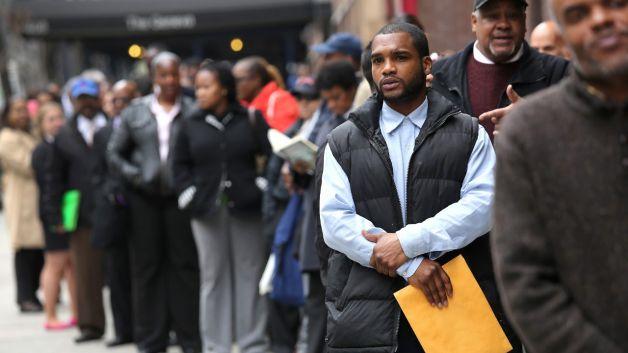
http://www.theneworleanstribune.com/main/wp-content/uploads/2014/02/BlackUnemployment.jpg
Stock Photo 4

In this post - Brexit Britain context, tackling racism becomes a matter of national interest. It is now vital that structural racism and disproportionality, demonstrated and evidenced by a plethora of in-depth academic research, illuminating profound social economic race and ethnic inequality, is substantively reduced over the next decade.
Failure to do so will, we believe, lead to growing and increased ethnic, religious and racial tensions in multi-racial Britain, where continued acute economic disadvantage and discrimination will lead to deep social unrest, and increased tensions among Britain's ethnic communities and ultimately civil disorder.

Young educated black, Muslim and minority ethnic people are becoming, quite rightly, increasingly impatient for access to social mobility and career development opportunities.  Black and particularly Muslim, young people having now achieved improved levels of educational success, will simply not tolerate being excluded because of their religion, gender or race.

We believe that a decade-long plan provides a realistic framework and timescale for real and sustainable progress to be made.
http://www.wingyip.com/portals/0/slide1980.jpg
Stock Photo 5

We believe that this requires the adoption of a clear and comprehensive, ten-year Race Equality Strategy, that outlines a series of proposals, targets and milestones, designed to achieve substantive race equality within a finite period. Black British and minority ethnic citizens must secure substantive commitments to race equality in their lifetimes.

The consequences of not doing so will condemn future generations of black and minority ethnic citizens and the UK as a whole, to a grim, angry and uncertain future where racism, racial and religious tensions, social discord and social unrest all continue to rise.

This strategy paper, presents a brief political and academic analysis of where we are today, in terms of racial and ethnic discrimination and inequality. The paper outlines some of the key findings of academic, statutory or community based research, and recommends the development of a coherent and radical policy approach to making a once in a generation, determined attempt to substantially reduce and /or eliminate racial inequality in the UK.

What the Research Tells Us

J:\BARAC\Document Pics\IMG-20170104-WA0025.jpg
Solidarity Vigil outside the USA Embassy

Racism in 2016 was significantly worse in economic terms, than the crude racism faced by migrant communities in the UK in the 1950/60s. Whilst this generation ended the horror of extreme racial violence and colour bar racism, the sad fact is, that their grandchildren today suffer lower levels of social mobility than their parents, higher levels of unemployment and homelessness, and yet are more educationally qualified than their grandparents.

These facts are confirmed in the important and significant report published in August 2016 by the Equality and Human Rights Commission in August 2016. The Commission analysed the state of race discrimination, inequality and disadvantage in the UK.

Their report cites the huge rise in hate crimes, racist abuse and violent attacks against migrants, Muslims and black people in the aftermath of the EU referendum. The report found significant growth in their rates of racial inequality and a widening of the life chances differentials between white, black and ethnic minority citizens.

These results are very worrying and fundamentally threaten Britain's social cohesion, economic prosperity and social solidarity in many multicultural cities and towns across the country.

This latest report follows a similar report published by the EHRC in 2010 entitled How Fair is Britain.  This report also came to similarly worrying conclusions. We have seen no effective policy or campaigning responses to either of these reports, from Government, trade unions, and campaigning groups or indeed from wider civil society.

The general impression among black and Muslim communities is that whilst racism remains a tokenistic "concern", it does not constitute a real political priority for politicians, business, trade unions or civil society organisations.

There is simply not enough grass roots pressure coming up from below to ensure race remains a political priority,

Since the publication of the EHRC’s earlier report in 2010, yet another black generation has grown up under the cloud of continued racial and ethnic disadvantage.

The findings of both these important reports, covering a six-year period, are an indictment of the grand political failure of successive governments of all parties, civil service administrations and wider civil society, in making real progress in ensuring that the dream of the UK being a place that affords equality to all its citizens and becomes a reality within the lifetime of the this current generation.

Today Britain is commonly described as a meritocracy, however we will argue that is no longer true, and that Britain offers it’s growing black and minority ethnic communities, third class citizenship in what is regarded by many as a modern first-class democracy.

Britain is an increasingly racial and religious discriminatory society where the current generation of black and minority ethnic citizens face more socio-economic exclusion and lack of social mobility than that faced by their parents, a most damning indictment for any society.       
       
Britain is not moving towards the goal of full race equality. That goal is moving away from us, condemning millions of black and ethnic minority citizens to continue to live under the long shadow of racism. The EHRC reports are not alone in identifying such gross and growing racial inequality.

The Runnymede Trust and independent race equality think tank published its second annual report entitled "Ethnic Inequalities In London: A Capital For All” and captured the growth racial inequality right across the capital.

J:\BARAC\Document Pics\IMG-20170104-WA0010.jpg
Rudolph Walker, Actor & Baroness Howells at Bernie Grant Blue Plaque unveiling

It’s findings were equally conclusive that "ethnic inequalities are persistent and widespread, particularly in employment and housing and identified the south London borough of Lambeth, as the most racially unequal and divided borough in London. This annual snapshot of London inequality also confirms that the gap between black and white Londoners in terms of life chances, quality of life, and access to opportunity is widening.

Runnymede’s report also found, as did the EHRC’s review as reported above, that black and ethnic minority pupils were out performing their white counterparts, and yet suffered huge discrimination within the British labour market. This successful trend within black and ethnic communities of a growing and confident, educated young black aspiring workforce, faced with systemic racism within the  labour market recruitment and the routine denial of opportunity, presents both a unique opportunity and a real and present threat.

Black and minority ethnic young people, qualified, ambitious and ready to work are finding themselves unemployed, on the streets unable to get a decent home to live in, unable to get a job commensurate with their skills and education, and living in a society where they will find themselves repeatedly racially profiled and harassed through the discriminatory application of police Stop and Search powers.

The combination of widespread racial inequality, racism and discrimination means our communities are both contained and under pressure, with no obvious social mobility routes out of this incredibly hostile environment and no real access to secure race equality and justice.

Where Do We Go From Here?

This paper set out BARAC’s key concerns and seeks to build public debate and political consensus on the urgent need for the development and adoption of a comprehensive Government and civil society RES action plan that identifies the goal of substantially reducing all areas of racial inequality and disproportionality by the year 2025.

A plan that should be developed through, timely and ethical consultations with black and minority ethnic communities, with a goal of developing a 10-year RES with annual targets and public reporting mechanisms.

We hope that the recommendations in this paper will be considered by all political parties, civil society organisations and community groups with a view to formally supporting this important initiative and sign up to a statement of intent and commitment, such as the draft that follows, by way of example;

We wish to live in a United Kingdom that provides equality of opportunity and freedom from race, religious and ethnic discrimination. Our ambition is for Britain to become a modern multicultural democracy, where all our citizens can live, thrive and prosper, without the fear of racial or religious discrimination and bigotry.

We call upon the UK Governments to ensure ethical, formal consultation and partnership with black and minority ethnic communities, organisations, faith groups and wider civil society, in the development of a radical and fully comprehensive Race Equality Strategy (RES) focused on the reduction and where possible, elimination of all substantive areas of racial inequality and discrimination in the United Kingdom by the year 2025.

We ….. commit to leading by example by initiating the development of our own public national 10-year Race Equality Strategy (RES) developed in partnership with black and minority communities. This will include targets in employment and service delivery that work towards reducing current levels of racial and ethnic under-representation and inequality.

In order to achieve this, we …. Commit to publishing a Race Equality 2025 annual report, outlining our progress each year until the target date.

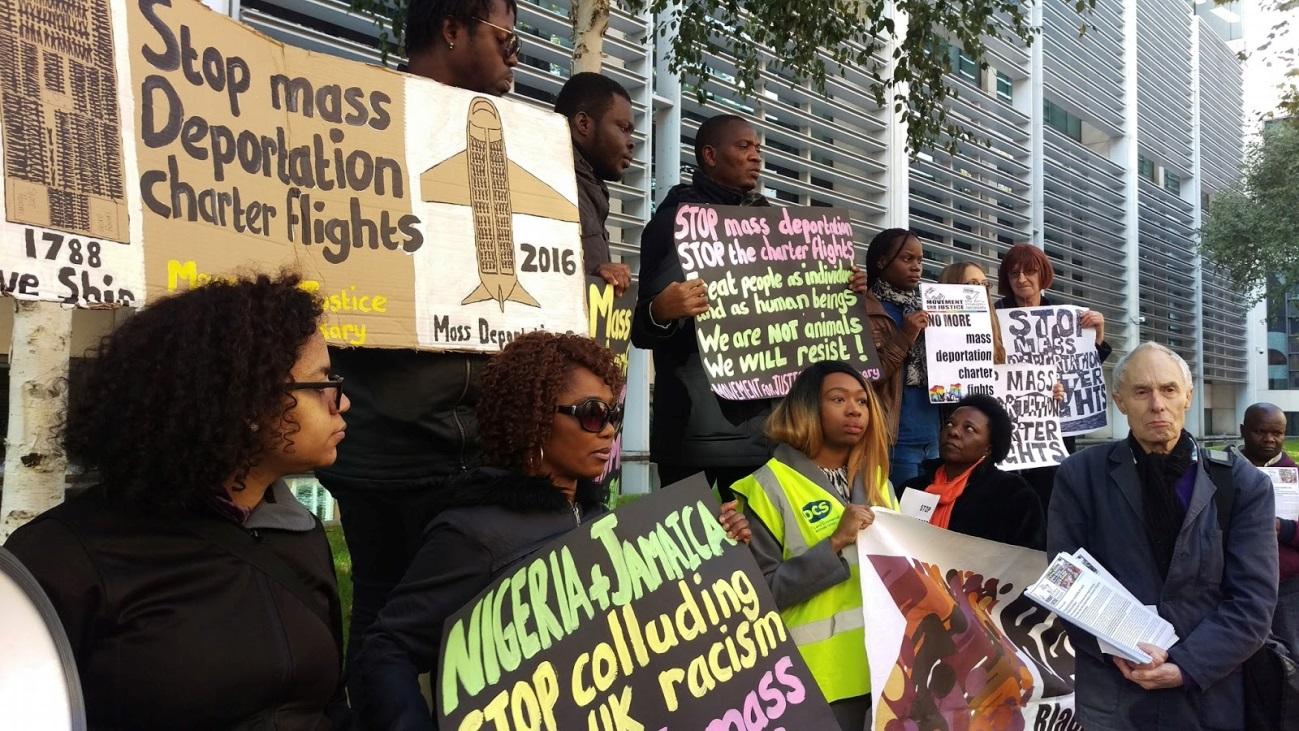
J:\BARAC\14883586_10207901912647881_6681167998027332839_o.jpg
BARAC demo against mass deportations #Jamaica50, Home Office, London

This BARAC UK Strategy Paper sets out some of the key statistics demonstrating racial disadvantage, disparity and disproportionality that affect black and minority ethnic communities within the UK. The effects of racism are nuanced and not all communities experience the same effects in terms of racism and racial inequality. Each distinct black and ethnic minority community is defined by its particular historical, political and cultural experience that result in a range of differential outcomes for many distinct British ethnic communities.

Notwithstanding this important distinction, it is nevertheless true to say that the major negative effects of a growing race and ethnic inequality and its negative impacts, have the greatest effects upon members of Britain's African, Caribbean, Pakistani and Bangladeshi communities, and of late we have seen the terrible xenophobia directed towards Eastern European and in particular Polish communities.

Any race equality strategy would need to take account of these real differentials in the lived experience of distinct ethnic communities. That requires very specific targeting of individual groups that suffer the greatest disadvantage.

This approach recognizes the reality of racial disadvantage as it impacts upon distinct ethnic groups, and provides a credible and coherent response to those in the greatest need. This moves away from a broad "black and minority ethnic" categorisation, one size fits all approach and adopts a unique range of nuanced and entirely specific ethnic targets, focusing on specific ethnic disadvantage and disproportionality.

Current Initiatives

The Prime Minister recently announced her intention to conduct a Race Equality Audit across all Government Departments and public services in an effort to reveal "difficult truths" about the extent of racism across and within the public sector in service delivery. This audit will highlight differences in outcomes for people of different racial and ethnic backgrounds in areas of health, education, childcare, welfare, employment, skills and criminal justice.

Whilst this is to be welcomed, it is vitally important that the detailed remit of such an audit, the assessment of the resources required and the timescale for its delivery and completion, are all agreed in partnership with a broad range of black and minority ethnic organisations and communities.

A simple 1980s style, race equality snapshot across government and society cannot be viewed as real and substantial progress. This has to be much more than just a bean counting exercise.

In addition the leader of the Labour Party, Jeremy Corbyn has announced a review of Labour Party policy on race equality and how to expand its recruitment of black people within the Labour Party, They have invited input from black communities and BARAC UK has already submitted this proposal for consideration. We look forward to hearing from the Labour Party on its conclusions later in 2017.
https://scontent-arn2-1.xx.fbcdn.net/v/t34.0-12/15995921_10208227643400818_103826861_n.jpg?oh=de0576b6a4b07f4e90a9985f570f8670&oe=587AA194
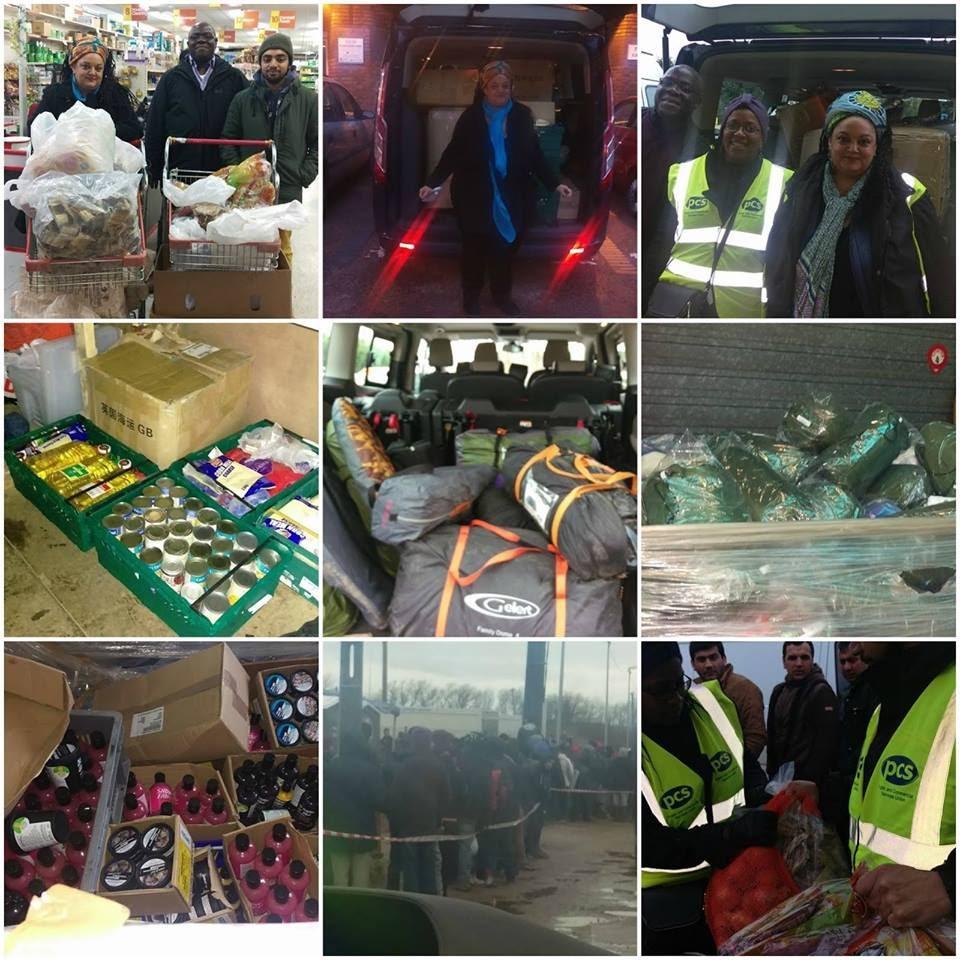
BARAC UK solidarity & aid missions to refugee camps in  France, 2016
The real test for Government will be the extent of proper public consultation and engagement with black and minority communities.

Any Government audit must enjoy the confidence of our communities and that will require genuine Government and civil society partnership in the development of the specific terms of reference that will inform the work of the audit.

However, there remains a fundamental weakness in what is currently being proposed by Government. The reality is that discrimination in wider society goes well beyond the realm of public services. If the UK private sector is to be excluded, then one of the most critical and important areas, of discrimination in the British labour market; i.e. recruitment and employment will be ignored.

Failure to include discrimination in relation to goods and services as well, will result in a keyhole examination of racism in Britain rather than a comprehensive full-scale inquiry.

We must work together to make sure that the remit for any planned audits are substantive and capable of tackling these issues in a sustainable and effective way. We must ensure that those who the Government chooses to consult are made fully accountable to Britain’s black, ethnic and migrant communities.

The ‘Fire Next Time’ Conclusion

What we believe is ultimately required, is a Judge led public inquiry on a similar  scale of the1967 United States’ National Advisory Commission on Civil Disorders also known is the Kerner Commission, established to investigate the causes of civil disorder that took place in the aftermath of the assassination of Dr Martin Luther King.

We believe that as a consequence of austerity, heightened levels of race and ethnic discrimination, disadvantage and inequality, civil disorder is not only likely, but inevitable. We believe that there is a failure by Government to recognise the driving factors that led up to the civil disturbances of 2011 and that many of the issues that gave rise to that explosion of anger and violence remain unaddressed. These issues have become substantially aggravated over the last five years.

By establishing a much broader inquiry now, the country can save itself millions of pounds in avoiding the huge costs that would be associated with yet another outbreak of national civil disorder and riot damage. We believe that for all UK citizens to flourish and for our economy to prosper we must be better able to compete in an increasingly globalised world.

J:\BARAC\Document Pics\IMG-20170104-WA0023.jpg
Roots Culture Identity Exhibition artists, TUC HQ, Congress House
Britain, as a modern multicultural democracy, must utilise all the talents available to the nation, in an effort to enhance long term social cohesion and promote economic prosperity.   

There is simply no need to wait for the ‘fire next time’,  politicians, trade unions, civil society groups and campaigning organisations need to all coalesce around  the demand for the establishment of a judge led public inquiry into racism in the UK and the production of a Government comprehensive race equality strategy.

2025 Racial Equality Campaign

BARAC UK 2025 Race Equality Campaign Draft Objectives


BARAC will work with others to develop a project/campaign framework that has the potential of attracting wide spread support whilst applying the necessary public pressure needed, to reverse the current trend of widening inequality and race discrimination.

Power concedes nothing without demand.  The importance of establishing the issue of race as a political and policy priority within both central and local Government and wider civil society requires a mass movement and a broad based campaign, capable of keeping the issue high on the media and political agendas.

Key to achieving this important objective is creating the broadest possible alliance of black and minority ethnic organisations, trade unions, community and civil society groups and faith communities.

Campaign Aims

The key aim of the campaign is to;
Challenge Government, business and wider civil society to substantially reduce persistent racial inequality and disproportionality in both employment and service delivery in addition to improving levels of ethnic representation in public life by 2025.

The 2025 Race Equality Campaign will seek to encourage UK society to adopt the objective and goal of ending significant racial inequalities within 10 years.

This will involve, clearly identifying current rates of race inequality, disproportionality and ethnic under representation through a base line Race Equality Audit (2017) and setting challenging annual public targets for substantial reductions to be achieved by 2025.  

The Campaign is designed to encourage a broad range of institutions, businesses and organisations to support the statement and sign up for the 2025 Race Equality Challenge, committing to working, within their specialist sectors, toward the elimination of and / or reduction of major areas of racial inequality, disproportionality and ethnic under-representation by 2025.

Developmental Objectives

We have five initial developmental objectives for further discussion;

  1. To publicly campaign for Government, businesses, institutions, civil society organisations, faith groups and individuals to accept and sign up to the 2025 Race Equality Campaign.

  1. To work with others in seeking to significantly challenge, reduce and where possible eradicate all major areas of racial inequality, disproportionality and ethnic under-representation in the UK by 2025.

  1. To promote, campaign and advocate for better public understanding of the reality and scale of racial inequalities, disproportionate treatment and ethnic under-representation and its effects on UK society and economy.

  1. To highlight the financial cost to the UK’s economy and prosperity of continued racial discrimination and economic exclusion and injustice.

  1. To bring public pressure to bear on governments, businesses and institutions to sign up to the campaign, reserving the right to initiate social action where there is resistance to race equality.

Signing Up to the Campaign

Political parties, businesses and civil society organisations from all sections of society, who agree with our stated aims and objectives to join with us in helping the UK to become a vibrant, multi-racial democracy by 2025, are invited to sign up.  

Sign up to 2025 Race Equality Challenge and commit to publishing  two five-year Race Equality Strategies that sets out yearly targets for the reduction or elimination of all areas of racial inequality, disproportionality in employment and service delivery and targeted improvement of ethnic representation.  

Commitment to the publication of annual Race Equality Audit progress reports identifying progress against annually agreed targets aimed at reducing rates of race inequality, disproportionality and ethnic under representation.

Help promote the campaign nationwide

Support the public launch of the campaign group that will take place on Saturday 17th of January 2017, Martin Luther King Day.

Campaign Structure

The 2025 Race Equality Campaign Group will be the national coordinating group providing input and guidance to the campaign.  We expect this group to meet no more than 4 times a year.  

This group will be made up of specialist organisations committed to tackling race equality that will then be utilised for their sector specific expertise.

BARAC UK will convene a national campaign-planning group that will help focus early negotiations with government about the remit and resources needed to undertake a comprehensive race equality audit across the UK.

If you are interested in becoming one of the initial, founding signatories’ supporters of this important campaign, contact

BARAC UK

To contact us

Twitter: @baracuk


C:\Users\Tarai\Downloads\baraclogo.jpg