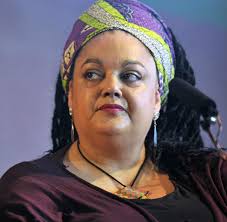
National Chair / Co-founder; Zita Holbourne
Established 2010, grassroots campaigning org against racism, injustice, adverse impact of austerity on black communities, for migrant / refugee rights. UK based but our focus is both o UK and globally.
Email: barac.info@gmail.com
Twitter: @baracuk
Instagram: @baracuk original
Facebook group: Black Activists Rising Against Cuts
page: BARAC UK
GoFundMe Humanitarian Aid crowdfunder: https://www.gofundme.com/f/BARACHumanitarian
The EHRC has produced a report this week on the level of racism in the UK - nothing in the report is a surprise because these are all things BARAC has been saying since we were founded 6 years ago but we welcome the EHRC producing the report as it backs up what we know to be true with facts and figures.
What is important now is how that report is used by government to put in place an urgent strategy to address racism which has been amplified by austerity and increased due to the Brexit campaign.
Here are some reactions from co-chairs of BARAC Lee and Zita.
A detailed analysis by Lee and you can watch Zita speaking on this week's Debate Show, Press TV.
The ruling comes after 5 Labour members crowdfunded a legal case to challenge the Labour NEC’s decision to block new members from voting.
A Labour party spokesman has suggested the party may appeal.
It is widely believed the NEC voted last month to limit who could vote in order to curb the chances of Corbyn winning another resounding victory following the 59% secured last year- the largest mandate ever won a by a political party leader.
Today’s ruling raises important questions about how Labour uses members’ money.
John McDonnell is angry about his party’s consideration of appealing the High Court ruling.
If the NEC appeals, then, as Shadow Chancellor John McDonnell has said: …”the Party will be using members money to try to stop members from voting”.
Another not so obvious question is what happens to those members who had to pay a fee of £25 to escape the 12th July freeze date?
Many of them are on benefits and/or low incomes. For them £25 is a lot of money.
Zita Holbourne, Black Activist Rising Against Cuts
Wrath & Rye asked her a few questions about the petition, the High Court ruling and austerity…
W&R: Why is reimbursement so important?
ZH: Because that money is stolen money, taken as part of the attempted coup against Jeremy Corbyn, deliberately set so high so as to deter or bar people who can least afford it signing up. I know people who are forced to go to food banks, families having to choose between paying a utility bill or putting food on the table.
£25 is more than some people have to feed their entire family for the week; it’s a shame and stain on the Labour NEC, a party started for working class people. Last year supporters paid £3. Imagine if inflation went up at this rate.
If there is no reimbursement for members it makes a mockery of democracy and the judicial system because we never should have had to pay £25 in the first place. We already pay our membership fee to Labour, we have a contract of agreement with them that includes our democratic right to vote. They have stolen from the poor.
W&R: Is it a success for those who are anti-austerity that the High Court has ruled the way it has today?
Austerity protestors, London
ZH: It is a success for all those who believe in democracy & many Labour Party members who joined Labour as members after the January cut off point who support Jeremy Corbyn will be against austerity and cuts.
I believe a substantive number of those people will be disproportionately impacted by austerity because of race, age, gender, disability.
One of the 5 in the court case was a young person who was also barred from signing up as a supporter because of age.
However this success in the court case does not address the £25 paid by members & non-members as the only way they could vote.
If the Labour NEC do not do the right, decent and democratic thing and refund the £25 paid by new members then there will still be a further legal challenge required. The actions of the Labour NEC fly in the face of democracy.
W&R: What will it say about the PLP if they push ahead for an appeal on the ruling?
Jeremy Corbyn
ZH: That they have no shame, that they are corrupt, that their real intent is to support the coup against Jeremy Corbyn because they do not want a party run by the people for the people but an elitist political party out of touch with ordinary people which is why the numbers are growing in their thousands in support of Jeremy Corbyn. We are crying out for a leader and future PM who stands with us not against us.
W&R: We don’t hear much about austerity at the moment as the news is taken up by Brexit. How is it still impacting BME communities specifically, and how will that impact continue?
Protesting austerity
There is a clear disproportionate impact of austerity on BME communities – austerity is amplifying racism and is closely linked with BREXIT. This was a toxic xenophobic racist campaign to demonise, label and scapegoat migrants as the cause of no jobs, lack of affordable housing, reduced services etc. In reality all these issues are caused by Tory cuts, not by migrants who contribute to the economy and aid economic recovery.
It will continue to impact because the government programme of cuts is continuing. If Brexit causes another recession then it will get dramatically worse. They’re impacting on us now- a whole generation is barred from jobs and housing, living in deprived conditions. The UK has one of the highest BME child poverty rates across Europe. The knock-on impact of cuts, racism, Islamophobia, injustice etc is on mental health and physical health. It creates a vicious circle.
W&R:What do you think people should do to stop austerity and create a more economically equal society?
ZH: Vote vote vote for Jeremy Corbyn. Get involved, campaign, join protests, challenge cuts and discrimination, be politically active, do, don’t just say; be part of the solution not part of the problem. Unite with like minded people.
We also need to create our own opportunities, we can’t rely on institutionally racist public bodies but we also need to hold them to account. Defend our hard gained equality rights and protections. Do not be complacent, strive for better.
BARAC National Co-Chair and BARAC Women's Officer both spoke at the Women's Assembly Against Austerity at Conway Hall on 22nd of February 2014, part of the People's Assembly.
They spoke about the disproportionate impact of cuts and austerity on black women, institutional racism, multiple discrimination, community organising and BARAC's call for a national boycott on all non-essential contact with the police until they accept they are institutionally racist.
Zita Holbourne, co-founder of BARAC speaks to Mary O'Hara for The Guardian newspaper about the impact on black workers, families and communities of the Coalition's cuts :
There are two aspects of the government's austerity
policies of which Zita Holbourne is absolutely certain – first, that
people from black and minority ethnic backgrounds are disproportionately
affected and, second, that as an issue it has been noticeably absent
from the wider public discourse around cuts. "This needs to be
understood and it needs to change," she says, pointing out that this
sector of society is "already more likely to be poor or to live in
deprived areas … and to face existing discrimination in the jobs market"
on top of being overrepresented in low-paid, vulnerable work even
before austerity was introduced. Holbourne, 47, is co-founder of the anti-austerity group Black Activists Rising Against the Cuts (Barac). Since the summer of 2010 the organisation, which she set up with Lee Jasper
(a former adviser to Ken Livingston when he was mayor of London), has
been challenging austerity policies and attempting to shed light on the
numerous negative effects on minority ethnic individuals, families and
communities. Comprised of a mixture of trade unionists, grassroots
activists and voluntary groups across the UK, Barac was born of a sense
of urgency when it became apparent how severe and enduring the
coalition's austerity project would be, Holbourne says, adding that she
"just knew" that the ramifications would be "horrific". Barac (as
the name suggests it was inspired by the election of Barack Obama and
chosen for memorability) evolved in much the same way as other
equalities-based anti-austerity organisations such as Dpac (Disabled People Against Cuts)
so that the people most affected had a voice, Holbourne says. "What we
aim to do is bring the perspective of the black community, the migrant
communities in the UK and the disproportionate impact of all of the cuts
and attacks." Calling austerity "economic vandalism", Holbourne
says the cuts "represent the literal death of hope and opportunity"
within impoverished communities. She speaks of the "interconnected"
issues of austerity, cuts, poverty, racism, injustice and
discrimination, before running through the litany of "multiple"
disadvantages. "We are particularly concerned about the double
impact [of cuts] on black women and young black people because of the
elimination of the education maintenance allowance [EMA], public sector
job cuts and [cuts to] the voluntary sector, another area where there
are a high number of black workers," she says. In addition, the fact
that so many minority ethnic women tend to take on caring
responsibilities adds even greater pressure to families as local
statutory and voluntary services, such as advice centres or children's
groups, face cuts, Holbourne says. She believes the abolition of
EMA to be one of the "most devastating" for minority ethnic families
because it offered "a lifeline" that encouraged youngsters to go on to
further education. "This was [already] a society where black boys are
more likely to go to prison than to university," she says. Pointing to government figures released last month showing that minority ethnic workers are twice as likely to be unemployed as
their white counterparts, she says the "barriers" to stable employment
are higher post-recession, as zero-hour contracts have proliferated and
public sector opportunities have disappeared. "And, if you lose your job
as a black person it's going to take a lot longer to get another
because of the discrimination that already existed in the labour
market," says Holbourne. Holbourne has been involved in the trade
union movement for more than two decades, working on "everything from
wage disputes to discrimination". She says minority ethnic workers
feature prominently in the public sector, due, in part, to "generally
better equalities policies". For this reason, she says, the cull of
public sector jobs, along with wage freezes is a major example of
disproportionate impact. A performance poet and artist, as well as
campaigner, Holbourne speaks enthusiastically about her work in the
community and in schools with children, including running poetry
workshops on subjects such as black history. "It's just as important as
all the other work," she says. She has been an activist almost her
whole life, against racism and wider social injustice. Her mother was a
primary influence, inspiring her to speak out. As a child in London,
she watched her mother face down "blatant" racism and believes this
meant she absorbed messages about prejudice and discrimination early on.
When she was six, she recalls, her mother challenged a local shopkeeper
for stocking products from South Africa and told him she would organise
a boycott of the shop. "At the time you don't think these things are
influencing you, but of course they do." As for Holbourne's
father, a white Welshman, his work for the UN meant she visited a number
of developing countries including Sri Lanka and Bangladesh while
growing up and it cultivated a broad political perspective, she says.
While on a trip to South Africa she couldn't eat in the same restaurant
as her father. This had a profound effect on her, she recalls. Such
experiences helped lay the ground for years of anti-apartheid
campaigning while at art college in London in the 1980s, and for her
later community activism and trade union work. Other major influences were events such as the Brixton riots and, later, the death of Stephen Lawrence, as well as ongoing issues such as stop and search
by the police, which adversely affects young black men. But if one
thing galvanised her more than anything, she says, it was the birth of
her son, who is now at college. "He's been the driving force throughout
my time as an activist. I did not want him and his life path to be
blocked because of racism." Holbourne says she worries for the
younger generation because of the far right's resurgence and the
presence of more "overt racism" as the government ratchets up
anti-immigrant rhetoric. But she says what people worry about most is
that the economic landscape for young people and the poor remains
difficult, with more cuts to come. Recovery, she insists, "is not being
felt" by the poorest or most excluded. Some people have questioned
why Barac focuses on one group within society when so many are affected
by cuts. Holbourne stresses that Barac and other rights groups form
alliances and she says that links forged with other groups, such as the People's Assembly and the Justice Alliance
to save legal aid, are crucial to nurturing an anti-austerity movement.
"It's all part of the same attack [from government]. It's the same for
disabled people and other groups. It's a multiple impact, multi-layered
attack," says Holbourne. Organisations such as Barac also remain
necessary, she says, because so many of those affected
disproportionately by austerity don't hold out hope that a Labour
government will reverse cuts. "Where do you go if the mainstream
political parties are not going to represent you," she asks. "It's about
people power isn't it?"
On 22nd of June, coinciding with the launch of a new campaign calling for National Windrush Day, The People's Assembly took place at Westminster Central Hall. Zita Holbourne, National Co-founder of BARAC UK spoke at the final plenary session and Hector Wesley, BARAC National Steering Group spoke in a workshop entitled 'At the Sharp End'. BARAC spoke about the disproportionate impact of austerity on black workers, service users and communities, the rise of racism and fascism and the necessity to involve black structures, networks and communities in the wider anti-cuts movement and local people's assemblies.
See below for videos of Zita and Hector Speaking and images from the day.
BARAC UK is one of the organisations involved in and speaking at the People's Assembly which is taking place this Saturday at Westminster Central Hall. Please see below for more details including a video of Co-Chair of BARAC, Zita Holbourne speaking at the Press Conference launching the Assembly, the schedule for the day, draft statement and supporting organisations.
Watch Zita Holbourne, Co-Chair of BARAC speak at the launch event here
A wide variety of tactics including strikes, mass demonstrations, direct action, legal action and online organising have already been put to good use in the anti-austerity movement. In this session, with plenty of input from the floor, we'll consider the strengths and weaknessess of these different forms of action and brainstorm ideas for how they can be joined up in the future to maximise impact.
The government aims to cut 30% of local council budgets by 2015. Big cuts are also hitting emergency services. In a few years time, councils may only provide social services, street cleaning and refuse collection, whilst privatisation, of the sort happening in Barnet, has implications for local democracy. What action can we take to defend our local services?
This session, hosted by Keep Our NHS Public, raises the importance of the move to privatise the NHS. The Coalition's 2012 Health and Scoal Care Act forces local health commissioners, the Clinical Commissioning Groups, to put services out to tender. John Lister's political analysis shows why this is happening and who gains, GP Dr David Wrigley talks about how it is affecting patients and what you can do to influence your CCG, and Gill George calls for fellow NHS workers to back resistance. Dr Wendy Savage, President of KONP, will chair the session.
The government is spending billions on war in Afghanistan while it wields the austerity axe on benefits, housing, health and education. Spending on the Trident nuclear submarine system is protected while libraries close and public sector workers see wage cuts. The wars of the past decade have had a terrible cost in human life and money, yet the government is planning to intervene again. How can we ensure money currently spent on arms and war is instead used to create equality and justice here and abroad?
Comedy and performance from some of the UK's most passionate and politically-engaged performers, including Mark Thomas, Josie Long and the Birmingham poet laureate.
The Welfare State was created 65 years ago by a Labour government swept to office by millions who had fought in a war and then wanted to fight poverty. They did not want a return to the 30s. Deep austerity is bringing back mass poverty while the rich are getting richer. How can we recapture the “spirit of 45” of social solidarity to fight for our welfare state, public services, and the NHS? Clips from Ken Loach’s new film “The Spirit of 45” will be shown.
With youth unemployment at an all-time high, privatisation hitting schools, colleges and universities and life-long leaning looking like a thing of the past, this session seeks to reflect on the consequences of the attacks on public education and to discuss how we can unite in defence of it. Speakers will address the riots of summer 2011, teachers’ strike action, university student occupations and the battle to bring back the education maintenance allowance, with plenty of time for contributions from the floor.
The proposed declaration and action plan of the People’s Assembly
The declaration below represents the beginning of a democratic process leading towards a second People’s Assembly in early 2014. This declaration represents the views of all those who initially called for the People’s Assembly. We hope it will be endorsed by the People’s Assembly on 22nd June. It will then be open to the local People’s Assembly’s, union bodies and campaign groups who support the People’s Assembly to suggest amendments, additions, or deletions. These will then all be discussed and decided upon at the recall People’s Assembly in 2014.
The plans for action are simply the most obvious rallying points for a national anti-cuts movement for the remainder of 2013. They are not intended to supersede local or sectional action by existing campaigns or trade unions. They are intended to be focus national, collective action by the whole anti-austerity movement.
The People’s Assembly, meeting in Westminster Central Hall, declares:
We face a choice that will shape our society for decades to come. It is a choice faced by ordinary people in every part of the globe.
We can defend education, health and welfare provision funded from general taxation and available to all, or we can surrender the gains that have improved the lives of millions of people for over more than 50 years.
We do not accept that government’s austerity programme is necessary. The banks and the major corporations should be taxed at a rate which can provide the necessary resources. Austerity does not work: it is a failure in its own terms resulting in neither deficit reduction nor growth. It is not just: the government takes money from the pockets of those who did not cause the crisis and rewards those who did. It is immoral: our children face a bleaker future if our services and living standards are devastated. It is undemocratic: at the last election a majority voted against the return of a Tory government. The Con-Dem coalition has delivered us into the grip of the Tories’ whose political project is the destruction of a universal welfare state.
We therefore choose to resist. We refuse to be divided against ourselves by stories of those on ‘golden pensions’, or of ‘scroungers’, or the ‘undeserving poor’. We do not blame our neighbours, whatever race or religion they maybe. We are not joining the race to the bottom. We stand with the movement of resistance across Europe.
We are clear in our minds that our stand will require us to defend the people’s right to protest, and so we support the right of unions and campaigns to organise and take such action as their members democratically decide is necessary.
We stand with all those who have made the case against the government so far: in the student movement, in the unions, in the many campaigns to defend services, the NHS, and in the Coalition of Resistance, the People’s Charter, UK Uncut, the environmental movement and the Occupy movement.
We do not seek to replace any organisations fighting cuts. All are necessary. But we do believe that a single united national movement is required to challenge more effectively a nationally led government austerity programme.
We have a plain and simple goal: to make government abandon its austerity programme. If it will not it must be replaced with one that will.
We will concentrate on action not words. We aim to provide the maximum solidarity for unions and other organisations and others taking action. We support every and all effective forms action and aim to build a united national movement of resistance.
Our case is clear. The government’s austerity programme does not work; it is unjust, immoral and undemocratic. Alternatives exist. Debts can be dropped. Privatisation can be reversed and common ownership embraced. A living wage can begin to combat poverty. Strong trade unions can help redistribute profit. The vast wealth held by corporations and the trillions held by the super rich in tax havens can be tapped. Green technology, alternatives to the arms industries, a rebuilt infrastructure including growth in manufacturing are all desperately needed. We are fighting for an alternative future for this generation and for those that come after us. Proposed actions: The People’s Assembly will support every genuine movement and action taken against any and all of the cuts. We support all current industrial actions by the unions. We encourage and will help to organise the maximum solidarity action with the PCS and teaching union members taking strike action the week after the People’s Assembly, as well as with other action by unions planned for the autumn. Peoples Assemblies against the cuts should be organised in towns and cities across our nations, bringing all those fighting the cuts together into a broad democratic alliance on a local basis. The national and the local Assemblies, in partnership with Trades Unions, Trades Councils, campaigning and community groups, can unite our movement and strengthen our campaigns. Local Assemblies will help us to organise a recalled National Assembly to review our work in the early spring of 2014. We will work together with leading experts and campaigners both here and abroad, and friendly think tanks, to develop rapidly key policies and an alternative programme for a new anti-austerity government. We will continue to welcome support from all who fight the cuts. We will call a national day of civil disobedience and direct action against austerity. We will call a day of co-ordinated local demonstrations in the early autumn.