Blog Archive

Showing posts with label black women. Show all posts

Tuesday, 16 October 2018

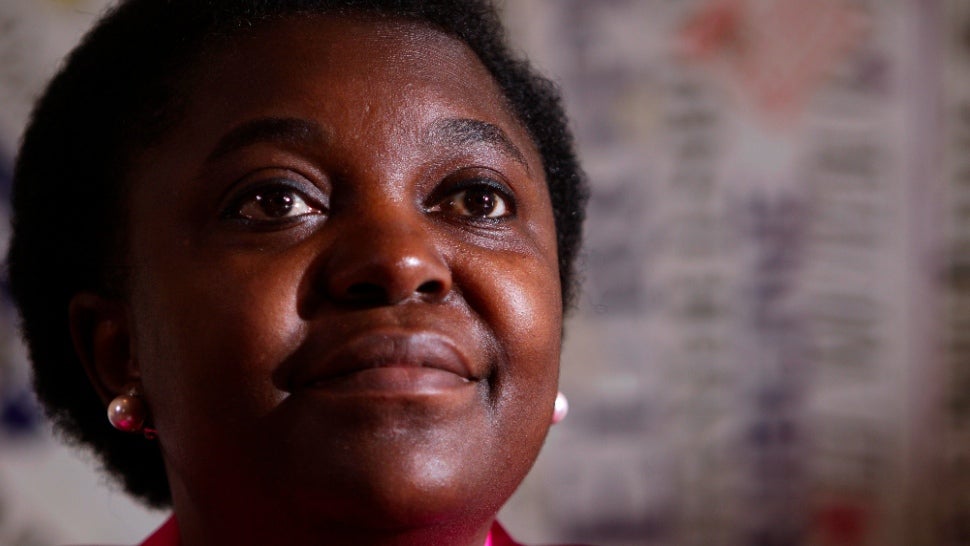
We Stand With our sister Cecile Kyenge MEP


We Stand With our sister Cecile Kyenge MEP


Cecile Kyenge is an Italian MEP. Over a prolonged period, she has been subjected to horrendous racist abuse, misogyny and threats by those who say she should not be a politician in Italy or in Europe.

Some of this abuse has come from other politicians and political parties. Northern League senate vice-president Roberto Calderoli likened her to an orangutan and said she should not be involved in Italian politics but ‘should do politics in her own country’.  There have also been calls for Cecile to be raped. She has had bananas thrown at her.

Cecile has a legal case naming ten Italian politicians because of their abuse.

The leader of Northern League, Now Deputy Prime Minister of Italy, Matteo Salvini, has compared African migrants to slaves and Northern League has ordered a process to expel undocumented Roma people from Italy.

Recently a town in Italy has denied school meals and bus services to children of migrant families, applauded by Salvini who has also blocked NGO rescue ships from Italian ports and has made a proposal that would force what he calls “little ethnic shops” to close by 9pm, targeting Asian shop owners.

In September I was part of a European wide trade union delegation visiting Palermo, Sicily to bring a message of solidarity with refugees and migrants.
We agreed a statement which initiated a European public sector union network of support. Cecile was invited to attend the first day of our programme and sent a video message. In my speech, I gave a message of solidarity with Cecile and called on participants to stand up to all forms of racism.

We visited one of several support centres for migrants, providing shelter and training.  In the same week a decree drafted by Salvini was approved outlawing the type of support centre we visited and also abolishing humanitarian protection for those not eligible for refugee status amongst other plans targeting migrants.  

As a result of the direct attacks on her and hostile policies and actions targeting migrants and refugees by Northern League, Cecile has expressed the view that they are racist. In response Matteo Salvini is now suing Cecile for defamation.

The attack on Cecile in suing her for speaking out about racism is an attack on us all, it is an attack on equality and on human rights and it is an attempt to legitimise racism and silence voices opposing it.  But it is also a direct attack on Cecile because she is a black, migrant woman.
We know first-hand that black women politicians, campaigners and activists face horrific abuse because of their race and gender and we  recognise that all have a responsibility to stand up to it. We condemn the horrific abuse and harassment of our sister Cecile and we offer our whole-hearted solidarity and support.  We thank Cecile Kyenge for her courage and determination and for speaking out for all of us.

We also encourage people to sign the petition in support  initiated by Operation Black Vote.

Zita Holbourne; Co-founder & National Chair;
On behalf of Black Activists Rising Against Cuts (BARAC) UK


Monday, 29 February 2016

Trade Union Gen Sec Guilty of Gross Sexism Against Black Woman

                     "STILL NO EQUALITY FOR WOMEN IN THE WORKPLACE" 

Former NAPO General Secretary Jonathan Ledger guilty of serious sexual harassment of black female work colleague.

Napo in their announcement on their website claim that they have apologised to the employee, but this is a deliberate lie. Judge Mark Emerton, acknowledge this was not an apology and stated that on the day of the Remedy Hearing 31/1/2014

Even though the victim was a long-standing member of Unite Union she faced a 'wall of silence', when seeking representation and therefore was forced to self-fund the case herself 

The Claimant's barrister in his submission summarised to the Tribunal that, 'the little value that is attached to the evidence of black women, even the most senior and established ones, demonstrates that racism and sexism is still inherent in the court system. 

In dismissing the majority of her claims including 'unfair dismissal', the court demonstrated its willingness to believe the words of a repeat sexual harasser who continually changed his story right up until the last minute over the consistent evidence of a female victim.' The victim is now considering options as to how she can attract support for her case against NAPO in the Court of Appeal.

BARAC provides support to victims of racism or discrimination in the workplace.  2010 saw the National Association of Probation Officers (NAPO) General Secretary, Mr. Jonathan Ledger resign his post. He had been conducting the most repugnant and disgusting campaign of gross sexual harassment of a senior black woman NAPO official.


Ledger was found guilty by a Employment Tribunal of three serious counts of sexual harassment between June and September 2010. The Tribunal also reported, that based on the evidence presented, it's view on a fourth allegation( that Ledger exposed himself and masturbated in front of the victim ) did take place as alleged on the 4 March 2010, but as the claim was poorly presented, they were unable to rule on that particular claim.

The remedy hearing was heard on 30th and 31st of January 2014 and reporting restrictions lifted.
Lee Jasper co chair of the campaigning organisation Black Activist Against The Cuts ( BARAC ) who provided support to the victim said,

" Jonathan Ledger, former General Secretary of the National Association of Probation Officers conducted a " Jimmy Saville " like reign of terror targeting vulnerable women working in NAPO.  The senior officers of NAPO despite being aware of a history of complaints simply colluded to hound and demonise a black woman colleague with a degree of evil intent that had to be seen to be believed."

He added, " Among the NAPO Executive one man consistently challenged Ledger and provided support to his victims. That man was Harry Fletcher whose resolute stand on this issue was outstanding, NAPO had a fine history of challenging racism and sexism. In the 80/90's They were the leading pioneers in challenging workplace discrimination.

This once proud Union has descended into a cesspit of racism and sexism. Rank and file members will be outraged that they have so terribly let down by a cabal of white trade unionists who have clouded with the activities of their General Secretary, a powerful white man who ruthless and brazenly assaulted women in the organisation.

The victim has reported her complaints catalogued in her work and personal diaries to the 
Metropolitan Police. The Police have been notified of similar complaints involving Jonathan Ledger 
from a number of women who worked in London Probation between 1998 and 2000. The police will support any women with similar complaints involving this individual should they come forward.

The TUC needs to conduct a thorough and transparent public inquiry into this whole matter ensuring the Trade Union movement uses these tragic events as an opportunity to revisit, assess and refresh its demand that Trade Unions uphold the highest standards in promoting equality"

A powerful white man has once again been shown to trample all over the policies, constitution rules and of this once proud Union. The current executive are all implicated and BARAC calls on ordinary NAPO members to take a vote of 'no confidence' in all senior NAPO executive members who colluded with and protected Ledger's campaign of sexual terrorism"

Ledger and Wilson (former Chair) were aided and abetted by a NAPO Officers Group, who once they had received an official victim complaint and a letter expressing serious concern from BARAC, then  conspired to sack the complainant on trumped up charges, instead of dealing with her devastating complaint against both Ledger and Wilson.

The details of her complaint revealed that Ledger had constantly and indecently propositioned her, suggesting that she and her young daughter join him in a threesome and showing her naked pictures of his partner stored on his phone and in March 2010 trapping her in his office, unzipping his trousers and masturbating in front of her. Despite her detailed grievance, 

Tim Wilson and the Officers Group that included Ledger decided that they would hear the grievance against themselves, whilst subsequently initiating disciplinary procedures. This well-known ‘management’ tactic of counter allegation on receipt of a grievance is not only unlawful; it also breaks every single rule in the trade union book.

There was a formal challenge about the process and the clear conflicts of interest. Ledger and Wilson rejected these and decided they would personally adjudicate the complaint against themselves, only supported in this despicable act by the cowardly NAPO Officers Group.

When the complainant refused to take part in this charade she was sacked. Indeed, in March 2012, a temporary female employee of NAPO submitted a grievance against Ledger for sexual harassment, including sending her emails and text messages of an explicit sexual nature, using work email and during work hours. Amongst the allegations made by this other female employee was that Ledger put his hand up her skirt and said he wanted to “f*** her until she moaned and groaned.”

Ledger confirmed under cross-examination, inappropriate behaviour towards a third female employee of NAPO (although she did not make a complaint). Ledger who does not smoke and was seen to have taken a cigarette from her mouth, put it in his mouth, lick it and put it back into her mouth.  This was a sexual act to demean a young Muslim woman, who he knew would be reluctant to complain as an administrative worker. Ledger was using NAPO headquarters, as is his personal fiefdom and relied upon his power as General Secretary to bully, intimidate and ensure all such complaints were bought off or buried.

There is one ray of light in this depressing tale. The one NAPO official who has consistently supported the complainant and relentlessly challenged the scandalous behaviour of NAPO officers is Harry Fletcher, himself a white male.
The victim can be accessed via Lee Jasper.

End.

Co Chair of BARAC

Monday, 21 September 2015

Solidarity Visit to Calais by Black Activists Rising Against Cuts with the National of Islam; Refugees Welcome Here Demo


NOI & BARAC delegation to Calais

On 19th September 2015, a group of representatives from Black Activists Rising Against Cuts and the Nation of Islam including Colin Muhammad, senior representative of the NOI, Zita Holbourne, National Co-Chair BARAC UK and Donna Guthrie, National Women’s Officer, BARAC UK,  visited the so called ‘refugee camp’ in Calais, France to take aid, solidarity and join the International demo called by L’auberge Des Migrants; Refugees Welcome.

Participants at the demo were asked to bring gifts, in particular rain coats and personal cards / letters and to give these to those in the ‘camp’ and promote the event during the day on social networking using the hashtag #makeitpersonal.


Embracing a Sister from Ethiopia 


Young Sudanese men


When we went through French passport control our passports were taken, the window was shut on us and the official did not engage with us. We sat for what seemed an eternity watching all the cars either side of us sail through, their passports glimpsed at for a second or two. When the window eventually opened we were scrutinised one by one and asked to identify ourselves. No apology or explanation was given for the delay.


Representatives from Convoys 2 Calais, BARAC UK & Nation of Islam


On arrival our group of 8 visited a warehouse to take our donations of clothes, tents, sleeping bags, coats, toiletries and food.  There were many different groups there who had travelled from different parts of the UK doing the same. We met there with BARAC’s newly partnered organisation London2Calais part of Convoys2Calais who are taking aid to Calais twice a month.  BARAC will be part of the convoys going forward.


After sorting our donations we went to the ‘camp’ which is known as ‘The Jungle’. On our way there we stopped at a garage and shop to use the facilities there.  A French woman parked her car near to us and we greeted her and smiled. She gave us a bad look and told us in French that immigrants are a problem and not welcome there and were not allowed in the shop. At first I thought she must be the owner of the shop but she was a customer telling us that we were ‘unwelcome immigrants who were a problem and banned from the shop’. I shouted after her that she was ‘raciste’.


We spent a few hours walking around, talking with people and listening to their stories and gave out the gifts of coats, toiletries, toys, books and 200 rain ponchos donated by my union, PCS plus other items and handmade cards, shared our lunch, snacks and drinks and listened to heart breaking story after story but were uplifted by the strength, determination and hope of those there.

What was clear immediately is that the place near to the ferry terminal that people are staying is not a refugee camp, it is a shanty town created by these forced to stay there, in limbo, using the limited resources available to them.

As we drove towards the ‘camp’ we noticed the make shift shelters and tents set up in corners around the town and along the road towards it, as more and more people make the journey to France in the hope of making it to the UK and having a chance of starting their lives anew after escaping persecution, poverty, war and other horrific circumstances. 

Along the way we met with some young men from Sudan who were carrying firewood – to obtain it they have to walk for miles – firewood they told us was important as they needed it for fuel and heat.


Inside the main area that people are staying it was crowded and muddy with uneven surfaces.  At the entrance was a bank of 11 portable toilets, for the estimated 4000 people there are 30 toilets in total.  Water is obtained from pipes which are away from the toilets and there are no showers, washing or bathing facilities. People have to fill bottles with water from the piping to use.


Caked into the muddy ground was discarded clothing and rubbish as there are no facilities for placing rubbish.

I asked some people staying there if the French authorities came to clean and empty the toilets and take the rubbish away and they said no.


I asked a group of young women from Eritrea what they did to bathe and wash their hair and if they had access to feminine hygiene products. They said that if they wanted a shower, this was only available sometimes at Secours Catholique in Calais Town. To get there they had to walk for two to three hours as there was no public transport, they had none of their own and had no ability to earn money to afford a cab.  Otherwise they just had to fill up bottles with water and use that to wash and bathe.


The ‘camp’ is divided into separate country areas so different communities live together in different areas.  While we were there we observed a queue of people in front of van that had situated itself in the middle of the camp. People were coming away with random items, one had a box of cornflakes, the next a piece of clothing, the next a hat and so on.  We could see that some of the people were looking bemusedly at the odd pieces of clothing and food they had been handed and it started to explain the large number of rags and clothes embedded in the muddy ground as people were being given items that were not useful or practical as well-meaning people have donated their unwanted items without necessarily considering what is most needed and practical.  Amongst the items in the mud were ‘going out’ dresses and high heeled shoes which don’t keep out the cold and aren’t designed to walk around a muddy area.


We met people from Eritrea, Sudan, Ethiopia, Syria, Iran, Kosovo, Kuwait, Afghanistan and many other countries, as we spoke with individuals and groups of people from different African countries including Sudan, Eritrea and Ethiopia we learned that there were divisions and unequal access to essential items and unequal treatment of those from African countries in the ‘camp’.   Amongst our group were fellow country people and between us we spoke a number of languages so we were able to overcome some communication /language barriers and  took the time to hear their stories and experiences in detail.

We were told that 60% of the people there were from Sudan but that people from other communities were coming to the ‘camp’ bringing essential items and provisions for others and saying that the items were only for those from that country and they are then offered the left overs that they don’t want.  Others groups have been provided with cooking stoves and building materials and equipment in order to build small businesses to bring some money in. All around the ‘camp’ were small businesses - shops and cafes but not everyone there can afford to purchase items and have to rely on donations but they also told us that they face hostility from some of the businesses and are not welcomed.


They said that the charities on the ground were very good at distributing items to everyone but that because of language barriers, if you don’t speak the language of the people doing the distribution you don’t understand what they are calling out – i.e. tents, blankets etc. and those that do speak the language get in first and they are too late or get the left overs.  Also food distributed does not cater for cultural / traditional needs, a bag of cornmeal flour or ground rice for example would be more welcomed and last longer than a box of cornflakes and would allow them to cook traditional foods. Traditional spices and dried fish would be welcomed also and the latter is as long lasting as tinned fish that is being distributed.

I will post a fuller list of the items needed later on but some of the items they asked for were:

A cooking stove so they don’t have to walk for miles to collect fire wood to cook on.

Cooking utensils.

Sacks/ bags of cornmeal flour, ground rice and other traditional food items.

Warm clothing for the winter such as coats, woollen hats, thermal underwear and other thermal items.

Waterproof items and inflatable mattresses so they don’t have to sleep on the ground.

We met lots of women from the African continent but we had been told in the 2-3 weeks leading up to our visit not to collect women’s clothing as there were not many women in the camp and the charities sorting the clothes had enough women’s clothing but the women we spoke to did need items, especially warm clothing and practical footwear and outer clothing to equip them to cope with the wet and cold season ahead.   Also feminine hygiene items are needed as although there are some donated they don’t always have enough. They also need African hair products.


Some had tents but others just make shift structures made with branches and plastic sheeting. They said that neither kept them dry when it rained.

Some of the gifts we took were packs of cards, balls and books and these were very popular, some groups we met only had one or two people who read in English but they said they would read the books and translate them as they went along so their friends could enjoy them too.

Spending days and months there mean that people need things to occupy their time and take their minds, if even temporarily from the horrible situation they are in so our experience is that also items to pass the time and share knowledge would be appreciated, not just for children but for adults.

We also learned that bicycles and trollies were very valuable – the ‘camp’ area is so far away from the town, shops and facilities that it takes hours to walk anywhere.

There is a library in the ‘camp’ which needs books in a variety of different languages plus a school.

Many of the people we met were young, in their late teens and twenties. 

During the day there were many tears shed as we embraced and encouraged our sisters and brothers there to keep strong. It was emotionally draining to see so many people in distress and hear so many tragic stories but we have to focus on the fact that they were also stories of hope and courage.

One young woman from Eritrea I spoke to told me that her parents and child had died, another that she had not seen her daughter for ten years.


One man on crutches told me that he had broken his leg trying to get on top of a train to the UK and had spent 20 days in hospital but then released and had no other option but to go back to the camp.  
A man told me that he spoke 6 languages and if I needed advice or information about anything in the camp he was there to help. 

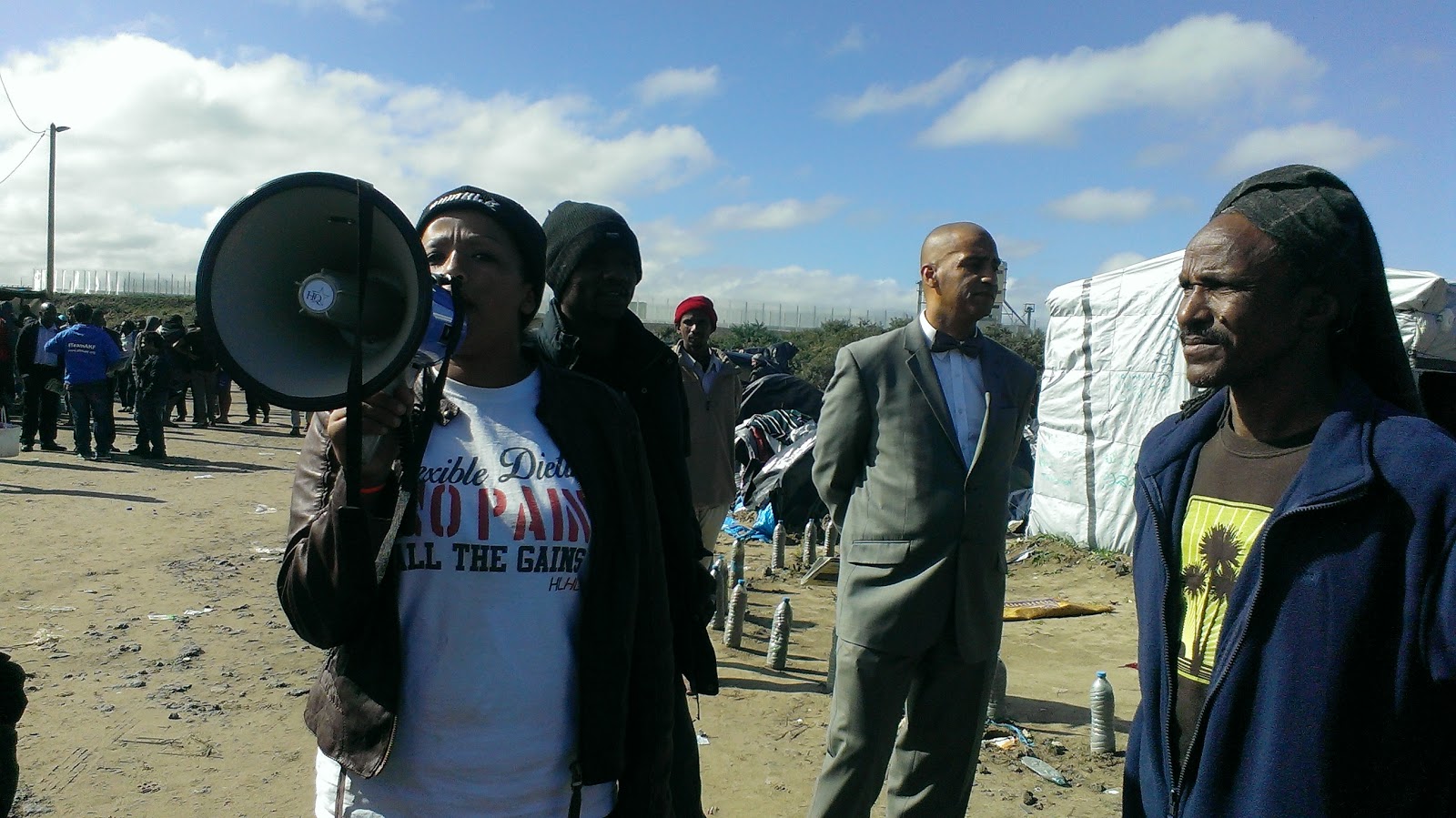
As we visited the Eritrean area a woman with a megaphone was shouting; ‘We Are Human! We Are Not Animals!’.


People embraced us as we did them and even though they have nothing they invited us to eat with them and hear their stories – for some this was the first time anyone had taken the time to listen.

Some of our group stayed at the camp to speak and eat with the Sudanese people there and some of us joined the march out of the camp to the ferry terminal – we were joined by a large number from the camp.  They were upbeat and determined but understandably and quite rightly  upset about the way they were being treated.

There were lots of people on the march from the UK but far fewer French, I met a couple of Dutch women who had come by themselves to give solidarity but from the UK there were several organised groups who also brought aid.

Our partner organisation Convoys 2 Calais organised a coach to take people to the demo which around 45 people joined.

As we approached the foot passenger entrance to the ferry terminal some men expressed to us their frustration on seeing two passengers that they could not go too.  We also saw a few men walking along the track.


At the end of the march there was a rally with speakers and again we heard the words uttered ‘we are human, not animals, freedom, freedom, freedom’.


Other activities were a giant mural that everyone could contribute to. I painted a tribute to all the sisters I had met during the day in solidarity. There was a one minute silent die –in, in memory of all those who have lost their lives on their journey to freedom.


I carried a homemade placard which had a painting I did of a boat packed with people with the caption ‘Refugees are welcome, Racism is not welcome’.  People told me that this image was very important to them as many of them had travelled there by boat across the Mediterranean Sea. One man said he had travelled on a small boat with 350 people and it had been a frightening and perilous journey.


People filled in large cards with messages to the UK government, about themselves and their story and people signed a solidarity agreement.


We were the last people left at the demo, taking the time to sit, share food and talk to people and as we were about to leave, half of our group who had gone to get our mini bus saw the woman we had seen earlier with a megaphone leading a group of 70 African women on a march out of the camp and down the road. By this time the march and the demo were well over. Police attacked them and told them that they had to return to the ‘camp’ and were not permitted to march on the road – the women argued back that they were going to asset their rights to express themselves and march. They carried signs saying ‘Where is our right?’ they chanted ‘we are human beings, where is our right? We are educated black women’.  The police threatened to set riot police on them and as they started to arrive the brothers in our group intervened and stopped the police from attacking them. 

watch the powerful video of them marching  below:


 video courtesy of Colin Muhammed, National of Islam 


The image of these strong African women marching for humanity, demanding rights and reminding the world that they matter was not captured by the media, will not be seen on the news but it is an image that makes me feel empowered.

On our return journey we were asked at Passport Control what we had been doing in Calais and if the people in our mini bus now were the same people that had been in our mini bus on the outward journey!

We need to tell the stories of those in the Calais shanty town and we need to show our humanity by supporting them, bringing solidarity and the practical things they need whilst living on the edge of survival.

But the reality is that ‘The Jungle’ should not exist, those who find themselves at the end of a long and dangerous journey after escaping persecution, poverty and war should not be left in limbo hoping that one day their lives may begin again. The truth is that the 4000 there is growing daily and will continue to grow, no fences, barriers, demonisation, scaremongering or scapegoating by politicians, the mainstream media or the far right will prevent people coming or risking their lives crossing the Mediterranean Sea to reach Europe, because for them, there is no choice, risking the dangers of getting here, is safer than staying where they were. 

Over the past few months we have heard refugees and migrants referred to us economic migrants, benefit tourist and even worse deemed to be non- humans marauding swarms of cockroaches and animals.   It is a shame and stain on the human race to treat their fellow human beings in this way.

Our role must also be to dispel the myths and lies, to lobby the government to grant asylum to those in Calais and to campaign for equality, freedom and justice for all. It’s not enough to be against injustice we must act to achieve it too.


BARAC is part of Convoys 2 Calais and we will be taking cars with food and essential items to Calais on the 2nd of October.  Information can be accessed here: www.convoys2calais.com.

We have also invited the new shadow chancellor John McDonnell to come on a future visit, which he has agreed to do. It’s important for politicians to see first-hand the conditions people in Calais and wider are forced to live.

You can donate here:
https://www.indiegogo.com/projects/london2calais-october-refugee-solidarity-convoy#/story

BARAC has signed the solidarity agreement that was launched at the demo yesterday which you can sign here:


Earlier this week at the Trades Union Congress, the following statement was passed:


It commits the TUC General Council to:

Congress commits the General Council to campaign for Government policy to:

i.             recognise that the UK must play a full role in supporting refugees and fulfil its moral and legal obligations to significantly upscale its resettlement programme
ii. participate fully in a continent-wide response to the refugee crisis
iii. make welcome tens of thousands of refugees whether from camps in the Middle East or already in Europe
iv. fully fund refugee resettlement, avoiding the exploitation of refugees and avoiding extra pressure on poorer inner-city communities, whilst ensuring that the international development budget is only used in line with OECD guidelines on official development assistance.


If you can sponsor or provide a vehicle on the convoys, can donate items or fundraise please get in touch barac.info@gmail.com.


Sunday, 29 December 2013

Co-chair Barac UK in The AfroNews list of Top 12 African & Caribbean Women of the Year in UK

Co-Chair of BARAC, Zita Holbourne, in Afro News top 12 African and Caribbean Women of the year 2013:  
http://www.theafronews.eu/community/the-afronews-list-of-top-12-african-caribbean-women-of-the-year-in-uk


Sunday, Dec 29th
Last update02:33:35 PM GMT

The AfroNews list of Top 12 African & Caribbean Women of the Year in UK

This year, for the first time, The AfroNews has compiled a list of remarkable Black women in the UK who have made a great difference in different sectors.
While of most of them are social activists leading the fight for human rights, fight against racism and other forms of discrimination, others are doing brilliant work in the charity and voluntary work sector. At the same time, others are a source of inspiration in entertainment and sports, etc.

We know that there are many other outstanding Black women in the UK who deserved being included in this list. In fact our team found it very hard to come up with this list because of hundreds of exceptional candidates we had at the beginning.

We would therefore encourage those who have not made it this time to continue doing good since we will be observing their achievements while preparing the next list of Top 12 African & Caribbean Women of the Year in UK.

“As a newspaper committed to promoting the positive image of members of the Black Community in the UK, we find it right to celebrate these women who have excelled in different fields. This is our way of encouraging and thanking them for their good work, while at the same time challenging others to follow their footsteps,” said Stephen Ogongo Ongong’a, Editor of The AfroNews.

The Top 12 African & Caribbean Women of the Year in UK

Muzvare Betty Makoni - For fighting for rights of girls and women globally

Ms. Muzvare Betty Makoni

Ms. Makoni is the founder of Girl Child Network Worldwide (GCNW), an organisation that champions the rights of the girl child globally, and supports their education.

She has dedicated her life to fighting for girls’ and women’s rights and calling for an end to harmful cultural practices.

She never relents in the fight against Female Genital Mutilation (FGM). She has of late, singled out one of the forms of FGM which is rarely talked about, labia elongation.

Her organisation has so far protected and supported more than 300,000 girls in Zimbabwe and other parts of the world.

Theodora Ibekwe-Oyebade – For supporting many upcoming actors and actresses

Ms. Theodora Ibekwe-Oyebade

Ms. Ibekwe-Oyebade is a UK based Nollywood movie producer and actress who has paved ways for many new young actors and actresses.

She is the founder of Theodora PR, a media and consultancy PR firm for Black talent in UK.

She is also the producer of the Miss Elegant international TV Show.

Ms. Ibekwe-Oyebade has supported and raised funds for various charities. She has also spearheaded many events including pageants and movie premieres.

Recently, she was made the Face of ZAFAA (Zulu African Film Academy Awards) 2013-14.

Zita Holbourne - For fighting against racial discrimination and anti-immigrant policies

Ms. Zita Holbourne

Ms. Holbourne is a poet, artist, activist, and trade unionist who for years, has been leading the fight against racial discrimination and anti-immigrant policies.

She is also the National Co-Chair of Black Activists Rising Against Cuts (BARAC) UK, an organisation that highlights the disproportionate and adverse impact of reduction in public spending on the Black Community. BARAC also provides a campaigning platform to fight against cuts.

The organisation has been calling for an independent judicial inquiry into the deaths in police custody in the UK, and supporting the families of the victims.

Tatiana Giraud – For highlighting the plight of Congolese rape victims and helping pay their hospital bills

Ms. Tatiana Giraud

Ms. Giraud founded the TG Foundation in London in 2009 to
help victims of rape and sexual violence in the north-eastern Democratic Republic of Congo (DRC).

The Foundation financially supports hospitals in more remote or less developed areas of the Kivu region in the DRC.

These hospitals provide various treatments including healthcare, psychological treatment, temporary housing, as well as job training programmes for women and girls who have been raped and are victims of sexual violence.

Some of these women and girls are so violently raped that it sometimes takes multiple fistula operations before they are able to physically recover from their ordeal.

They develop a condition known as traumatic fistula. This condition occurs when women are raped so violently, that their vaginas are left torn and they are rendered incontinent.

Anne Wafula Strike -  For encouraging excellence

Ms. Anne Wafula Strike

Ms. Strike is a Harlow-based British Paralympic wheelchair racer. The Kenyan born athlete contracted polio at the age of two, resulting in a later Royal National Orthopaedic Hospital diagnosis of below T7 paralysis.

She arrived in the UK in April 2000, and was introduced to wheelchair racing in 2002. In 2004 she became the first Kenyan wheelchair racer to represent her country, competing in the T53 400m finals at the Paralympics in Athens.

Following a successful application for British citizenship in 2006, Ms. Strike became a member of Team GB and, after reclassification, now competes in the T54 racing category as a British athlete.

She provides a personal example of courage, commitment and determination that challenges misconceptions about disability.

Athlete, author, and sporting ambassador, Ms. Strike inspires achievement and excellence across a broad range of life situations through motivational talks and appearances that encourage others to overcome difficulties and maximise potential.

Baroness Doreen Lawrence – For fighting for justice and racial equality

Baroness Doreen Lawrence

Baroness Lawrence is the mother of Stephen Lawrence who was murdered in a racist attack in 1993. Since then, she has been a strong voice and tireless campaigner for justice and racial equality.

She is one the very few people in the UK to have ever had a profound effect on society.

Without doubt, her campaign for justice and racial equality has transformed attitudes towards racism and policing in the UK.

Baroness Lawrence also uses the Stephen Lawrence Trust to help young people transform their lives and achieve real social change.

Pauline Long – For inspiring change

Ms. Pauline Long

Ms. Long is the Founder of Black Entertainment, Film, Fashion, Television and Arts (BEFFTA) Awards. This is Europe’s biggest award ceremony for black and ethnic personalities.

The awards honour film directors, actors, beauty pageants, musicians, fashion designers, journalists, authors, models, radio personalities, TV personalities amongst others.

Ms. Long also runs their family business East End Studios, the award-winning film studio where she supports many unsigned artists to shoot high quality music videos.

Ms. Long is a self-appointed crusader for human love. She believes in spreading love and humanity as a means of ending war, poverty, hunger, rape and all other injustices.

She uses her premier daytime TV talk show on SKY channel 182 - Pauline Long Show to highlight on world’s injustices by engaging her panellists and the viewers at home in a live discussion.
Ms. Long is Ambassador for Melqosh Mission, a charity that supports amputees in Sierra Leone. She is also Ambassador for Shai Foundation, a charity that educates orphans in Haiti.

Jenny Steele – For mentoring youth and women

Ms. Jenny Steele

Ms. Steele is the Creative Director of Lioness Ladies, Motivational Speaker and Mentor.

She created “Keeping it Real” show to celebrate local heroes, inspire and connect them with the wider community.

In 2011, Ms. Steele was honoured at Lewisham’s Make a Difference Awards by the Mayor for Supporting Others after creating 10 different projects from £8,000 funding.

She recently created a program for young women raising awareness around domestic violence and unhealthy teen relationships.

Many young people consider her a source of ideas for inspiration. Ms. Steele nurtures aspirations and promotes empowerment of women.

Yinka Sunmonu – For raising awareness of dementia

A Gèlè Tea Model

Ms. Sunmonu is the Founder of Gèlè Tea, the couture fashion show and afternoon tea that raises awareness of dementia within the UK Black Community.

Gèlè Tea is named in honour of a gèlè enthusiast living with Alzheimer, hence the emphasis on  gèlè - a traditional  African head gear which draws attention to the head.

Proceeds from Gèlè Tea events go to support the work of Dementia UK.

Jennifer Lapompe - For educating orphans in Haiti

Ms. Jennifer Lapompe

Ms. Lapompe is the Founder of Shai Foundation, a UK-based charity supporting education of poor children in Haiti.

Shai Foundation supports global ministries in sending help where help is needed to demonstrate God’s love in all its fullness. Explaining their projects, Shai Foundation states: “We see the necessity of mission work to alleviate suffering, relieve poverty, and improve the quality of life for people in the UK and globally. The work that we get involved in helps to build houses, medical centres, and support schools. We enable people to hope because we show a long-term commitment to development in communities that changes people’s lives.”

Debbie Ariyo OBE – For promoting the rights and welfare of African children

Ms. Debbie Ariyo OBE

Ms. Ariyo OBE, is the Founder and Director of London based charity Africans Unite Against Child Abuse (AFRUCA).

She founded AFRUCA in 2001 as a platform for advocating for the rights and welfare of African children in the UK. In 2012 AFRUCA was instrumental in influencing the government to take action against the issue of the branding of children as witches.

AFRUCA is the only black led charity in England supporting victims of trafficking from Africa and raising awareness in Black Communities about the issue.

Justina Mutale - For championing fight against AIDS

Ms. Justina Mutale

Ms. Mutale is the Founder and CEO of POSITIVE RUNWAY: Global Catwalk to Stop the Spread of HIV/AIDS.

This is a global HIV/AIDS awareness campaign that tours the world working with models, beauty queens, fashion designers and celebrities.

Ms. Mutale is an Honorary Ambassador for Gender Equality and Spokesperson for the International Women’s Think Tank. She is also an advocate for women’s, children’s and human rights.

In November 2013 Ms. Mutale received the Ambassador for Peace Award from the Universal Peace Federation, a global alliance of individuals and organizations dedicated to building a world of peace in consultative status with the United Nations.
LAST UPDATED ON TUESDAY, 24 DECEMBER 2013 11:14