Blog Archive

Showing posts with label Morning Star. Show all posts

Tuesday, 6 April 2021

Statement on the Government report of the Commission on Race and Ethnic Disparities (Race Report)
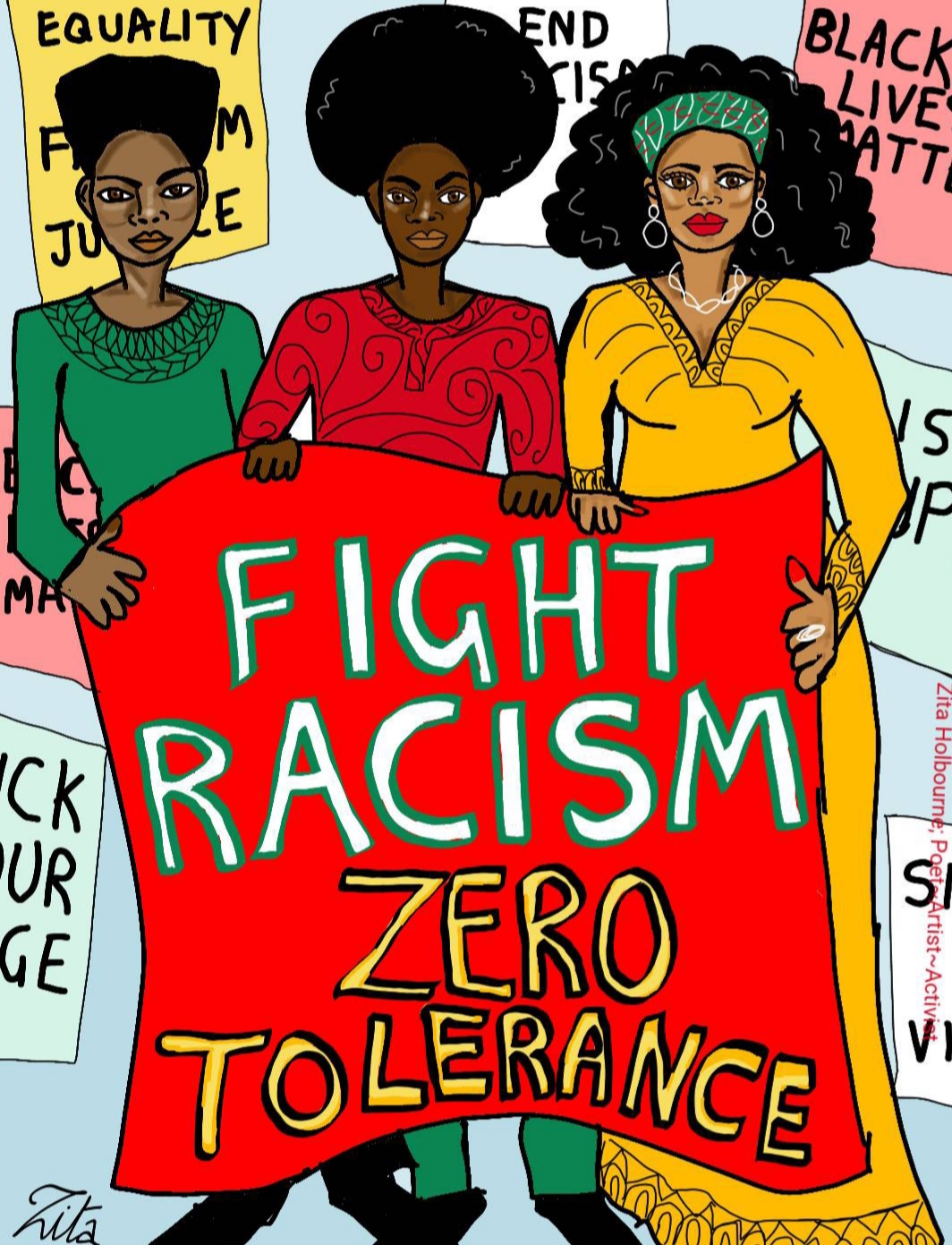
 Statement on the Government report of the Commission on Race and Ethnic Disparities (Race Report)


BARAC UK is deeply concerned by the tone and content of this report, published on 31st March.  https://www.gov.uk/government/publications/the-report-of-the-commission-on-race-and-ethnic-disparities

It seeks to reduce the very real and devastating lived experience of racism by racialised groups of people living in the UK.

It also seeks to divide Black and ethnic minority communities into 'good' and 'bad' migrants and suggests that those of us who campaign against racism are stuck in the past or that we are imagining it.  Effectively gaslighting people who experience racism. 

To suggest that racism is in the past, ignores the impacts of over a decade of austerity with disproportionate impacts on employment and service provision, the Grenfell Tower fire, the Windrush scandal, the treatment of people who are displaced and are refugees, the disproportionate rate of contracting and dying of coronavirus, to name but a few recent and current events, still impacting now. 

The report barely mentions the Windrush Scandal or the Grenfell fire.

Astonishingly the report also disregards institutional racism and seems to lack an understanding of what institutional racism is, but goes on to suggest that we are all confused about the difference between institutional, systemic and structural racism.

An extract of the report states: 

"However, we have argued for the use of the term ‘institutional racism’ to be applied only when deep-seated racism can be proven on a systemic level and not be used as a general catch-all phrase for any micro aggression, witting or unwitting."


Following the inquiry into the racist murder of Stephen Lawrence, the McPherson report in 1999 defined institutional racism as:


"The collective failure of an organisation to provide an appropriate and professional service to people because of their colour, culture or ethnic origin." 


A number of review reports ten and twenty years on, found that the original 70 recommendations had not been implemented and institutional racism still exists. The race report suggests that the McPherson report was limited to policing only but it raised concerns about a range of public bodies. 


Since then, several government investigations and reports into racism have found that institutional racism does exist. For the race report to suggest that people and organisations are confusing micro aggressions with institutional racism is insulting and disgraceful.


The report attempts to reduce racist hate crime as 'individual instances' as though they don’t count and don’t have an impact and to state that our success as racialised people should be "regarded as a model for other White-majority countries", playing down racist hate crime and suggesting that if people succeed in 'education' and 'the economy' this makes the UK a shining example of positive race relations irrespective of the lived experiences of racism and their devastating impacts. 


The race report refers to some previous reports on racism but does not mention the Windrush Lessons Learned report or the Joint Committee on Human Rights report which last Autumn stated as we have been saying, that all the recommendations from the previous reports needed to be implemented.  


We did not need yet another report, but for action to be taken to address racism in all its forms without arguments put forward to reduce and disregard some forms of racism over others. All racism is wrong and all racism has devastating impacts on lives, life chances and future generations. 

The race report makes 24 new recommendations. 

Recommendation one includes investing in the EHRC. The EHRC was subjected to funding cuts by the government, which not only impacted on its ability to carry out enforcement work but also led to disproportionate numbers of Black and Asian staff losing their jobs at the EHRC. 

In 2017 Lord Herman Ouseley, Lord Simon Woolley and I were part of a delegation that met with the EHRC about this, read more here;

http://blackactivistsrisingagainstcuts.blogspot.com/2017/04/follow-up-letter-to-ehrc-from-race.html?m=1


Recommendations call for partnerships with the police and for improved training for police to interact with communities but nothing about addressing institutional racism in policing and  police brutality. Just look at the recent case of missing student Richard Okorogheye, at the time of writing this, I am so devastated for his family that a body which matches his description has been found (but not formally identified yet). Richard's mother Evidence Joel told the press that the police told her when she reported him missing: 

"If you can't find your son, how do you expect police officers to find your son for you?" 


At the start of this year Mohammud Mohammed Hassan was taken into police custody overnight in Wales. By the next day he was dead. 

Black, Asian and minority ethnic people face discrimination in the labour market, in recruitment, appraisal, promotion, progression and pay but the report recommends:

"the use of sponsorship to ensure wider exposure of ethnic minority individuals to their peers, managers and other decision makers".

It speaks of fairness needed at work but not equality. 

On the race pay gap it recommends;

Investigate what causes existing ethnic pay disparities 

and

Investigate what causes existing ethnic pay disparities

But no recommendations on closing the race pay gap.

There is specific  law on the gender pay act so why not on the race pay gap.


The report suggests that Black Lives Matter protests in the UK in 2020, which is what led to the Commission's establishment, were solely concerned with the horrific murder of George Floyd and racism in the USA. This is not true at all. The protests were calling for justice for George Floyd but also about the racism which exists in the UK including the legacies of enslavement of African people and colonialism which exist today not just in statues and symbols but also policies and practices. 

The report is condescending towards young people and insults their intelligence, gaslighting them also.  In fact, the report seeks to make light of the 'transatlantic slave trade’ or worse still glorifying it as they say:

"There is a new story about the Caribbean experience which speaks to the slave period not only being about profit and suffering but how culturally African people transformed themselves into a re-modelled African/Britain"


They also describe calls to decolonise the curriculum as negative.  They say they want children to 'reclaim their British heritage' but don’t seem to understand the importance of history being taught truthfully and the experiences and achievements of black and brown people in history being included in the curriculum. 

As somebody who has campaigned for black history to be on the curriculum including as part of the Mary Seacole Curriculum Campaign, I do not agree, Black, Asian and minority ethnic children have the right to learn about the histories  and heritage of their parents and ancestors too:

https://www.obv.org.uk/news-blogs/we-ve-won-mary-seacole-olaudah-equiano

Also, in my role as part of the UNESCO Coalition of Artists for the General History of Africa, I promote the 8 volumes of the history of Africa in my work in the arts, the UN recognises the benefits of decolonisation and promoting African history as a way of countering the racism faced by young black people of the African diaspora. 

“The Coalition aims to mobilize and raise awareness of the African youth and diaspora around a number of central themes related to the General History of Africa (valuing African contributions to contemporary societies, promoting a pan-African identity, “decolonizing” minds, celebrating African diasporas.”

https://en.unesco.org/general-history-africa/coalition

  I reject these ideas in the report about history and heritage. It’s crucial for  children to learn about all their roots and heritage , it helps to break down barriers and to instil value and worth.  

The report negatively labels young people, families and negatively targets Caribbean communities specifically. 


Bizarrely the report references the ceremony for the opening of the Olympic games in London as demonstrating progress on race because there were black people featured but fails to  mention that the Olympic games were held in one of the UK's most deprived boroughs and one with the highest ethnic minority population, that many black and minority ethnic communities were displaced because of the Olympics , losing homes and businesses and that the promises of the games benefitting the local community  never materialised. The London borough of Newham is the local authority with   the highest rate of covid deaths which is caused by poverty, overcrowded housing, precarious work and disadvantage.

In fact, as the Olympic games opened in Stratford, BARAC UK was also in Stratford, launching an initiative to address race discrimination at a meeting entitled; Jobs and Justice, Olympics Fair Play for Who?

http://blackactivistsrisingagainstcuts.blogspot.com/2012/07/barac-public-meeting-jobs-justice.html?m=1

In addition, I led a successful campaign against racism by the British Olympics Association, when Britain's biggest black newspaper The Voice was denied 1 single media pass whilst the BBC had over 100. Whilst we won the campaign,  it should not have been necessary. It ought to have been obvious to even the all white BOA committee that black press would have an interest in the Olympic games, I cannot believe they had missed the significant presence of black athletes at the Olympics. 

https://www.campaignlive.co.uk/article/boa-overturns-decision-grant-voice-olympic-stadium-accreditation/1141794?src_site=mediaweek

The report states that instead of focusing on race and ethnicity we need to look at underlying socio-economic issues, but fails to acknowledge that it is due to institutional and structural racism, that those disproportionate impacts linked to socio economic factors, exist. 

The report suggests strangely that if we refer to institutional, structural or systemic racism we are trivialising racism. In the same way we may describe, direct and indirect racism and racist harassment and bullying, it is correct that we refer to the other types of racism which exist. It is wrong to say that we are the ones creating a 'problem' by doing so. 

In addition, the report has misrepresented the meanings of white privilege and white fragility all together. It seems to suggest that success cancels out discrimination and that they are mutually exclusive.

BARAC UK rejects this report, it seeks to divide communities, trivialise and disregard some forms of racism,  gaslights those who experience racism and plays into the hands of those who hold racist views, setting us back not taking us forward.


This statement was published in the Morning Star newspaper on Thursday 8th of April.  Read Here 


Zita Holbourne 

National Chair & Co-Founder BARAC UK

On behalf of BARAC UK 


Friday, 12 October 2018

Black History is World History

Zita Holbourne, National Chair of BARAC UK, writing for the Morning Star newspaper on why in the midst of the Windrush scandal and hostile environment Black History is as important as ever;


Black history is world history, and attempts to water it down are harmful to black people in our struggle against racism, says ZITA HOLBOURNE


Read here;

Defending Black History Month

Monday, 12 March 2018

International Women's Day; Celebrating, Reflecting and Challenging


On International Women's Day BARAC UK kept the focus on intersectionality and as well as celebrating our achievements, looked at the struggles we still face. Read perspectives and thoughts here from three BARAC Women,  Donna Guthrie, Colette Williams and Zita Holbourne:

Read a feature written for the Morning Star  by National Chair of BARAC UK, here:

International Women's Day is for All Women


Zita was also interviewed by the think tank Class  and by African print fashion company Grass-Fields:


Watch Celebrating International Women's Day here


Read Interview with Grass - Fields here


Donna Guthrie, BARAC Women's Officer organised an event celebrating the stories of black women campaigners; here is her IWD 18 message:


As BARAC UK Women's Officer I would like to send International Women's Day greetings to Sisters wherever you are and hope that our fight for equality, freedom, justice and peace is successful and that our great contributions are recognised and valued.
I spent International Women's Day campaigning with strikers and students at UCL and toured the numerous picket lines to highlight the gender pay gap and bring international women's day greetings. We led a march to UUK offices and i encouraged striking women to speak from the crowd. Followed by fantastic feminist teach out.
I ended my day hosting an IWD celebration evening in my Labour party ward with speakers from the local Avenue Parents' Group anti Academisation campaign and BARAC National chair Zita Holbourne. The evening was so enjoyable and members raised £46 in the raffle and badges sold to donate to BARAC's humanitarian aid for refugees.


Colette Williams our Manchester and North West lead convenor and chair wrote a moving  and powerful article for  Jam Session magazine:

Read: Still I Struggle here


Wednesday, 6 July 2016

In the Wake of Brexit it's Vital We Stand United Against Racism and Xenophobia

Feature written for the Morning Star by Co-Chair BARAC UK, Zita Holbourne 


Also read Bracist Britain, a British Black Perspective written by Co-Chair of BARAC UK, Lee Jasper 

THE Brexit campaign was toxic, built on fear, hatred and othering, wrongly blaming migrants for the effects of austerity and cuts.
So is it any wonder that it bred an explosion of racist and xenophobic hate crimes immediately after Friday’s referendum result?
Racism is not something new. It has always been there — no amount of race equality legislation or policies have made it disappear.
We hear phrases like “Britain is a very tolerant society” and “We’re living in a post-racial society.”
Well, I don’t want to be simply tolerated — I want to be treated as an equal with equal chances and opportunities for me, my family and communities.
As for a post-racial society, over the past six years austerity has amplified racism. It has deepened, not gone away.
We’ve seen the deeply racist Immigration Act introduced that sets us back several decades.
We’ve seen the rise of the far right and the shift to the right of mainstream political parties.
Black and anti-racist campaigners received death threats during the referendum campaign from fascists and the week before the vote we witnessed the brutal murder of Jo Cox MP because of her stand against xenophobia and for migrant rights.
In the hours after she was murdered, there was an attempt to play down the reason she was killed and many of us thought that this horrific act might change some minds — but it didn’t.
I and many of my friends awoke to the news of the referendum result on Friday morning and our hearts sank.
I wept — for our children’s futures, knowing that their struggle against racism was just about to get harder.
My son said: “You’ve spent decades dedicating your life to campaigning for race equality and against racism and in one day that work has been undone.”
I spoke to several friends that day and they all said the same thing — they were looking to leave Britain and go to the homelands of their parents. Most of them were born in Britain, but it now seems an unwelcome place and we know that our lives are about to get even harder because hate won.
That’s not to say I believe that everybody who voted Leave is racist — far from it.
I know that people of all races and politics voted to leave for a wide range of reasons, but it would seem that everybody who holds racist views voted to exit and the overwhelming message coming out of the Brexit campaign was that if Britain left the EU it would stop migrants coming here.
The campaign scapegoated migrants and gave no consideration to the impact on migrant, black and Muslim communities and the consequences of an exit on us.
Our fears during the campaign have now been realised before our eyes on our streets across Britain in the past few days.
As horrified and upset as I was on Friday morning, it was still a shock to witness an explosion of racist, xenophobic hateful displays and acts played out on our streets.
In quick succession I saw reports in the news and on social media of children in schools, people going about their everyday business being targeted and abused and of people out on the streets displaying racist signs and slogans.
In the lead-up to voting day, we increasingly heard the phrase “I want my country back” from those who supported the Brexit campaign.
This was not restricted to private conversations between friends. People boldly declared this in vox pops, in open conversations and even in our workplaces, black trade union reps were told this by their members.
People felt emboldened and with the result they became empowered — not just adults but small children at schools told by fellow pupils that they needed to pack their bags and leave, black and Muslim people told: “You’re next.” People punched in the street, taxis refusing to take black people, cars driven by African and Muslim people smashed, a Muslim woman told by a bus driver: “This is my country so I make the rules.” And this is just a small sample during the first 48 hours from Friday morning.
At the weekend I attended a trade union equality seminar in Birmingham where Polish people described how they had received hate mail through their letter boxes.
A Polish worker at the hotel told me that he was scared. He has lived in Birmingham 15 years and always felt safe and welcome, now he feels very unwelcome. This fear was repeated in conversations all week.
By the end of one week I feel as though I am running a racist incident helpline myself because of the number of people who have contacted me for support and advice due to racist abuse and attacks they have experienced, attacks on public transport, a mother beaten up by another mother on the school run because she challenged the xenophobic comments made about Romanian people — “I hope they [the Romanian mothers] and their children and babies all die on the way home,” an Asian worker in a grocery store verbally abused by a customer, a young black man physically attacked by his manager, a Muslim woman racially abused by a bus driver — I could go on.
Given that so many race monitoring organisations and race equality councils have been forced to shut their doors due to cuts, we know that the support for people in their communities that used to exist is no longer there.
So we are inviting people to contact Black Activists Rising Against Cuts (Barac UK) if they need advice and support.
Nobody should have to suffer in silence and not everybody will feel able to go to the police for a number of reasons.
It’s essential that these incidents are reported. While the police have stated that reports of hate crime have increased by 57 per cent we know that hate crimes are grossly underreported and that the real figure is likely to be much higher.
If this is just week one, I dread to think what is to come. But it is for all these reasons that this week, national black organisations, migrant groups, black trade unionists and the wider trade union movement have held emergency meetings to discuss how we respond.
On Thursday, national black organisations including my own Barac UK came together in an emergency meeting also attended by Operation Black Vote, Runnymede, Race on the Agenda, NUS Black Students Campaign, Voice 4 Change, The Monitoring Group, Blak Sox and Media Diversified.
The meeting agreed to issue a statement on how to respond with a message about mobilising in our local areas and communities, communities working together and taking action to support those under attack.
In addition to these meetings the TUC general council also met this week and agreed on a new campaign against racism.
It is essential for any such campaign to not just involve trade union and anti-fascist organisations but communities too.
The PCS union executive, to which I am elected, also held an emergency meeting this week on the EU result and our political campaigning and at that meeting agreed a campaign against racism.
The NEC agreed that we would work with the TUC to launch a new targeted and sustained anti-racism campaign in light of the EU referendum result.
Such a campaign must focus centrally on the need for an end to cuts in public services and investment in our communities, including an education campaign on immigration. We will review and expand our own anti-racism and equality campaigning on that basis.
And we also confirmed our support for Jeremy Corbyn. Jeremy and John McDonnell have both provided unwavering support to PCS campaigns over many years, whether it be raising our members’ issues in Parliament or standing with us on picket lines, even when the Labour Party leadership of the day was not willing to do the same.
In particular, they have supported our central campaign for an alternative to austerity and an end to the cuts in pay, jobs and pensions inflicted on our members by all governments in recent years.
Barac UK also stands in solidarity with Corbyn against the attempted coup by Labour politicians and is deeply disappointed to see MPs and councillors campaigning against him.
Corbyn and McDonnell have provided solid and consistent support for Barac UK and black communities and for our work campaigning against racism and injustice, providing solidarity, practical and political support and a strong presence and voice against racism and xenophobia.
In the face of growing hatred, we need political leaders who are totally committed to standing up to racism and Jeremy and John have demonstrated a lifetime commitment to doing this.
Next week the TUC race relations committee will also meet to discuss the new TUC campaign against racism and how this is taken forward in conjunction with communities impacted.
But we all have a collective responsibility to stand up to these attacks and to stand up and support people who are attacked and abused, reporting hate crimes and documenting them and building a strong united campaign.
It is not enough to state we are anti-racist or anti-fascist, we need to stand up to all forms of racism and xenophobia and offer practical support as well as political activity to tackle the root causes and effects that lead to a climate of fear, division and hatred.
  • Zita Holbourne is co-founder and national co-chair of Barac UK and elected to the PCS national executive committee and the TUC race relations committee. She is also an author, poet, artist and curator.

Tuesday, 1 March 2016

Refugees in Calais and Dunkerque - urgent call for support of BARAC Humanitarian efforts


Image by Zita; Poet~Artist~Activist


Dear Friends 

Most of you will have seen the news reports of riot police using tear gas and water cannons to support the demolition of the South part of the Calais 'camp', only days after a judge gave a commitment that this would take place slowly, in stages and humanely - if there could ever be a humane way of destroying the tiny bit of shelter and belongings people had after fleeing war, persecution, poverty and climate change, followed by perilous journeys. 


Image by Care 4 Calais


We are responding to the call for urgent replacements of essential items and food supplies because people have lost everything with the demolition.  We will be returning to Calais and Dunkerque to take essential items and food next week with other Black Community and Trade Union groups. 

Image by Care 4 Calais


This impacts on thousands of people including hundreds of children. 

Image by Care 4 Calais


You can read a feature here, written by Co-Chair of BARAC UK, Zita Holbourne, for the Morning Star newspaper; http://www.morningstaronline.co.uk/a-b268-Fighting-survival-in-the-Calais-jungle#.VtddJ5yLSM8 

Read a report in The Guardian here

Please can you support our efforts to respond to this urgent situation by donating what you can and sharing our GoFundMe with your networks.   https://www.gofundme.com/BARACHumanitarian


Thank you for your support. 

BARAC UK 


Monday, 29 September 2014

WHEN PREJUDICE, POWER & PRIVILEGE JOIN FORCES, RESISTANCE IS NECESSARY, by Zita Holbourne for The Morning Star

 Written by Zita Holbourne for The Morning Star  - the truth about the Boycott the Human Zoo campaign. . First published in The Morning Star here
When Prejudice, Power & Privilege Join Forces, Resistance is Necessary 
Monday 29th

posted by Morning Star in Features
 

The protest that led to the cancellation of the Barbican’s Human Zoo exhibition was not anti-art – it was anti-racist, writes ZITA HOLBOURNE

FOR the past month I have campaigned with a broad range of black community organisations, anti-racist organisations and trade unions, forming the Boycott the Human Zoo Campaign.

Exhibit B is an internationally acclaimed “art” exhibition, by white South African playwright Brett Bailey.  

It replicates human zoos of the Victorian age, using black actors to re-enact scenes of abuse and torture that African people were subjected to during enslavement and colonial rule.  

Actors in the exhibition, who must remain silent, are blacked up, placed in cages and iron masks and shackled.
There is no narrative on the resistance by African people and no acknowledgment of our history before or after these events. 

In some other countries there have been protests, petitions and written complaints, but the Barbican and Bailey had not anticipated the level of resistance from black communities bringing it to London would attract.  

During the campaign, it became very apparent that the Barbican has no expertise in race equality and no diversity in its own organisation, with one single black member on its board. 

When we initially wrote to the Barbican with our concerns in August they replied, stating that Exhibit B was empowering and educational, trying to tell those of us that have a lived experience of the legacy of historical and current racism that we need to be educated on racism by them — a nearly all-white institution.  

How the Barbican could believe an exhibition which objectifies black people in a degrading and offensive way, repeating horrific acts of racist abuse could be empowering to us is beyond me. 

A criticism levied against us by the Barbican and others is that we had not seen the exhibition so how could we be against it? 

But you don’t wait until you have been racially abused to point out that racism exists. 

When we asked the Barbican board and management if they had seen it, only one single member had. So if they were arguing we couldn’t conclude it was racist because we hadn’t seen it, how could the Barbican management say it was not racist when they had not seen it either? 

For us seeing the images and videos of the exhibition were horrific enough. 

Over and over, in meetings, at protests and lobbies and in writing we explained to the Barbican why we found Exhibit B to be racist and we were told that it was not racist because the Barbican did not believe it was — completely disregarding the impact on us.
Some 23,000 people signed an online petition started by Birmingham activist Sara Myers.  

The organisations making up the campaign, including my own union, PCS and Black Activists Rising Against Cuts (Barac) UK represent over one million members. 

PCS culture sector group president Clara Paillard, representing workers in museums and galleries, said: “We supported the boycott because we believe that art should not be used to disguise or promote racism.”

The campaign was also supported by Unite which represents members in the City of London Corporation branch which covers the Barbican. 
   
Action for Southern Africa, the successor organisation to the Anti-Apartheid Movement, wrote to the director of the Barbican raising its concerns. 

“To challenge racism requires a sustained commitment, not a one-off production, and there needs to be the active involvement and engagement of those who continue to experience racism.
“To stage a production that is clearly offensive to many — who view it as a re-enactment of racism, demeaning and patronising — indicates a Barbican that is not sensitive to the views of black people, black organisations and those actively campaigning against racism.” 

Despite ongoing attempts at dialogue with the Barbican, where we pointed out that black communities should have been consulted, it was not prepared to consider our concerns let alone the hurt, pain and anger we felt. 

Director of arts Louise Jeffreys outraged audience members over a last-minute “damage limitation” event, when she stated they did not consult black communities because they did not know who black communities were. 

The meeting we had with the Barbican board came about because I wrote an open letter to the City of London Corporation chief executive and elected council after it failed to respond to my second letter.  

Yet Barbican director Sir Nicholas Kenyon told the Sunday Times yesterday: “He was taken by surprise” and “when we heard a couple of weeks ago that a petition was being organised against the show, we invited them in. 
 “They came to see us, including one of our board members, Trevor Phillips, who is of course black.
“We heard their concerns, but pointed out they had misunderstood the work. They went away promising there would simply be a peaceful protest. But on the evening of the planned first night, it turned nasty. Frankly, I feel we were used.”  

Following that meeting we organised a march and rally outside the Barbican and a further petition hand-in demo because the Barbican failed to provide a senior member of staff as promised to receive our petition the first time round.
On the opening night Kenyon stopped to greet me on his way into the exhibition. Hardly a nasty atmosphere. 

The Vaults venue sought to shift responsibility responding to my letter by saying: “The Vaults is a neutral space, we are just hiring the space to the Barbican.”   

As I pointed out to them, if you are neutral in situations of injustice, you have chosen the side of the oppressor.
On the opening night of the exhibition, 200 protesters gathered at the Vaults, which is in a narrow underground tunnel.  

The protest was noisy but peaceful. Protesters closed the entrance doors and drummers lined up in front of the entrance. The organisers called the police, suggesting there had been a fight — which there had not.  

We subsequently learned that riot police had been deployed to the Barbican, mistakenly believing the exhibition was taking place there and that they arrived way before the time of our planned protest so not in response to any concerns, which is disgraceful. 

Subsequently the venue announced that it was closing for the night and protesters started to leave.   
It then issued a formal statement that the entire London show was cancelled. 
 We departed, pleased with this news, if frustrated that it had taken until the opening night for it to happen. 

What followed was a vicious attack on black activists and communities opposing the exhibition. 

The Barbican put out a statement accusing us of stopping freedom of expression.   
It also said: “Last night as Exhibit B was opening at the Vaults it became impossible for us to continue with the show because of the extreme nature of the protest and the serious threat to the safety of performers, audiences and staff.
“Given that protests are scheduled for future performances of Exhibit B we have had no choice but to cancel all performances of the piece.” 

This statement was irresponsible and cowardly. Police have confirmed publicly that there were no arrests, no damage to property and no injuries. Yet the Barbican intentionally used the terms “extreme” and “threat.” 

The venue was in an underground tunnel. It would have been easy for police to cordon off the area for subsequent nights, only allowing those with tickets to enter.
The truth is that the Barbican had underestimated the strength of feeling and resistance. 

There was nothing extreme about the protest, yet supporters of Bailey, “defenders” of art and sections of the media reported that we brandished placards and drums and acted threateningly by singing and blowing brightly coloured whistles. 

Comments were even made about our hair — “many of them had dreadlocks.” We were branded racists, fascists and extremists.  

But to be racist we would have to have power. Racism occurs when prejudice, privilege and power join forces.
Tellingly, journalists who were there reported that our protest was welcoming and peaceful, but those who had not been there described us as an angry threatening mob, relying on the Barbican’s statement. Some even incorrectly reported that our protest took place outside the Barbican. 

We have been accused of censoring art and stopping freedom of expression. We were told that we have done a terrible thing to art. 

But our boycott campaign in fact involved a wide range of artists — visual artists, musicians, rappers and poets.
As a visual and performance artist myself, I am passionate about art — but if my work greatly offended hundreds of thousands of people I would act responsibly and acknowledge this.  

I am an artist but I am also a human rights and anti-racism campaigner and I don’t see the rights of people as being lesser than objects of art.  
People are outraged that art has been treated this way, but the same people were not outraged by the pain, offence, hurt and anger we experienced because of the Human Zoo exhibition.
They are not offended by the institutional racism that black communities experience today.  

The reason we came together in a short space of time to oppose the Human Zoo is because we have had enough of racism, criminalisation of our communities, the disproportionate impact of cuts on our families, the scapegoating, scaremongering and demonisation.  

As racism deepens, the last thing we need to see is acts of historical racism promoted and celebrated as art while those involved profit from the £20 entrance fee. 

The Barbican has told us repeatedly that Exhibit B is important work. When we asked who it is important for they couldn’t answer. 

The truth is that Exhibit B was never for us. The entrance fee alone would prohibit most austerity-stricken black (and white) working-class families from attending. 

If it was really supposed to be educational it would have been free and open to many more people.
If Bailey really wanted white people to know what racism feels like he would have put white people in the cage, mask and shackles.  

There are many other ways to educate on the horrors of historic racism, but any such project must also seek to address the racism we face today. They should be inclusive not exclusive.

Dr Richard Benjamin, who heads up the International Slavery Museum in Liverpool, wrote to me saying: “Congratulations to you and your colleagues for making your voices heard. For me there is nothing more important than the culture sector being subject to such scrutiny. The International Slavery Museum has a very clear ethos, we are a campaigning museum and as such use the museum and its content to challenge views/actions/ideologies that persist today.”


The response to Exhibit B by black communities in London must send a message to British arts and culture institutions that they must practice equality — they must consult the diverse communities they serve and nurture the artistic talents that exist in those communities.  

The institutional racism that exists in the sector must be addressed. My decision to try and tour an exhibition showcasing the talents of young black artists despite having no budget, funding or sponsorship is exactly because young black artists do not get the opportunities that white privileged artists like Bailey get. 

Barac UK and others see a need for a new black arts movement to nurture talent in our communities because we know we can’t rely on the institutions.
Zita Holbourne is an award-winning trade union and community activist, poet, visual artist and curator. She is co-founder of Barac UK and has been elected to the PCS NEC, TUC race relations committee and ACTSA NEC.