
Black History Month Greetings from Chair of BARAC UK;
Zita
Holbourne


When Black History Month was established in the UK, the aim
was that October would open a series of black history events / activities which
would run through the whole year from October to September.
Nevertheless, October gives us an opportunity to focus on
the histories, achievements, talents and struggles of black people, for black
people to share knowledge and for others to listen, learn and acknowledge.
This year has been one of collective trauma for black
communities. Black people have been impacted disproportionately by the
coronavirus pandemic, more likely to be in precarious and front line jobs as
key workers, having to go to physical workplaces through the lockdown and with people from African and Asian diasporas
up to 4 times more likely to contract and die from covid and many in our
community losing loved ones, family and friends but unable to grieve and say
goodbye in traditional and familiar ways.
One of the people who died from coronavirus that I didn’t know
personally, but whose death impacted really badly on me and many others, was
Belly Mujinga, a transport worker, who was kind, caring and helped everybody she encountered, way beyond
the call of duty, on many occasions, who was spat at whilst doing her job by a
member of the public and who was made by her employer to work out in the
station rather than in the ticket office, despite her being in a high risk group.

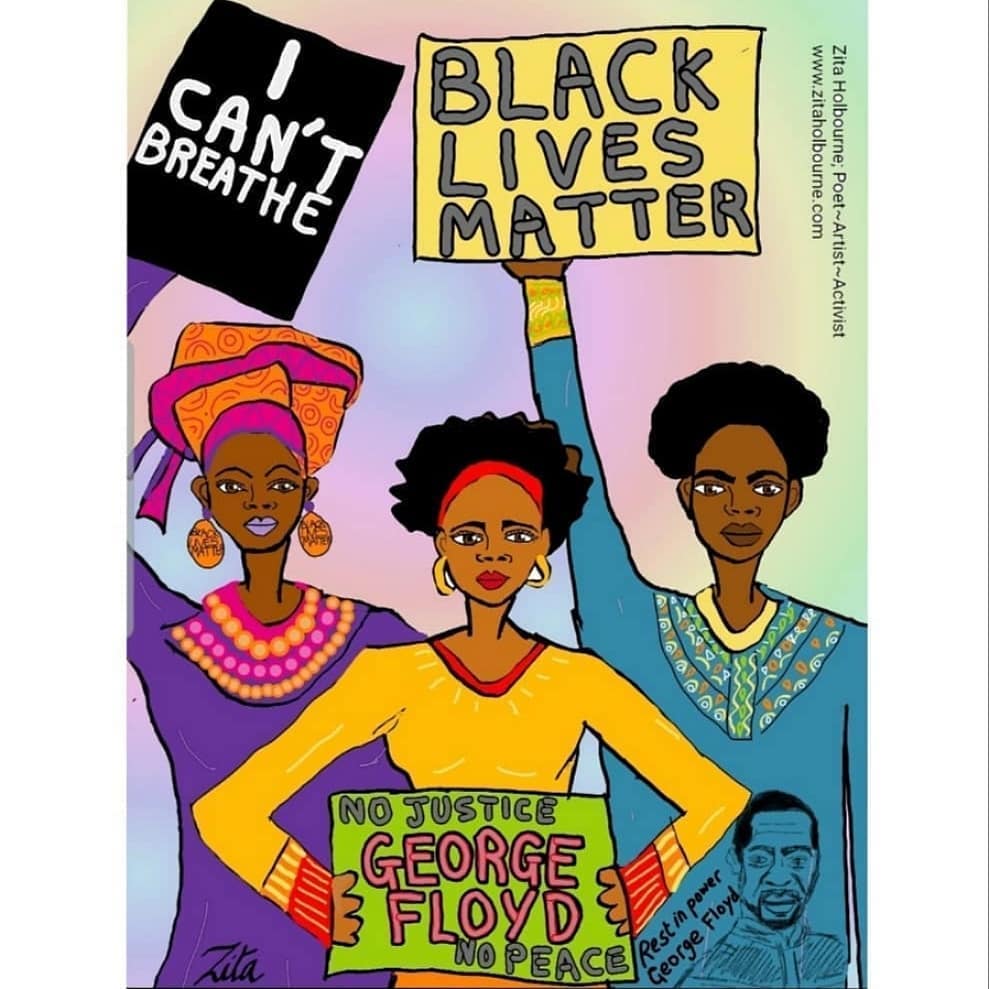
As if that was not bad enough the killing of George Floyd (and
others) in the USA, was captured on video and witnessed through social media
across the world. This led to global
black lives matter protests, a rallying call for justice and for race equality.
In the midst of the pandemic the Windrush Lessons Learned report was finally published with a list of recommendations for the Home Office
to address what was described as ‘institutional ignorance of racism’.
Meanwhile the vast majority of people who are entitled to
compensation because of the injustice they faced as part of the Windrush
Generation, have yet to receive it, some had already died and in July, one of those
impacted and who has also campaigned for justice, the wonderful Paulette Wilson
passed away, adding to our sorrow and trauma.

The protests over the summer sparked a refreshed debate about
the legacies of enslavement and colonialism and their role in allowing racism to
thrive today.
We saw institutions and businesses jump on the black lives
matter ‘slogan’ one minute, declaring their anti-racist credentials, irrespective
of their track records, in a tokenistic way and then we saw some institutions
who sought to claim those three words: Black Lives Matter - distance themselves the next minute. We also encountered the ‘white lives
matter’ and ‘all lives matter’ declarations
from those who did not want to understand that if all lives actually mattered
there would be no need for those with a lived experience of anti-black racism
to inform the world that black lives matter as it would be taken as a given.

When we started this year, none of us anticipated how
different to everything we were familiar with and expected, it would
actually be. The impacts on everyone have been vast - dramatic, distressing and
frightening. Some people have lost their lives, others have lost their businesses or jobs and even for those who have
not lost lives or livelihoods or loved ones they have experienced changes and
challenges and had to adapt immediately to new ways of living, working,
communicating and more. But there have been disproportionate impacts on many with protected characteristics, black, Asian and minority ethnic people, women, disabled people, LGBT plus, young people, older people. and multiple impacts for those who are intersectional.
So, when we speak about celebrating black history month, it
will be understandable that for some people, they are not in a space or a time
where they feel able to celebrate. But Black History Month is also an opportunity
for reflection, for personal learning, for acknowledging our struggles and our
accomplishments and given the year we
have encountered thus far, black history month is more important than ever in providing
an opportunity for us to have conversations about what it is like to live with racism, to campaign
against it, to be labelled or harassed and bullied, to experience microaggressions,
to be barred from promotion and progression, to feel isolated at university or
in the workplace and for institutions and businesses to not just reflect but to
act upon their own failures in tackling racism and creating safe equal
environments and to address these issues be it as employers or service providers and not just in a tokenistic trivial way.
But it is also an opportunity for us to lift up our voices
collectively, to share stories of unsung sheroes and heroes, to share our
histories and herstories, to meet – be it virtually – to acknowledge the skills
and talents in our communities and the pioneers whose shoulders we sit upon.
As a visual artist and poet, I have created a daily visual diary through the
pandemic and the black lives matter protests and am doing the same through black history
month to document my personal and our collective experiences through arts and
creativity. On Instagram @zitabaracuk you can view them. I have art/ poetry in two virtual exhibitions
- one in the UK on the impacts of coronavirus Life Interrupted and one in the USA on black lives
matter - Speak Your Truth .

I started Black History Month at an opening event which I hosted / chaired with historian David Olusoga, where he spoke about black lives matter in the
context of Black British History. Too often we hear USA black history being
shared with us but not UK black history and I was struck by something David
said that in Bristol a school was teaching about the Montgomery Bus
Boycott and Rosa Parkes but they knew
nothing of the Bristol Bus Boycott and
Paul Stephenson. This made me both sad
and angry in equal measure.
Paul Stephenson who was central to the Bristol Bus Boycott
is one of the people who inspired me as an activist from a young age. When I
was 19 years old, as part of a photographer placement with the Caribbean Times,
for a project I was doing at art school,
I visited Paul in Bristol where he was giving us an interview in relation to a friend
of his who had passed away in London. I expected to be in Bristol for a couple
of hours but it was nightfall by the time I left and by the time I left my life
had become enriched and informed by the experience and knowledge that meeting
Paul Stephenson gave me. He took us to his home where I was stunned to see framed
photos in his front room of Muhammed Ali and his family which led to the first
black history month of the day but then he took us on a tour of Bristol and all
the while he was driving us around he was teaching us the history of the impact
of enslavement of African people and the transatlantic slave trade on Bristol,
pointing out street names and places -
which we have seen come to the fore in Bristol and other cities this summer
with the toppling of the Colston statue and he taught us about the Bristol Bus
Boycott, he taught us about the economic impacts on race and black communities
by physically taking us around to see this with our own eyes and before we made the long journey back to London,
he treated us to local culture and hospitality in St Pauls at a Caribbean pub for some rum and a Caribbean
café for some rice and peas and jerk chicken.
As I sat on the coach on the journey home, I didn't imagine I would see him again, let alone host him at seminars and conferences I co-organised, would share platforms with him as a speaker and spend quality time with him.

I often wonder how many years it would have taken for me to
know about the Bristol Bus Boycott if I had not met Paul Stephenson that day.
That day had a profound impact on me then, not just because
of what he taught us, but because he took the time to give up his day to be with
us, to show us the city, the politics and history of it and to share his
knowledge and wisdom with us and to welcome us like you would family. He taught
me community in a strange city I had never visited and only knew about vaguely and he enriched my mind with knowledge that had never been taught to me in school.
This June marked the ten year anniversary of BARAC UK, when
we were established we did not imagine that ten years down the line we would
still exist and still be campaigning
against the impacts of austerity and against racism and injustice and that ten
years of campaigning alone could fill a book of black history and will.

There are many untold stories of the history and presence of black people in the UK and a starting point
could be for you to just share your own story, or the story of a family member
with your own friends, colleagues or circles, it doesn’t have to be a public
event.
As a trade union representative and community campaigner I have been and will be speaking at a range of
different black history month events, but in one of my local union groups I am part
of, this is exactly what we will be doing - simply sharing testimonials of our lived
experiences of racism and challenging it and surviving it but also of the
impacts of it, with our colleagues at our
black history month event.
Each one teach one – the knowledge your hold and take for
granted – may be a revelation and an inspiration for another.
On Saturday 10th of October, as part of Newham Black History Month, BARAC
will be hosting a panel debate and film screenings from the film Is Britain
Racist, about how, what became known as
the Windrush Scandal, came about, our campaigning against it since 2012 and joining
BARAC representatives on the panel will be Glenda Caesar who was directly
impacted by it and the maker of the film about those impacted and those who
have campaigned , Jean-Marc Aka-Kadjo.

But in addition to the Windrush Generation and how they have
been impacted, we must also remember that their descendants – the children and
grandchildren who joined them in the UK
as babies or young children and even some born in the UK are also being
targeted for deportation , people like Osime Brown, a young 21 years old black
man with severe autism who came to the UK aged 4 years old and who was wrongly
convicted under now defunct joint enterprise law and who is being targeted for
deportation, my heart goes out to his mother and family who like so many other families
find their lives torn apart and forced to fight and campaign for justice and for their families to stay together.
One of the events I attend every year during Black History
Month is the United Family and Friends Campaign annual march against deaths incustody. Over the years of being an activist and campaigner I have met with,
campaigned with and supported so many families who have lost loved ones at the
hands of the state. The huge number of black people who have died like this
should not be part of our history in the UK or in the USA but it is and this year because of covid restrictions
and safety, the event will be online and I encourage you to join those families
and show your love, support and solidarity because they need it.

I have written here about many struggles and injustices that
black communities have encountered, but our history did not begin with our
oppression and we have a rich history to learn about and share – humanity began on
the continent of Africa and in my role as a member of the UNESCO Coalition ofArtists for the General History of Africa, I would like to remind people of the 8 volumes of the history of Africa which UNESCO has written in order to
document that history.

Even in the face of racism here in the UK – we have achieved,
we have succeeded, we have represented and we have enriched British culture as
have all of the communities who came to the
UK and made it their home. Be it in
business, through the arts, sports, literature, academia, at work, in
education, in communities, in politics and in every part of life, we have contributed to British History - so we have a story to tell, a story to
share, a story to educate during black history month.
Black History is world history and another event I will be doing for black history month is a book reading from my book Striving for Equality Freedom and
Justice - a book which fuses the poetical
with the political and documents black history from the Haitian Revolution to
the Black Lives Matter Movement. For Black History Month I would like to pay tribute to my publisher Hansib Publications and Arif Ali. Hansib is one of the oldest Caribbean publishers in the UK, they started publishing newspapers - the Caribbean Times and then also the Asian and African Times newspapers and it was through the Caribbean Times that I met Paul Stephenson and got my first works published - photographs. So Hansib has also been part of my journey and history and they are most certainly part of black history.

For this Black History month I would also like to pay tribute to
the black people I work with every day in the trade union movement and in
community activism, in the arts and in campaigning – you are making history
every day but I would also like to remember our ancestors and those who put
themselves at great risk to pave the way for us and to the pioneers who were
brave enough to be the first but opened the doors for other to follow and those
who are the unsung sheroes and heroes who quietly behind the scenes, never
seeking glory, work tirelessly on our behalf.
I would encourage you to click on the hyperlinks included to find out more about the people and events if you don't already know.
Black History is World History.
Zita Holbourne


All other photos courtesy of Zita Holbourne/ BARAC UK and all artwork created by Zita Holbourne.


